Outdoor Afro names Dr. Mamie A. Parker 'Lifetime Achievement' recipient
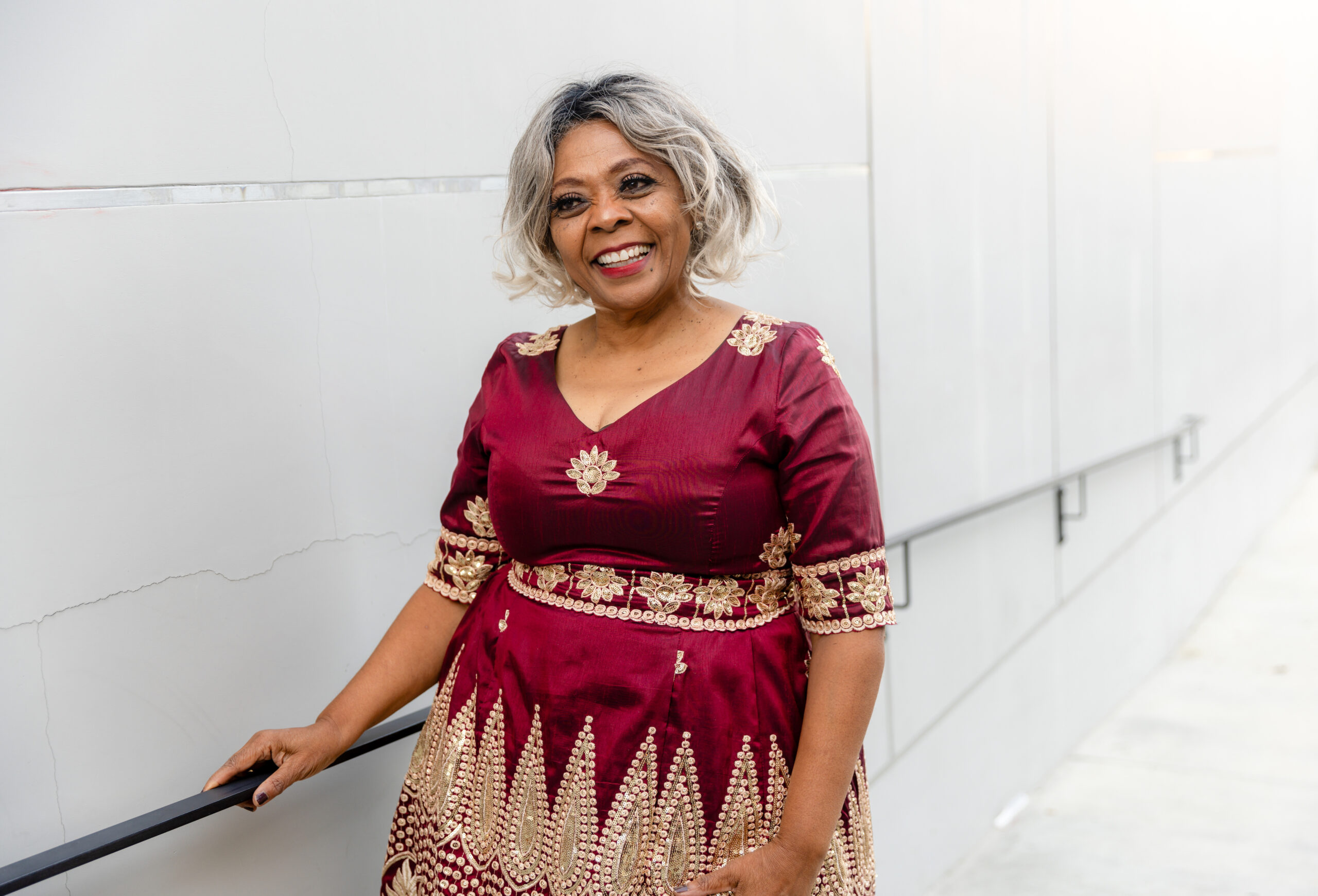
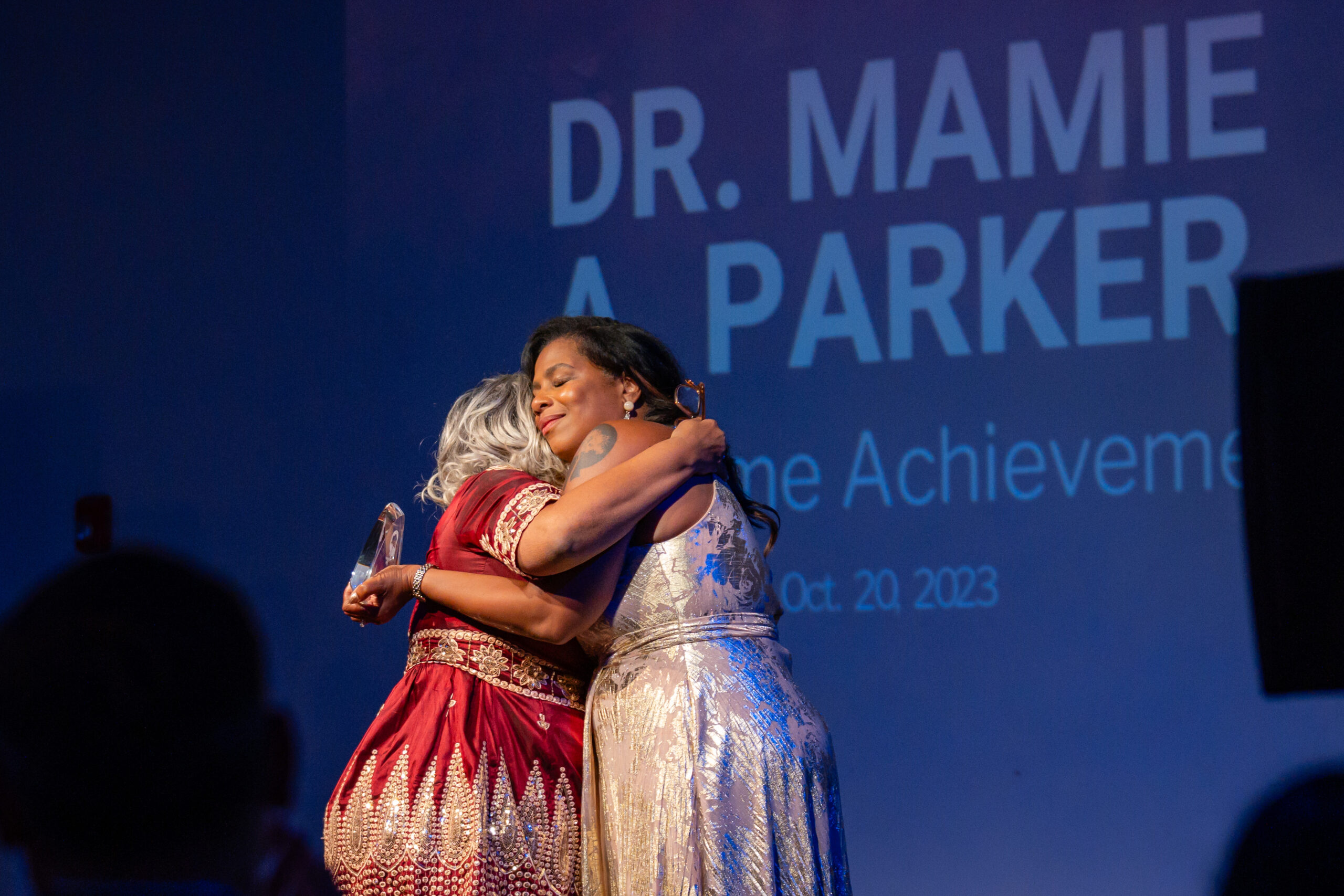
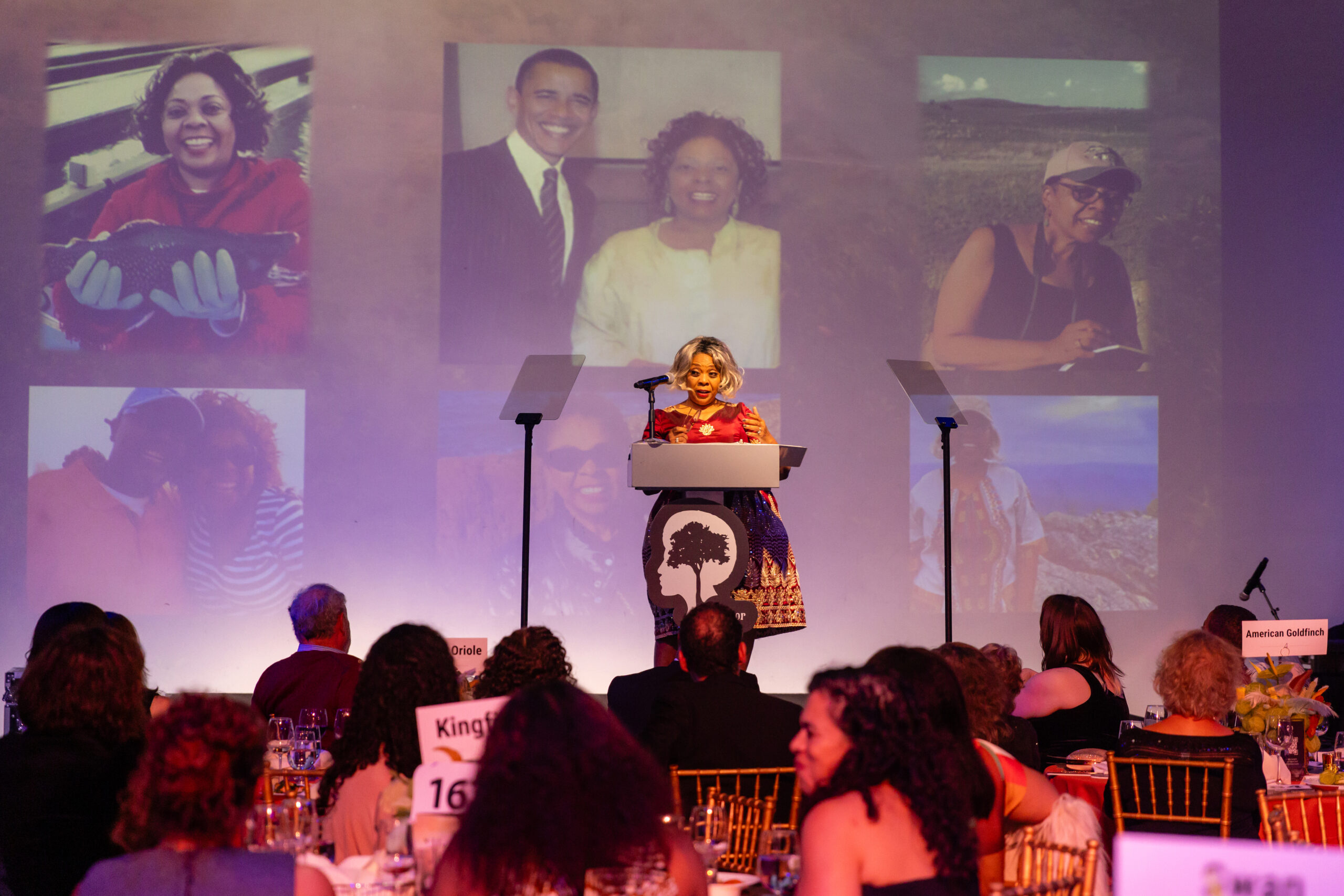
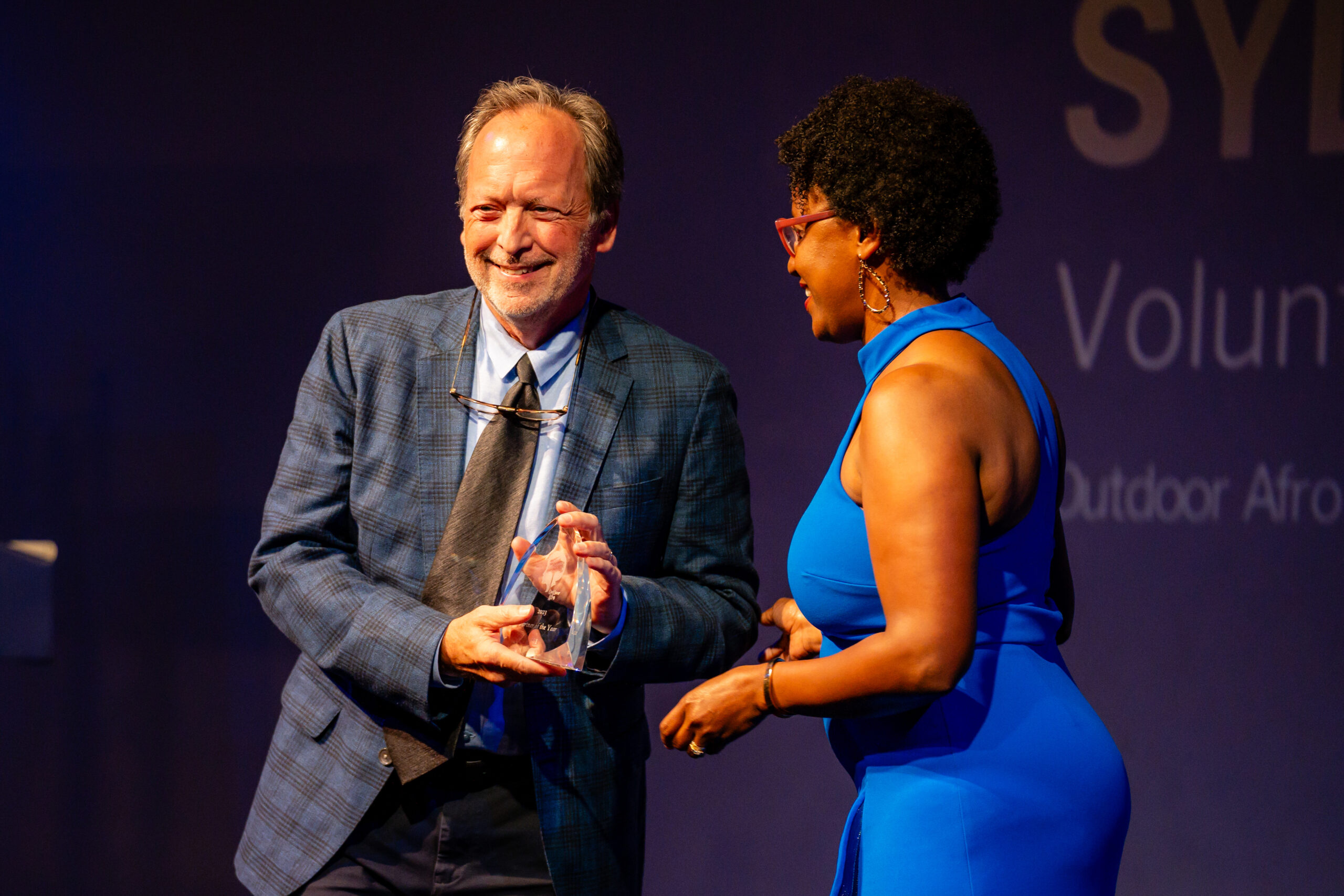
She ascended to the stage, glimmering in the night’s joy. Her maroon and silver gown sashayed with each quaint step. Bringing the memory of her late mother, Cora Parker – an Arkansas maid and tenant farmer – front stage to celebrate in the moment. Overjoyed, Dr. Mamie A. Parker squeezed Outdoor Afro friend, Founder, and CEO Rue Mapp before the award exchange. It’s the national not-for-profit’s ninth annual fundraiser, Glamp Out, held Oct. 20, 2023. Mamie, 66, recently received Outdoor Afro’s distinguished “Lifetime Achievement” award at Bloc15 in Oakland for her decades of innovative conservation work.
Mamie pledged her outdoor career to fish and wildlife biology, as a success coach, and to later serve as a principal consultant for countless state and federal agencies. Because Chaka Khan’s “I’m Every Woman” played as her Glamp Out walk-on song, it was only customary for the wildlife conservationist to give the crowd a quick two-step and a few shimmies as she approached the podium. “Good evening,” she said with a well-grounded tone and delicately sliding her readers onto her smiling face. “I know you can do better than that. In my culture, when we call, we ask you to respond.” The crowd gladly did with louder claps, whistles, and good evenings in reply to the Wilmot, Arkansas, hometowner.
Mamie emphasized her roots to help explain her call-and-response request. It’s due to her purpose-driven travels from a sharecropping South to serving as a key presidential appointees’ house adviser with several administrations that she often delivers messages of resilience across America. Hopeful words she’s shared in different formats across world stages. Against-all-odds stories that crowds either hear for the first time or need to hear again. “Dr. Parker is a history maker,” said Mapp to Glamp Out guests. “She served as the first African American U.S. Fish and Wildlife Service (FWS) regional director of the 13 Northeastern states.”
 FWS is the oldest federal conservation agency, tracing its lineage to 1871. It’s the only agency in the federal government whose primary responsibility is the management of fish and wildlife for the American public. Notably and repeatedly, Parker entered outdoor spaces as a “first” in similar conservation and wildlife environments. Appointed by the governor of the Commonwealth of Virginia, Parker was also elected as the inaugural Black chair of the Virginia Department of Wildlife Resources Commission. Mamie earned the American Fisheries Society’s highest honor – named after its first woman president – for her outstanding work promoting clean drinking water in nationwide streams.
This presidential rank awardee also became the first Black woman to serve as Head of Fisheries in the United States. The avid angler was appointed as the special assistant to the director and later became the assistant director in the FWS headquarters located in Washington, D.C. – the first Black person to hold this title. Among other pioneering roles, Parker also held the post of the board chair of the Virginia Game and Inland Fisheries Commission. While there, the board passed a resolution that became a model for other states, changed the board name from “game” to wildlife, and protected migratory birds threatened by major bridge construction. “I always say that if it weren’t for my mother, I probably would have been kissing instead of fishing,” said Parker, chuckling with the evening’s Glamp Out audience.
Cora raised Mamie and her ten other children in a four-room house. In an era where young women were expected to step into homemaking and caretaking roles. Cora, along with the hit song “Mercy, Mercy Me” by Motown sensation Marvin Gaye, inspired Mamie to look after Mother Nature instead. Mamie spent almost 30 years as a fish and wildlife biologist to tackle challenges like radiation and pollution because of Gaye’s lyrics. Just as Mamie looked up to her mother and the musical artist, Mapp admired Mamie’s pioneering outdoor trajectory for years. Mamie served as the first Black judge of the 2013 Federal Duck Stamp Contest held in Ohio.
Ten years later, Mapp followed in this webbed footpath as an art judge as well. FWS produces the Federal Duck Stamp, which sells for $25 and raises approximately $40 million annually. Revenue from stamp sales is used to protect wetland habitats in the National Wildlife Refuge System, benefiting wildlife and contributing to people's enjoyment. Since its establishment in 1934, sales of the Federal Duck Stamp to bird watchers, outdoor enthusiasts, collectors, and hunters have helped raise more than $1.2 billion to conserve more than 6 million acres of habitat for birds and other wildlife.
This year’s contest of more than 200 submissions took place Sept. 15 and Sept. 16 in Des Moines, Iowa. For the first time in Federal Duck Stamp Contest history, the judging panel included all females: Gail Anderson, MJ Davis, Rebecca Humphries, Dr. Karen Waldrop, alternate judge Jennifer Scully, and Mapp. “Becoming a judge for the contest was an opportunity I had no idea existed for me,” said Mapp, “even though I have been purchasing the annual stamp in recent years.” Mapp did know Mamie pioneered this fun but nail-biting platform. A role that required weighing in thoughtfully to determine only one creative’s artwork on behalf of U.S. citizens. “Dr. Parker has blazed a path for people like me and organizations like Outdoor Afro,” Mapp said to nearly 140 fundraising attendees, “to step into positions of conservation policy, governance, advocacy, and influence that continue her legacy.”
Mamie’s lifetime in outdoor play and professional circles always left lasting impacts regardless of the waters trodden. She adds her Glamp Out recognition to a hefty list of avant-garde honors: The Governor of Arkansas enshrined Mamie into the Arkansas Outdoor Hall of Fame. During 2020, she became the recipient of the John L. Morris Lifetime Achievement Award, named for the founder of Bass Pro Shops. She earned The William P. Reilly (the first head of the U.S. Environmental Protection Agency) Environmental Leadership Award. Followed by the Presidential Rank Award – the highest honor bestowed upon federal employees. Above all these credits: “Dr. Parker is a connector, friend, homegirl, wife, and mother,” Mapp said to conclude her appreciation and love for Mamie, “who never ceases to light up every room she’s in.”
ABOUT OUTDOOR AFRO: Outdoor Afro is a national not-for-profit organization that celebrates and inspires Black connections and leadership in nature. What started as a kitchen table blog by Founder and CEO Rue Mapp in 2009 has since grown into a cutting-edge nationwide network with 100-plus volunteer leaders in 60 cities, with network participation reaching 60,000 people. Outdoor Afro reconnects Black people with the outdoors through outdoor education, recreation, and conservation. Follow Outdoor Afro @outdoorafro and outdoorafro.org.

#DispatchesDNLee: An Outdoor Afro Adventure to Africa
Danielle N. Lee is a member of the Outdoor Afro Leadership Team. She is a Ph.D. Biologist currently in Tanzania doing a field study of African Pouched Rats. She will be sharing her Adventures from Africa here on Outdoor Afro. You can join her on her adventure at her blog The Urban Scientist at the Scientific American Network.
I don’t believe in coincidences. ~DNLee

Until I was 8 years old, my mother worked for the Memphis Park Commission which overlooked maintenance of city public lands and community center recreation activities. Every summer she was assigned to work as a supervisor at a neighborhood park; and accompanied her to work. I lived for the summer. I played outdoors, picked flowers, and made friends.
I was also a complete zealot when it came to animals. I rescued almost every cat I encountered. Though I was mousey, nothing stirred me to fight quicker than a kid torturing an animal, and not just the cute cuddly ones. I probably got into more fights over toads and frogs than any other beastie. And, yes, I religiously watched Wild Kingdom and collected Wildlife Treasury Picture Cards. I was that kid!
I didn’t know it at the time, but those experiences laid the foundation for who and what and where I am today: a Zoologist. Studying wildlife in Africa.
Field Biology may be one the most romanticized career tracks of the sciences. Images of exotic wild places, muddy boots, trekking through forests or mountains or grasslands, enduring the elements, swatting mosquitoes and other pesky insects…a scientist on an exhilarating journey exploring nature. I’m in Tanzania studying the African Giant Pouched Rat, doing a capture-mark-recapture study to learn more about its natural habits, its mating system and social structure.

I know it doesn’t sound like the wildlife adventures I watched on television as a child; but it all is a part of the fabric of science. And it is every bit as a dream come true to be here doing this. Field work can be simultaneously amazing and exhausting, scary and wonderful. I wouldn’t trade one bit of my journey.

Official #DispatchesDNLee postcard
artwork by @LalSox
And I am grateful to my parents, family, extended family, and friends who cultivated the scientist in me, even as a young child. Maybe they knew that all of that exposure to the outdoors would lead to this. Maybe they didn’t. But I am glad either way. I know it was those experiences that brought me to this place, this space, this path and I love them for it.
How have your Outdoor Afro experiences cultivated your interests in the outdoors? Has it resulted in a career in the sciences or conservation or environmental education like it has for me? Or perhaps you are encouraging younger generations. Tell us your story.
December’s Bird of the Month

Douglas “Birdman” Grey, Outdoor Afro Contributor
As one who spends a lot of time outdoors, I've noticed that nature seems harsh at times. Even with birds, their lives can sometimes seem brutal. And some birds even appear to be equipped with "Weapons of War". Keen and intense eyes, swept-back wings, sleek aerodynamic bodies, razor-sharp talons and menacing beaks.
But the Bird of the Month for this month, doesn't possess any of these weapons of war. This month's bird is the common, but not so commonly known, Ruddy Duck.
When it comes to ducks, we as humans typically consider them to be ..."cute". We are usually introduced to ducks even before we can speak. They animate our baby books. They cover our baby bibs. They float in our baby baths. They're symbols of cheer for us, usually from an early age. And this is probably because they're just so ding dang ..."cute".
The Ruddy Duck is an odd bird but it is, in my opinion ..."cute". I find the rattling sounds this bird makes during courtship a bit odd ... but cute. During the breeding season the male's bill turns a bright blue. I find a blue bill on a bird a bit odd … yet cute. They have an odd looking spiked tail, which is often times held straight up, which makes them look even more ..."cute".
While checking out a very large retention pond a few weeks back, I noticed a number of different species of waterfowl out on the water and among them were about 80 or so Ruddy Ducks. I spent almost an hour observing them, all the while thinking, "Awwww...those Ruddys...they are just soooo cute!"
(Just then a Bald Eagle swooped in, snatched one right out of the water, and carried it off for consumption. The life of birds can seem brutal at times.)

Douglas “Birdman” Gray has been birding almost all of his life. He grew up on a family farm near Clarksville, Tennessee, where they grew crops ranging from apricots to wheat, and most things in between. They also raised chickens, guineas, pigs, horses, and a cow named…….Apples. Doug’s grandfather identified the birds they would see daily on the farm.
Doug now resides in Indianapolis and works in Parenteral Engineering with Eli Lilly and Company. Most of his current birding takes place in Indiana, with a concentration on Central Indiana, where he leads bird walks for “Backyard Birds”. Doug can be reached at 317-255-7333.