
From Ripples to Waves: How Your Support Helped 3,200 New Swimmers in 2025
From Ripples to Waves: How Your Support Helped 3,200 New Swimmers — and Why This Work Matters More Than Ever
Across the country this year, something powerful happened in pools, swim schools, and community centers. Because of people like you, more than 3,200 Black children, parents, grandparents, and caregivers were able to learn lifesaving beginner swim skills through Outdoor Afro’s Making Waves program.
Each of those 3,200 swimmers carries a story — a before and after. A moment of hesitation turning into a smile. A bit of fear turning into a breath of courage. A first float. A first kick.
This isn’t accidental, it’s the result of a clear mission: helping Black families not only learn to swim, but reclaim and strengthen their relationship with water — a relationship that has been historically disrupted.
Why Making Waves Exists
Swimming isn't just a life-saving skill, it's a nature-connecting one. Yet the racial disparities in access and safety are stark.
According to the CDC, Black youth ages 10 to 14 drown in swimming pools at more than 8 times the rate of their white peers. This isn’t due to a lack of interest — but a legacy of exclusion from public pools, beaches, and waterfronts.
Outdoor Afro launched Making Waves in 2019 to address this public health crisis by removing a key barrier: cost.
Our mission is simple: Help every Black child and caregiver within our reach learn how to swim — safely, confidently, and joyfully.
The Making Waves program covers the cost of beginner swim lessons for children, adults, and families nationwide. Families choose the instructor or the facility that works best for them, we handle the reimbursement, they handle the joy.
This year’s challenge was our largest yet — and you helped us meet it.
We set out to fund 2,000 new swimmers in 2025. We not only met our goal, we exceeded it, funding more than 3,200 new swimmers before year's end.
Meet the Swimmers You Supported
Below are just a few of the many stories shared with us this year. Each represents a family who gained safety, confidence, and connection because someone like you chose to invest in their experience.
Laila, 5 — “We realized she was meant to swim.”
For Laila and her mom Krystal, swim lessons opened a door to something unexpected:
“I’m so glad that we received a scholarship to put my daughter Laila (5yrs) in swimming. It was her first time, but soon enough, we realized that she was meant to swim! She is a natural in the water, and just seeing her blossom from this experience has been great.”
What started as a first lesson has become a passion:
“Even now, since the scholarship has ended, she still goes to swimming lessons and has promoted throughout her swim levels. She can now float unassisted, glide through the water, and is working on her backstroke.”
Thanks to the Making Waves program, Laila discovered something she truly loves and developed a skill that will stay with her for life.
Sabrina’s 3-Year-Old — “She wholeheartedly enjoyed it!”
In Minnesota, Sabrina wanted her daughter’s introduction to water to feel safe and joyful:
“I have nothing but great things to say about Outdoor Afro! They made it possible for my 3yr old to have swimming lessons, which she wholeheartedly enjoyed! Water safety is very important to me along with enjoying the water! Thank you again!
This is what it looks like when access and joy meet early. A strong start at age three can shift the trajectory of an entire family’s relationship with water.
Carolyn, 59, & Her Four Grandchildren — “After all of these years, I finally fulfilled my lifelong dream.”
Perhaps one of the most moving stories this year came from Carolyn, who decided it wasn’t too late to learn:
“After all of these years, at age 59, I finally fulfilled my lifelong dream of learning to swim.”
She didn’t stop there. She enrolled four grandchildren, ages 10, 5, and 4-year-old twins:
“The 10 year old was so fearful of the water, but after 3 sessions this summer he swims like a fish. The 5 year old is improving as a beginner and the twins ‘had fun.’ We will all take lessons again next summer so we can be safe and enjoy the water.”
This wasn’t just one person learning to swim. It was five. Five new stories, five safer swimmers, five deeper connections to water and to each other.
Family transformation — that’s the impact you helped create.
More Stories, More Joy, More Safety — All Made Possible by You
These three stories are only a glimpse into the families who wrote to us this year:
Parents like Marquita, who said swimming lessons helped her overcome a lifetime of anxiety around water.
"Thankfully I found Outdoor Afro and their swimming reimbursement program. This allowed me and my daughter to take lessons and me to overcome my anxiety. I feel more comfortable swimming and have even started going to local indoor pools regularly for fun and exercise."
Adults like Aja, who shared:
“I’ve always been a lover of water and adventure — but my fear of drowning and inability to swim held me back. This scholarship from Outdoor Afro gave me the opportunity to conquer that fear and experience more of life how I’ve always wanted. Not only am I learning to swim myself, but I’m gaining skills transferable to those around me. I am beyond grateful for this scholarship and the initiative Outdoor Afro has taken to empower people."
Teens, toddlers, parents and grandparents who discovered courage and connection in the water.
Every one of these moments was made possible because someone believed Black families deserve safe, supported, joyful access to water.
And we’re not done yet.
Where We’re Going Next
We surpassed our goal of funding 2,000 swimmers this year. We funded over 3,200 swim scholarships and now we’re headed for the next milestone: 5,000 swimmers.
With your support, we can get there and continue removing financial barriers to swim education for Black families across the country.
Your donation helps ensure that another child, parent, or grandparent can step into the water with confidence.
Help us reach 5,000 swimmers this year. Your support funds real families, real stories, real transformation.
Make More Stories Like These Possible — Donate Today.


Washington Park
Washington Park in Milwaukee, Wisconsin is a unique outdoor destination. Historic urban park on the city’s West Side. It also holds special significance, serving Milwaukee’s Black neighborhoods and a hub for cultural events.
Recommended Activities: Visitors can enjoy cycling, fishing, and walking here.
Tips for a Safe & Enjoyable Visit:
- Check the weather forecast and dress appropriately.
- Bring appropriate licenses and follow local fishing regulations.
- Respect cultural heritage sites and follow Leave No Trace principles.
- Carry a repair kit and check your tires before riding.
- Wear a helmet and reflective gear for safety.

5 Essential Tips for New Black Swimmers Ready to Dive In
As the temperatures rise and summer is at its peak, you might be feeling called toward the nearest body of water — and if you’re a new to swimming and water activities, you might also be feeling a mix of excitement and nervousness.
Maybe you've completed some beginner swim lessons through our Making Waves scholarship program, or you're finally ready to take that plunge you've been thinking about for months. Either way, you're here, and that's what matters.
Let's be real for a moment. Swimming hasn't always felt like a space for us—historical exclusion from pools and beaches, combined with the current CDC statistics showing that Black children drown at 7-8 times the rate of their white peers, means that getting comfortable in the water can feel like more than just learning a new skill. It can feel like reclaiming something that should have always been ours.
But here's the beautiful thing about our Outdoor Afro community: we're changing that narrative, one swimmer at a time. Whether you're planning to stick to your local pool this summer or you're dreaming of open water adventures in lakes, rivers, or the ocean, these five pieces of advice will help you build confidence, stay safe, and genuinely enjoy your time in the water.
1. Start Where You Feel Secure, Then Gradually Expand Your Comfort Zone
Your swimming journey doesn't have to begin with dramatic ocean waves or mysterious lake depths. In fact, it shouldn't. The pool where you took your beginner lessons is still your friend, and there's no shame in spending more time there before venturing into natural bodies of water.
Here's what I recommend: master your basic strokes and floating in the controlled environment of a pool first. Get comfortable with putting your face underwater, treading water for extended periods, and swimming continuously for at least 10-15 minutes. Once these skills feel automatic rather than effortful, you'll have the foundation you need for outdoor swimming adventures.
Quick tips:
- Practice in different pool depths to build comfort with varying water levels
- Try swimming in pools with different layouts (lap pools vs. recreational pools)
- Gradually increase your swimming duration and distance
- Ask a friend to join you – swimming with community makes everything better
The transition from pool to outdoor water is significant because natural bodies of water present variables that pools don't: currents, waves, unclear visibility, and different temperatures. But when your fundamental skills are solid, you can focus on adapting to these new conditions rather than worrying about basic safety.
2. Respect the Water, Especially in Natural Settings
This is where we talk safety, and it's crucial. While pools have lifeguards, clear sight lines, and controlled conditions, outdoor swimming requires a completely different level of awareness and preparation. The statistics about drowning in our community aren't just numbers – they represent real families, real losses, and real reasons why we need to approach water with both joy and respect.
Before you even think about swimming in a lake, river, or ocean, research the specific location. Check for current conditions, water temperature, potential hazards like rocks or strong currents, and whether lifeguards are present. Many outdoor swimming areas have seasonal warnings or restrictions that could affect your safety.
Essential safety practices:
- Never swim alone in natural bodies of water
- Always inform someone of your swimming plans and expected return time
- Check weather conditions and water temperature before heading out
- Wear bright-colored swim caps or clothing for visibility
- Consider investing in a swim buoy for open water visibility
- Learn to identify rip currents if you're planning ocean swimming
Here's something many new swimmers don't realize: water temperature significantly affects your body's performance. Cold water can cause muscle cramps and rapid exhaustion, even for strong swimmers. Start with shorter distances in outdoor water and gradually build up your tolerance and endurance.
3. Embrace Your Hair and Skin Care Routine as Part of the Experience
Let's address the elephant in the room – many of us have been told that swimming and our hair don't mix. That chlorine and saltwater are enemies of our curls, coils, and protective styles. While there's truth to the fact that these elements can be drying, they don't have to be deal-breakers for enjoying swimming.
Pre-swim preparation is key. Wet your hair with fresh water before entering chlorinated pools or saltwater – this prevents your hair from absorbing as much of the harsher chemicals. Apply a leave-in conditioner or natural oil as a protective barrier. Consider protective styles like braids or a silk-lined swim cap if you're planning extended time in the water.
Hair and skin care essentials:
- Rinse immediately after swimming to remove chlorine or salt
- Deep condition weekly if you're swimming regularly
- Invest in a good swim cap – silk-lined options protect better than standard latex
- Use a gentle, sulfate-free shampoo to avoid over-drying
- Apply moisturizer to your skin after swimming to combat chlorine's drying effects
Remember, taking care of your hair and skin isn't vanity – it's self-care that allows you to enjoy swimming without sacrificing other aspects of your routine that make you feel good. The goal is to make swimming a sustainable part of your lifestyle, not something that creates additional stress.
4. Build Your Swimming Community and Find Your Tribe
Swimming can feel isolating, especially when you're learning or when you don't see many people who look like you at your local pool or beach. This is where the power of Outdoor Afro really shines – we're creating spaces where Black swimmers can learn, grow, and enjoy water activities together.
Connect with your local Outdoor Afro chapter to find swimming meetups, group lessons, or buddies who share your interest in water activities. Having a community makes everything from learning new techniques to exploring new swimming locations more enjoyable and safer.
Community-building strategies:
- Join Outdoor Afro events and swimming-focused meetups
- Follow our social media for tips, inspiration, and community highlights
- Share your swimming journey – your progress might inspire someone else to start
- Consider volunteering with swimming programs in your community
- Find an accountability partner who shares your swimming goals
There's something powerful about seeing other Black swimmers confidently enjoying the water. It normalizes the experience and helps break down the mental barriers that historical exclusion created. Plus, swimming with others is simply more fun and provides built-in safety support.
5. Set Realistic Goals and Celebrate Every Victory
Your swimming journey is uniquely yours, and it doesn't need to look like anyone else's. Maybe your goal is to swim a full lap without stopping. Maybe it's to feel comfortable enough to join friends at the lake this summer. Maybe it's to eventually try snorkeling or stand-up paddleboarding. All of these goals are valid and worth celebrating.
Set small, achievable milestones that build toward your larger objectives. Can you tread water for two minutes? Celebrate that. Did you swim in open water for the first time? That's huge. Are you finally comfortable putting your face underwater? Victory.
Goal-setting tips:
- Write down both short-term and long-term swimming objectives
- Track your progress in a journal or app
- Take photos or videos to document your journey
- Share your wins with your Outdoor Afro community
- Adjust goals as needed – flexibility is strength, not weakness
- Focus on how swimming makes you feel, not just technical achievements
Remember that every expert swimmer was once where you are now. The difference between someone who becomes a confident swimmer and someone who gives up isn't natural talent – it's persistence, patience with the learning process, and willingness to keep showing up.
Your Swimming Journey Starts Now
Swimming is more than just a recreational activity or fitness routine – it's a form of freedom, a way to connect with nature, and a skill that can literally save your life or someone else's. When we increase swimming proficiency in our community, we're not just learning a new hobby; we're working to change those devastating drowning statistics and reclaiming our rightful place in all water spaces.
If cost has been a barrier to getting started, remember that our Making Waves scholarship program covers up to $200 for individual beginner swim lessons or $400 for families through our free Outdoor Afro app. This summer doesn't have to be another year of watching from the sidelines.
Whether you're taking your first swim lesson or preparing to graduate from pool swimming to lake adventures, you're part of a community that believes in your success. Follow us on social media for ongoing tips, tricks, and inspiration from fellow swimmers who started exactly where you are now.
The water is waiting, and so is your swimming community. Ready to make some waves?
Ready to dive in? Apply for a swim scholarship through the Outdoor Afro app and join thousands of Black outdoor enthusiasts who are making waves in swimming and beyond. Follow our social media channels for daily inspiration, safety tips, and community highlights that will keep you motivated on your swimming journey.

Stargazing Hotspots in New Mexico's High Desert: An Albuquerque Guide
The clear skies of New Mexico offer some of the best stargazing in the country. With high elevation, dry air, and minimal light pollution, the Albuquerque region is perfect for viewing celestial wonders. Here are the top spots to experience the magic of New Mexico's night sky.
Best Viewing Locations
Sandia Mountains
Located just east of Albuquerque, Sandia Crest sits at 10,678 feet and provides spectacular views of the Milky Way and planets. Access via Sandia Crest Scenic Byway (NM 536). Bring extra layers—it's significantly cooler at the top!
Valles Caldera National Preserve
About 90 minutes from the city, this vast volcanic caldera offers truly dark skies. The Valle Grande overlook is particularly stunning, with ranger-led night sky programs available in summer.
Cibola National Forest
For a quick escape, try Doc Long or Sulphur Canyon Picnic Areas in the Sandia Ranger District, just outside the city's eastern edge. Perfect for spotting major constellations without a long drive.
When to Go
- Summer: Best views of the Milky Way's galactic center
- August: Perseid meteor shower (dozens of "shooting stars" per hour)
- New Moon periods: Darkest possible skies
What to Bring
- Red flashlight (preserves night vision)
- Warm clothing (even summer nights get chilly)
- Folding chair or blanket
- Binoculars (optional)
- Star chart or astronomy app
Cultural Connection
The night skies over New Mexico have inspired wonder for thousands of years. Many sites around Albuquerque contain petroglyphs and structures aligned with celestial events, connecting you to generations who have gazed at these same stars.
Remember to check current conditions and regulations before visiting any location.

App Updates: May 26-June 11, 2025
- Added a field to display capacity and available spots separately.
- Added support for the registered_payment_later status.
- Improved the search bar so it works when clicking anywhere inside it.
- Formatted the date of birth in the waiver.
- Added a tooltip to the "pay in advance" option for better user guidance.
- Adjusted the "nearby" section to always show trips ordered by proximity, displaying distance in miles.
- Improved the "recommended" logic to return the 7 closest trips regardless of distance.
- When creating a trip marked as "pay in advance", the button now says "Submit for approval" instead of "Create".
- In the social profile, trips are now ordered by: (1) the closest upcoming active trip, (2) other upcoming active trips by the same leader, and (3) past trips.
- Added logic to dynamically trigger actions (e.g., call/email) when a phone number or email appears in text.
- Updated styles for the NavLink component.
- Updated header styles to match Figma design ( web) .
- Fixed trips missing latitude and longitude.
- Fixed the home-search component to work correctly on web.
- Created the CategoryFilter component to display preferred tags on web.
- Fixed bug where emergency_contact_name was undefined.
- Added ability to delete draft trips.
- Limited co-leader selection to only one, as expected in Salesforce; updated app and Supabase logic.
- Added an updated_at column to the trips table.
- Added new components for the web: TripSliderCard, TripSlider, and SliderIndicator.
- Improved the "recommended" logic to use the user's current address.
- Trip creation notifications are now only sent if the trip status changes from draft to active.
- Added validation to prevent users from registering to trips that aren't active.
- Trip status is now displayed only when it's not "active".
- Passed name and email to the feedback form for autocomplete.
- Fixed typo from "trips leaders" to "trip leaders".
- Added a support link to the menu.
- Created an error handler component that redirects with full context (name, email, location, error, etc.).
- Adjusted payment instruction text.
- Hid the "nearby" section and now display 6 leaders in the home page.
- Hid related content.
- Improved the "recommended" logic to first search within 50 miles, and expand the radius with a message if no results are found.
- Improved the Home button behavior: resets filters, scrolls to top, or refreshes depending on context.
- Improved survey ordering in the "How do you feel today?" flow.
- Added address autocomplete to the waiver's DetailsForm.
- Added a contact link to the login page.
- Added a contact button to the web login.
- Added a filter modal to the home page, following Figma styles.
- Adjusted map styles for the web.
- Updated trip details styles for the web.
- Made the "View on map" button functional on the web.
- Added build version and JS version to Rocket's logs for debugging.
- Fixed a bug that redirected to login when opening a trip link with the app closed.
- Improved error handling in the registration flow.
- Created the ImageSlider component.
- Added functionality to show similar trips in trip details on the web.
- Adjusted the "Register on App" button to properly open the app.
- Web notifications now display a dot indicator when there are new ones.
- Updated message styles for the web.
- Updated notification (activity) styles for the web.
- Implemented web versions of Profile, Profile Settings, and Advanced Settings.
- Implemented useFollowers hook to retrieve followers of a user.
- Created the follows route to display followers and following; leaders have a star and link to their profile.
- Added functionality to fetch trips by ZIP code within a 50-mile radius.
- Added horizontal margin to the Following component.
- Improved validation for capacity to reject decimals or dots.
- Adjusted the Payment Step to ask whether the trip is paid; payment options only show if needed.
- Fixed bug in StepTwo that selected extra tags when navigating back.
- Added a component to allow users to add trips to their calendar.

Outdoor Afro App Guidebook for Volunteer Leaders is Live!
Did you know that the Outdoor Afro App Guidebook for Volunteer Leaders - Version 1.0 | Living Document is live?! Please be sure to check it out.
Here is the document – feel free to download it from this document version as a PDF: Outdoor Afro App Change Management Guidebook for Volunteer Leaders
Here is an audio walkthrough that outlines the content of the guidebook: Outdoor Afro App Guidebook Walkthrough V1 2025.mp4
As a reminder here is a link to our previous MicroBlog: Our Future on Meetup - https://outdoorafro.org/2025/05/our-future-on-meetup/
Some of Last Week’s Updates!
- Added the payments-step component to handle all payment-related information for a created trip.
- Updated Supabase to store and manage a payment details object with total_payment_requested, payment_instructions, and payment_due_date.
- Modified the app to send and process the payment details object.
- Improved the search layout to ensure all cards are fully visible and not cut off.
- Improved getTripsByCity to also include trips from the state the city belongs to.
- Added tags to the category card so users can see the trip categories at a glance.
- Added a banner to notify users when an update is available.
- Improved the behavior of the "recommended" section to always show trips in order of proximity, expanding the search radius by 100 miles until trips are found.
- Added a button in the recommended list to load more trips, up to a limit of 7.
- Added validation to latitude and longitude so leaders can’t leave them empty or set them to "0".
- Fixed a bug that allowed registrations from the waiting list to move to "completed".
- Added an allergy field for children going on the trip with their parents.
- Added functionality to show the waiver to leaders and created the necessary components to view the information.
- Fixed trips in production that were missing latitude and longitude.
- Fixed the cron function that marks trips as "complete" after the trip's end_date.
- Fixed issue with user's ability to edit trips
- Fixed issue with special characters added by users preventing trip pages from rendering.
Honoring Black Water Conservationists Who are Making Waves
Throughout history, water has been both a pathway to freedom and a space of healing for Black communities. From the Underground Railroad's river crossings to the beaches that became sanctuaries during segregation, our relationship with water runs deep. This Juneteenth, we're highlighting five remarkable Black water conservationists whose work continues to inspire our mission to strengthen Black connections to water, wildlife, and the healing power of nature.
Honoring Black Water Conservationists

Dr. Tiara Moore
Founder of Black in Marine Science
Dr. Tiara Moore is a marine ecologist and the founder and CEO of Black in Marine Science (BIMS), an organization that supports and raises the visibility of Black people working in marine science worldwide. Previously serving as the BIMS Program Lead at The Nature Conservancy in Washington, Dr. Moore uses her voice and bold leadership to celebrate Black marine scientists, spread environmental awareness, and inspire the next generation.
Through BIMS, she created the annual Black in Marine Science Week that connects researchers, students, and advocates globally. Dr. Moore's leadership shows us how scientific expertise and community organizing can work together to create lasting change in both marine conservation and representation in STEM fields.
Jean Wiener
Goldman Prize-Winning Marine Conservationist
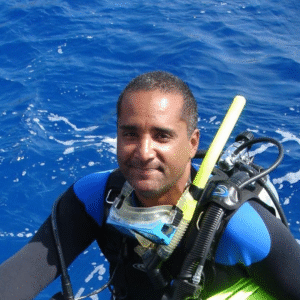
In a country facing extreme poverty and political instability, Jean Wiener brought communities together to create Haiti's first marine protected areas. He helped local fishermen and families understand how protecting their waters, fisheries, and mangrove forests today would benefit generations to come. He was awarded the Goldman Environmental Prize in 2015 for successfully creating the Three Bays National Park, Haiti's first marine protected area.
As the founder of the Marine Biodiversity Protection Foundation (FoProBiM), Haiti's only nongovernmental environmental organization focusing on coastal and marine areas, Wiener has worked tirelessly to balance conservation with community needs. His approach shows us that effective marine conservation must involve local communities as partners, not obstacles, in protecting precious water resources.
Mina Rhoden
Trailblazing Open Water Marathon Swimmer
Mina Rhoden, an African American open water swimmer from Novato, California, completed her first marathon swim across Lake Tahoe in 10 hours 55 minutes, breaking barriers in a sport where Black athletes have historically been underrepresented. Her achievement demonstrates that excellence in open water knows no boundaries of race or background.
By taking on one of America's most challenging alpine lake crossings, Rhoden's courage to dive into unfamiliar territory continues the long tradition of Black Americans asserting their rightful place in every waterway. Her presence serves as powerful representation, showing that Black folks have always been making waves in America's waters.
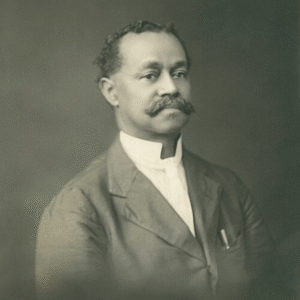
Dr. Charles Henry Turner (1867-1923)
Pioneering Aquatic Researcher
Dr. Charles Henry Turner was a groundbreaking zoologist whose research on aquatic life laid the foundation for modern understanding of marine animal behavior. Despite facing significant racial barriers in academia, Turner published over 70 scientific papers and became the first African American to have his research published in Science magazine.
Turner's work with aquatic insects, fish behavior, and marine ecosystems helped establish crucial knowledge about how water-dwelling creatures navigate, communicate, and survive. His dedication to scientific excellence, despite systemic exclusion, paved the way for future generations of Black marine scientists, and his research continues to inform conservation efforts and our understanding of aquatic biodiversity today.
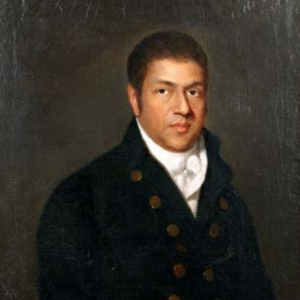
Captain Paul Cuffe (1759-1817)
Maritime Entrepreneur and Conservationist
Born to a formerly enslaved father and Wampanoag mother, Paul Cuffe became one of the most successful Black maritime entrepreneurs of his era. As a ship captain and owner, Cuffe understood the delicate balance between utilizing ocean resources and preserving marine ecosystems for future generations.
Cuffe advocated for sustainable fishing practices and responsible shipping methods, recognizing that the health of waterways was essential for both economic prosperity and community wellbeing. His legacy reminds us that Black leadership in water conservation has deep historical roots.
As we commemorate Juneteenth 2025, we honor both the freedom that came too late and the ongoing work to ensure that freedom includes access to all of nature's healing spaces. The conservationists we celebrate today remind us that Black leadership in water and environmental justice has always been part of our story.
From the pioneering research of Dr. Charles Turner to the contemporary advocacy of Dr. Tiara Moore, Black voices have shaped our understanding of water conservation and aquatic ecosystems. As we continue this legacy, we invite you to join us in the water—in learning, in healing, in connection, and in celebrating the freedom to access all that nature offers.
The outdoors is a place for everyone to connect with water, our shared history, and our community. What does freedom mean to you?

Our Future on Meetup
We have had a long relationship with Meetup. Over the years, we’ve used it to build community and manage our trips. It’s been a great tool. And, it will continue to be. Here’s how we’ll work with Meetup.com starting on May 30.
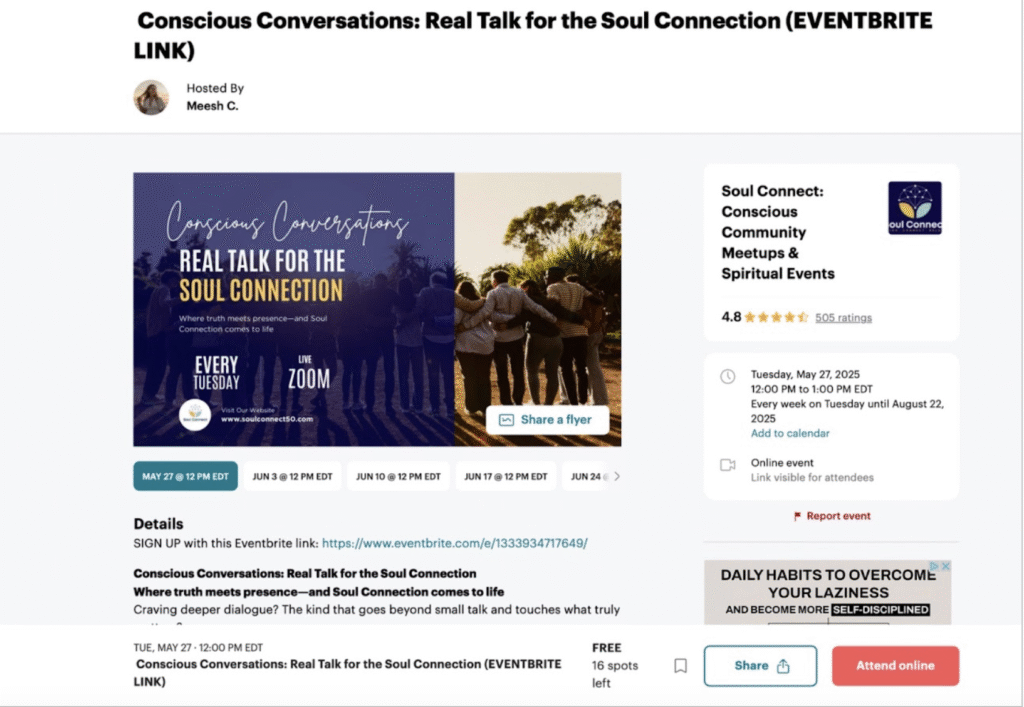
1. We are not leaving the platform. While we will create and manage all trips on the Outdoor Afro App, we will share our invites to our Meetup groups.
-
- We will no longer create trips on Meetup or manage registrations on Meetup.
- We will link to the trip on the App and request that participants RSVP on the Outdoor Afro App.
See examples below. They show users using links to Eventbrite in the same way we will use links to our App. Note: Though this technically violates T&Cs, there are many examples like this. We will follow suit.

2. We are not leaving participants behind. We’ve taken multiple steps to determine how many of the 80K followers across our groups are active and real. The first was to weed out incomplete and duplicate records and really old accounts. That got us to 71K. We began using e-waivers in January 2024 and have just over 5K records–the number of people who registered for trips during the 16 months since we began using e-waivers. We offered a giveaway as another way to ascertain how many members were active/real. Approximately 5K responded. Our hypothesis: Most of the member IDs/records are no longer active or no longer engaged. And still, we are not leaving Meetup.
3. Meetup will simply play a new role in our community development/management ecosystem.
-
- We will use Meetup to share invitations created within our app to Meetup members–just as we should be doing with our Facebook groups.
- We will use Meetup to promote our App to that community. Outdoor Afro’s Marketing team will post app promotions to all of Outdoor Afro’s Meetup groups with language that includes…To join a trip, you must RSVP on Outdoor Afro’s Free App.
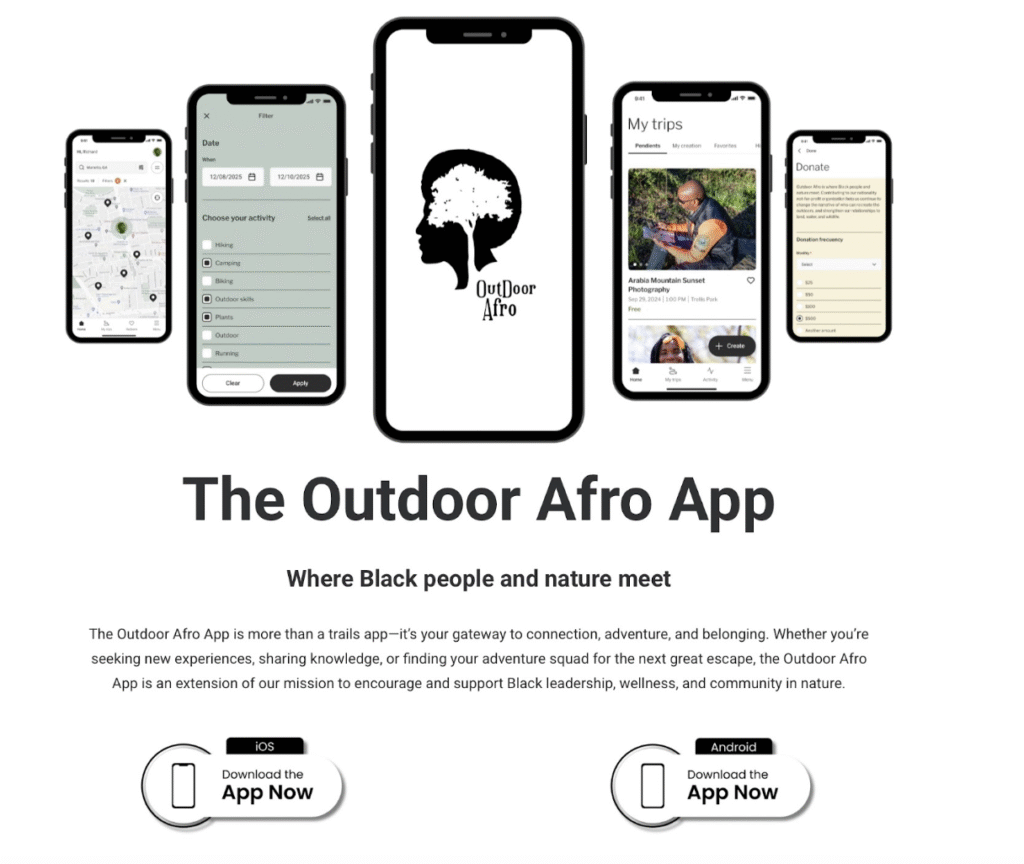
4. It is time to own our own platform and relationships with online communities. We live in an age where people find their information from multiple sources–and where many of those sources have made it acceptable to disrespect Black people. Just as we have in our journey to date, we will continue to captain our own ship. The Outdoor Afro App enables this and brings something new to the lifestyle and fitness app ecosystem–an app for Black people who love nature, for connecting Black nature experts, nature lovers, and nature nerds across the US.
-
- We are now moving full steam ahead with promoting the App. We believe it is our future. We are sharing it in our newsletters. We will share it in the post-trip surveys that participants complete. We will email and, where allowed, text participants to ask them to join us on the App.
- We ask that you share it with all of the participants with whom you engage across all social media platforms–and with others in your personal social media, community, and professional networks.
You have been critical to Outdoor Afro’s success to date, please stick with us. We are updating the App weekly in response to your valuable feedback and in accordance with our product roadmap designed to serve 47M Black people–or at least the nature lovers among us.

Outdoor Afro App: A Natural Moment of Change Management
Volunteer Leaders,
Once again we find ourselves in the throes of change—within Outdoor Afro and in our country. At Outdoor Afro, we are driving change in order to get closer to achieving our mission. As you know, our mission is inspiring and connecting Black leaders in nature. And we mean ALL Black leaders and every nature setting. To accomplish our mission, we’ve built the Volunteer Leader Program which you so ably execute and innovate daily in your communities; the Making Waves Program which enabled us to remove barriers to enjoying water and waterways for Black children and their families; and now, the Outdoor Afro App, which will enable us to reach all 47M Black people (well beyond what we can reach with our 128 volunteers and staff).
Our journey has taken us from a single blog to 70+ social media pages and 200,000 followers across all of our accounts. We have the most volunteers in the most markets that we’ve had in our history. We are offering the most diverse set of activities we’ve offered in our history. Yet, we are reaching a small fraction of the 47M Black people who live in America. And that’s at a time when what Outdoor Afro offers as a Black community—and to a Black community—has never been more needed and more valuable. We inspire and connect Black leaders in nature by providing community, expertise, and opportunity to safely and joyously explore whatever interests them in nature. At this time in our country, this is medicine, therapy, wellness, and peace.
It is also rebellion in the opinion of some and revolution for others. It is also the perfect time to own our platform—to create a space where we can continue to be beautifully, peacefully, intentionally Black and connected in nature. Our Outdoor Afro App is our strategic bet on how we can reach and serve every Black person and community, how we can provide community and expertise even where we don’t currently have volunteers, and how we can avail Black people of the resources we’ve cultivated as an organization (free/discounted gear, access to venues, training and certifications, knowledge exchange, etc.).
To make this bet pay off for us and the communities we serve, we need you. We need you to continue to do the amazing trip planning and leadership, to continue to nurture and grow the community, and to share what you’ve learned...on the Outdoor Afro App.
We understand that this is a change—an important change that we as a staff and you as Volunteer Leaders must navigate together. To that end, here are the major curves and milestones on the road to change.
-
May 30 - All trips must be posted on the App. No new or additional trips should be posted on Meetup after May 30. If you have a trip that is posted now but scheduled for later, please do not delete it; duplicate it on the App.
-
Meetup should continue to be used in the same way that we use other social media accounts—as a place to share our invitations and promote trip participation and donations to continue to support the Volunteer Leader Program and Making Waves. Please share/syndicate your trip invites to the Outdoor Afro Facebook groups.
-
Additionally, please note that you can now share the trip invitations to any social media platform and share them in emails or blogs, we hope that you will share these to all social media groups of which you are part and to which Outdoor Afro is relevant. For example, share your trips on your Linkedin feed so the folks managing their careers can discover ways to relax with us.
We will continuously update the App, fixing bugs, and adding new features that you and our community will love. Here are the most recent App updates:
On the app:
-
Added a collaboration form to the trip creation process (ability to share who they collaborated with)
-
Added a helper in the payment section of trip creation to inform the user about what each option means (this helper can be reused to assist users in other parts of the app)
-
Added trip cloning functionality (only the start and end dates will be required when cloning)
-
Now the start and end dates are entered in 15-minute intervals
-
Ability to add more than one co-leader, and ability to delete co-leaders
-
Now co-leaders can view and manage their assigned trips, just like the trip leader
-
The co-leader is now displayed in the trip view for end users
-
Improved ability to enter latitude and longitude, allowing users to tap a button to get full address details
-
Added vetted spots, always visible on the map
-
Ability to select the text for a trip or vetted spot description
On the share service:
-
Improved styles for not found trips and feedback.
-
Feedback is added as JIRA tickets when submitted.
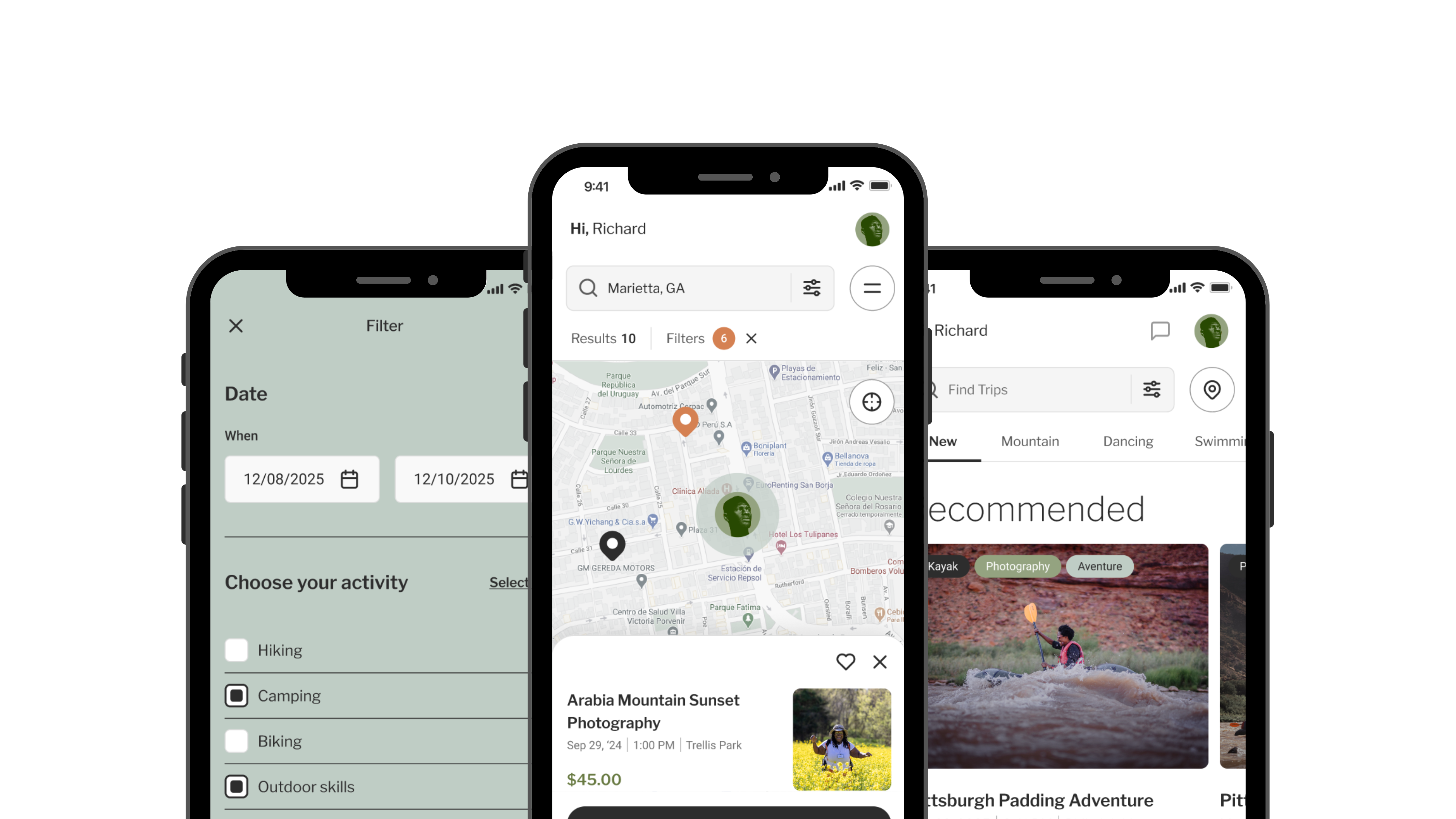
Post OALT25 App Update


- Google Play Store: https://play.google.com/store/
apps/details?id=org. outdoorafro.app&pcampaignid= web_share
- Apple App Store: https://apps.apple.com/
us/app/outdoor-afro/ id6743444433
- Make sure that you are building your profile and trips. Trips can be kept in drafts, but start to upload your upcoming trips to the app.
- Spread the word about the app to your Outdoor Afro networks and beyond. The app is live on all platforms, but there are still some bug fixes, so we are waiting a bit longer before doing a hard launch to the public.
- Read the Outdoor Afro App Cheatsheet linked below.
- Continue to submit feedback and questions (thank you so much!!!).
- If you have events coming up in early May and need to be give access permission on Meetup, please [email protected] know ASAP.