Outdoor Afro’s Georgia networks offer silver- and small-screen views to capture nature, Southern living
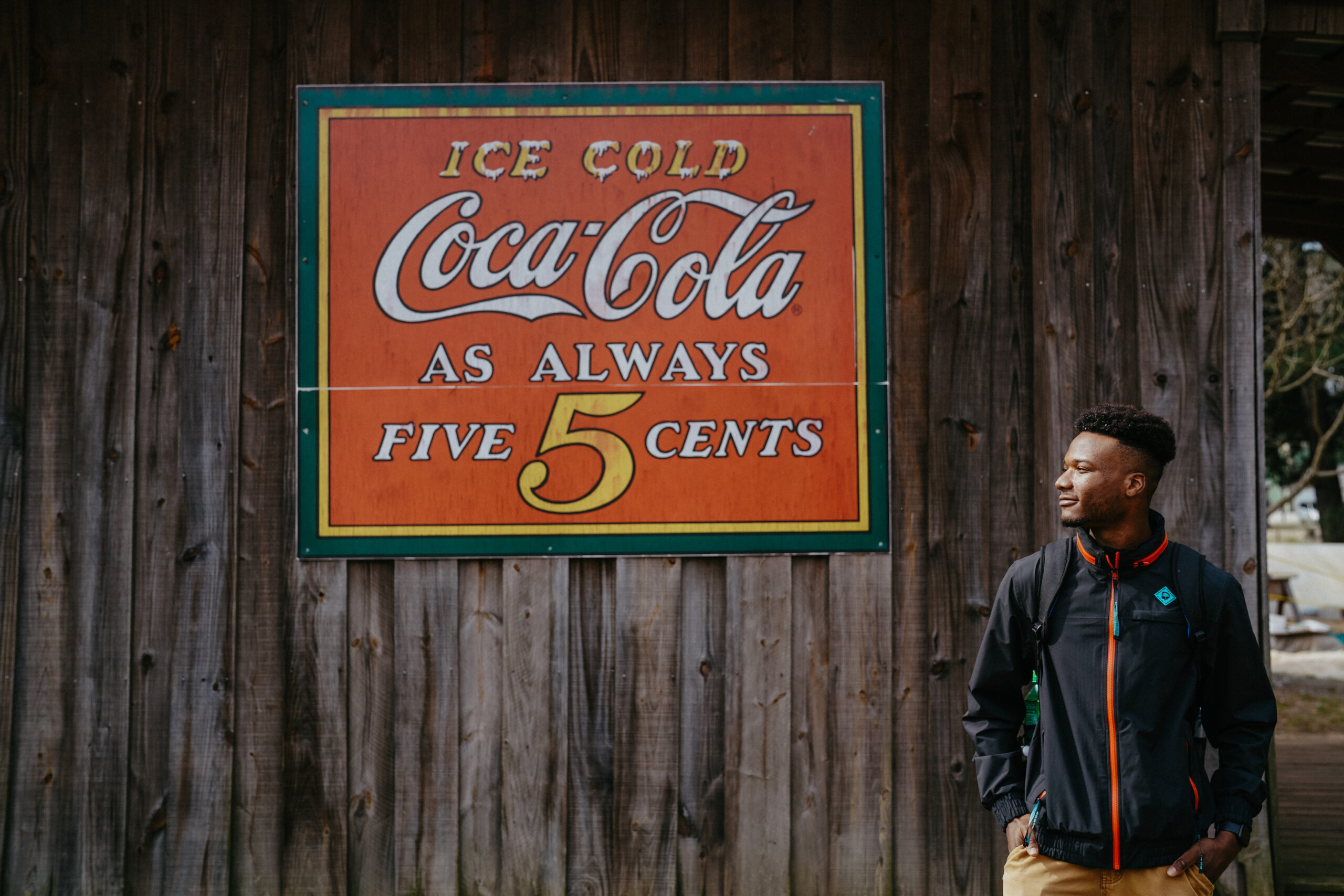
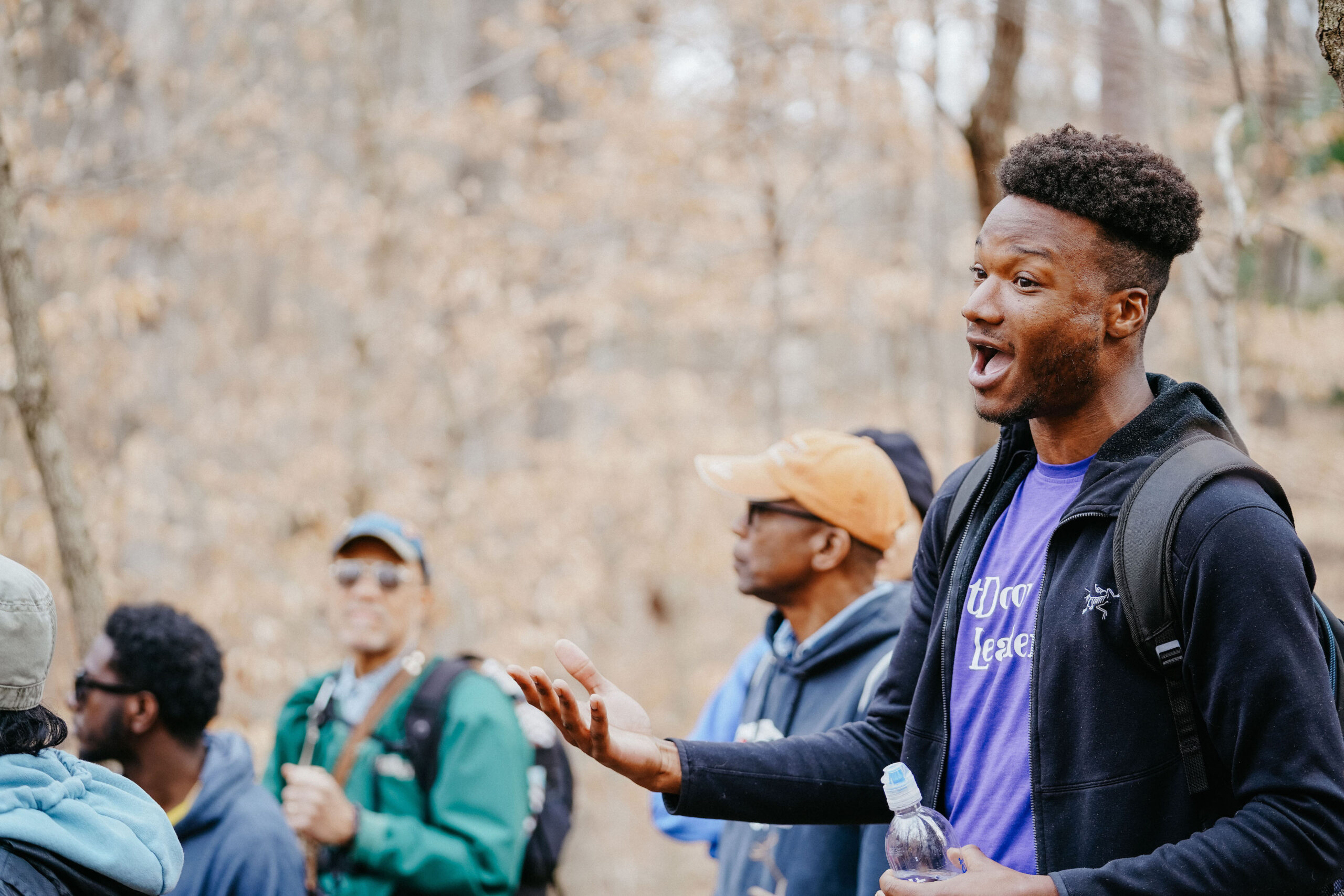
The future naturalist framed up the plant IDing scene with such fervor. Conviction. Even care. Every google-eyed expression and conductor hand gesture queued plant life. As if it was taking center stage. His soft smile pulled community participants into the Lionel Hampton Greenway Trail. The old-growth storyline voice-overed by Southern hospitality. “So, this is actually turkey tail mushrooms,” said Outdoor Afro volunteer leader Dajawn Williams, 27, “and guess what? It’s edible.” “Edible!” One hiker blurted in the background with an unsure side eye. Williams’ grin deepened with a few promising head nods. Oohs and ahhs then bounced around the forest floor. Promptly, he waved the group of 23 local explorers into a direction of more shocking nature sights along their 2-mile urban wander. This Feb. 10 Black History Month activity taught Atlanta attendees how to recognize special species within their Outdoor Afro network and neighborhood greenspace. The experience also unearthed Black contributions connected to the nature preserve.
To that point, the greenway trail is named after former landowner and famous Black jazz musician Lionel Hampton. Hampton donated much of the right-of-way for the trail during 1993. Designed today for cycling, hiking, agritouring, and picnicking. The historic Black district and site on Atlanta’s west side features the most archaeologically significant Civil War trenches in the region. “This area’s infrastructure included a mill, cemetery for enslaved Black people, and a rock quarry,” said guest speaker, naturalist, and local historian James Tyler. “After the Civil War, Black farmers who lived south of Atlanta moved up to become railroad and mill workers.” Over time, these stories evolved into backdrops to what’s now designated as the “Hollywood of the South.” It’s been more than a decade that metro Atlanta’s mushrooming film and TV industry generated blockbuster momentum. Primarily because of the Peach State’s benevolent tax break.
Major studios popped up and big-budget projects like “The Hunger Games,” “The Walking Dead,” and the Marvel franchise settled into their new Southern home. During 2022, Marvel’s “Black Panther: Wakanda Forever” became the highest-grossing movie with a female superhero lead at the U.S. box office – the latest example of the high-earning films attracted to Georgia. In recent times, production opportunities have tapered off for some creatives, too. However, Gov. Brian P. Kemp reassured Georgians that the silver- and small-screen industry is forging ahead: “Georgia remains a global leader in film, TV, and streaming productions,” said Kemp in a Sept. 13, 2023, press release by the Georgia Film Office. “Those who benefit most from the significant growth we’ve seen in this industry over the past couple of decades are hardworking Georgians who fill the many behind-the-camera jobs that come with each project. That’s why we’ve worked hard to attract these and other opportunities for those who call the Peach State home.”
Last year, the state celebrated 50 years of the Georgia Film Office, a strategic post within the Georgia Department of Economic Development that helps mature Georgia's film, TV, and commercial production industries through marketing, scouting, and coordinating project needs. The office reported productions spent $4.1 billion in Georgia during fiscal year 2023. Between July 1, 2022, and June 30, 2023, the state hosted 390 productions, represented by 31 feature films, 55 independent films, 40 commercials, 23 music videos, and 241 TV and episodic productions. Travel an hour and some change south into Middle Georgia where Outdoor Afro participants have the chance to explore newer rural trails, farm life, and film tours later this year. Williams’ next stop: Dauset Trails Nature Center in Jackson, Georgia – a 15-minute ride away from where Netflix's hit sci-fi drama series “Stranger Things” filmed. The nature center provides mountain and e-bike courses; backpacking and camping; and farmstead sightseeing.
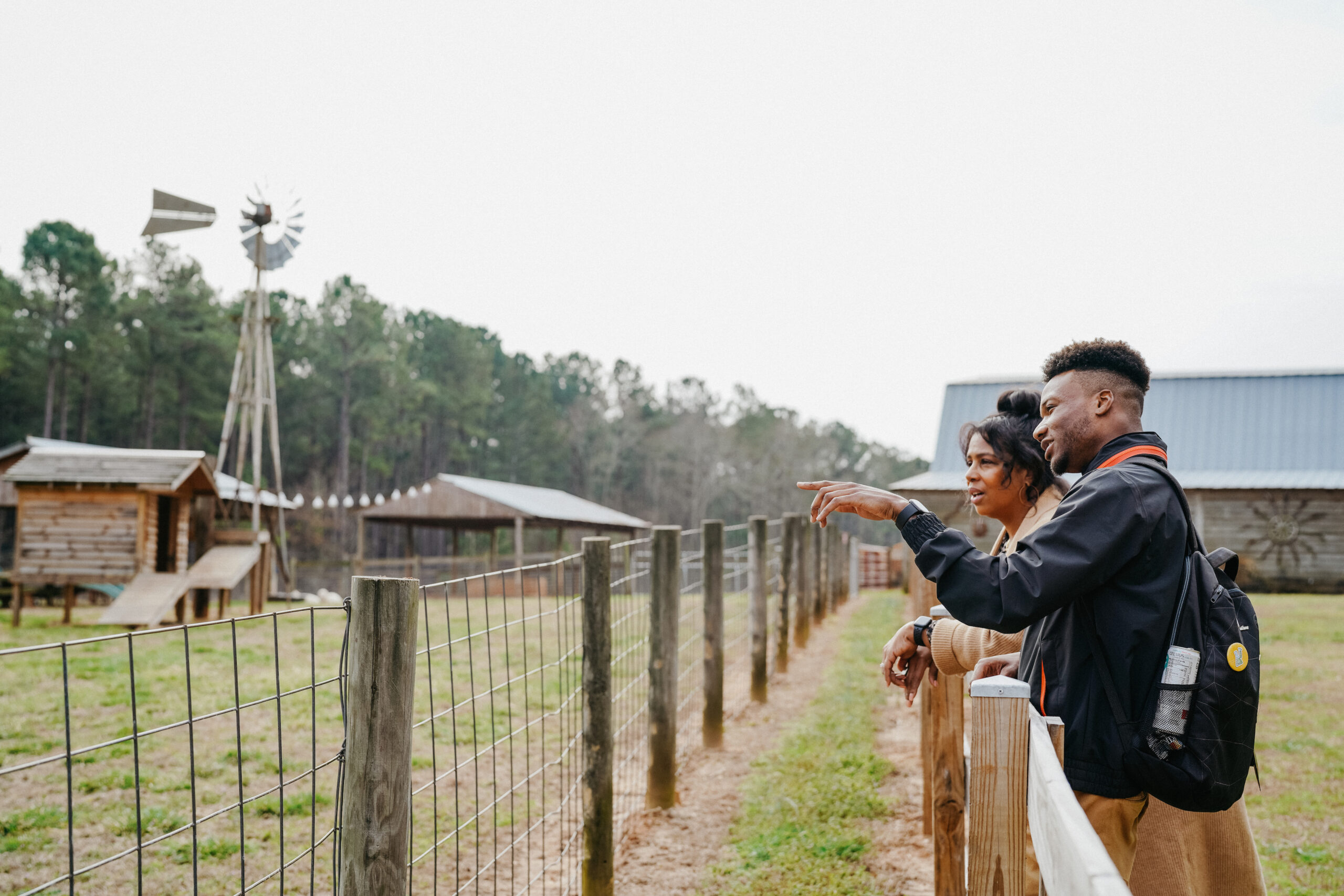
Williams linked up with Outdoor Afro’s Founder and CEO Rue Mapp at the nature center. The two went on a site visit to reimagine what foraging, farming, and family-centric activities could look like for his network and others in the organization’s “Year of Innovation.” “I’m continually in awe of the natural resources found in our volunteer networks,” said Mapp. “To visit places like Dauset helps people discover opportunities to reconnect to nature close to home, and be inspired by the natural and human history you can always find in these places.” For 15 years now, Outdoor Afro has celebrated and inspired Black connections and leadership in nature across the United States. The national not-for-profit organization reconnects Black communities to outdoor conservation, recreation, and education through networks located in 60 cities and 32 states, including Washington, D.C. By way of more than 1,200 planned and hosted network activities, volunteer leaders like Williams reintroduce more than 60,000 people to the outdoors annually. “We’re on a journey to reach more rural and urban communities,” Mapp said. “Nature, travel, tourism, and the shows and movies we all grew up on are ways to imagine new connections.”
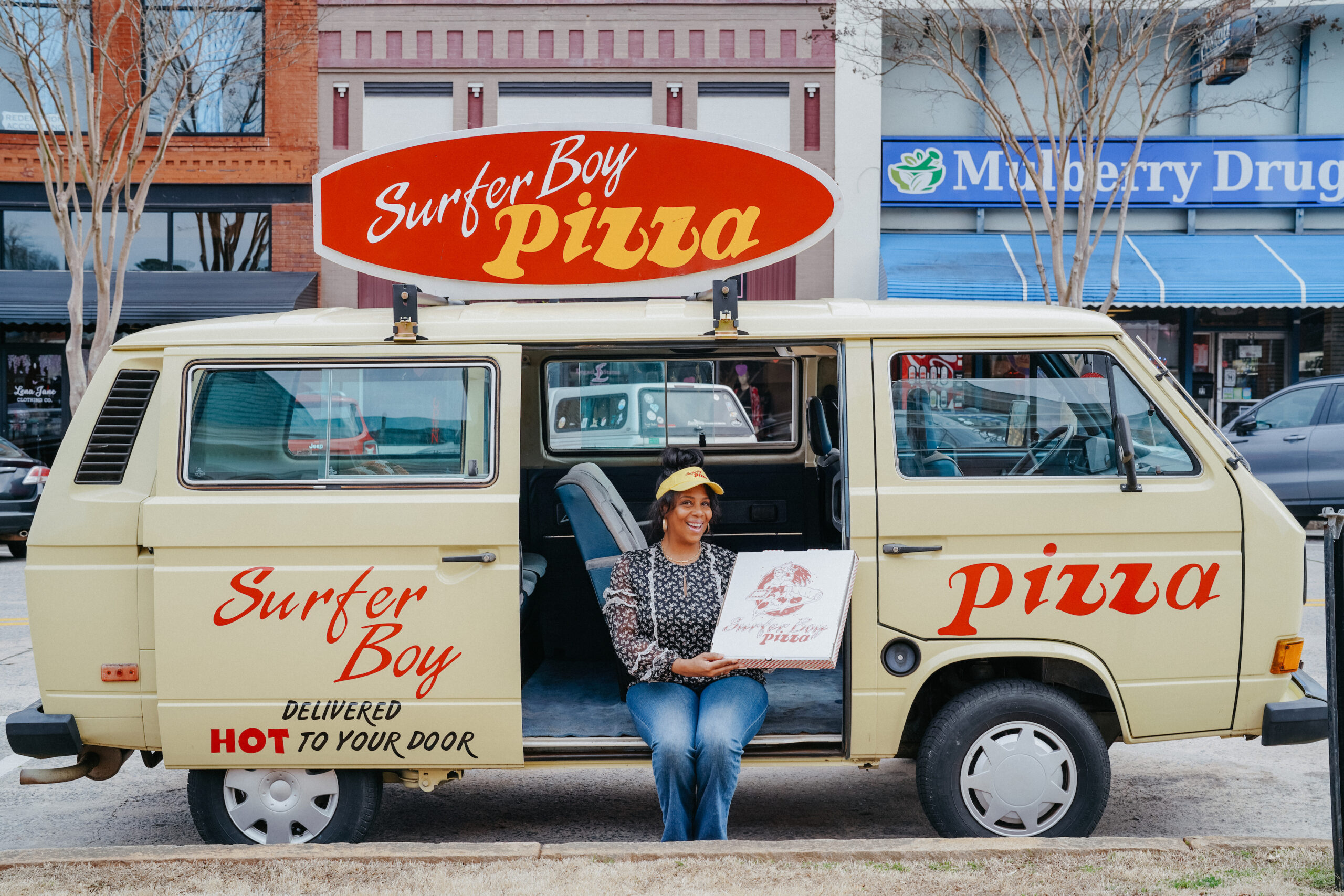
After Dauset Trails, a truck ride to downtown Jackson (the state’s outdoor capital) zapped Mapp into the make-believe town of Hawkins, Indiana, from the TV show “Stranger Things.” She toured real-life locations, replaying memorable scenes from the series’ Hawkins Library, back alley, and Radio Shack. The coolest Outdoor Afro clip of the day: Mapp propped with a pizza box and visor inside the iconic Surfer Boy Pizza vanagon, a.k.a. Pizzamobile. Headed back south on U.S. Hwy 23, a pitstop to Juliette, Georgia, revisited Cicely Tyson’s role in the 1991 comedy-drama “Fried Green Tomatoes.” Where the movie’s Whistle Stop Cafe is still open for business and serves Southern cuisine – most notably, of course, the menu’s crispy fried green tomatoes. Described in one word: De-lish! The final destination for Mapp’s agritourism and film-guided driving tour traveled 42 miles east along backcountry roads to Milledgeville, Georgia. The fourth capital of the state and where actress Julia Roberts’ character, Vivian, in “Pretty Woman” said she came from.
Mapp drove through camera-ready site Central State Hospital. Established in 1842, the campus became known as the “world’s largest mental institution” by the 1960s. It included more than 12,000 patients, 6,000 employees, and more than 8,000 acres of land. By 2010, the dilapidated complex closed. Four years later, “The Originals” (spin-off to The CW Network’s “The Vampire Diaries”) filmed episodes at the hospital. Interestingly, the eerie site still produces a pecan grove that attracts the community, schools, and families to year-round nature activities. “That’s the thing about nature,” said Reginal Black, 59, who joined the Feb. 10 Outdoor Afro plant IDing activity. Black relocated to Atlanta from California to live closer to family. “Nature ties us all back to our local histories and community stories,” he said. “Why I’ve been attending network events like this one with the organization and Rue since 2009.”
SUPPORT OUR STORYTELLING SERIES
ABOUT OUTDOOR AFRO: Outdoor Afro is a national not-for-profit organization that celebrates and inspires Black connections and leadership in nature. What started as a kitchen table blog by Founder and CEO Rue Mapp in 2009 has since grown into a cutting-edge nationwide organization. Outdoor Afro’s U.S. networks include nearly 100-plus volunteer leaders who guide nature activities in up to 60 cities with network participation reaching 60,000 people annually. Outdoor Afro reconnects Black people to the outdoors through outdoor education, recreation, and conservation. Connect with @outdoorafro on social and visit outdoorafro.org to follow our year-round nature narratives.

October's Bird of the Month
By Douglas "Birdman" Gray, Outdoor Afro Contributor

As I reflect on my personal birding over the last month, I have to say it was a very good month. My last 30 days ofbirding reinforced something I've shared with folks before, "September is my favorite month for birdwatching in Indiana." The month of May is probably most folks’ favorite birding month. With many migrants passing through not only singing, but also in their full breeding colors, it's easy to understand why.
It was such a good month that I'm sitting here scanning my Month List, and I must confess, I'm having a somewhat difficult time picking out a "BOTM". I've seen some GREAT birds! But alas, I must choose so, here we go.
This month's Bird of the Month is the American Avocet.
This long-legged shorebird has a striking black and white pattern on its back and sides. It also sports a long, up-curved bill that makes it one of our most unique looking birds.
We don't get many chances to see this beautiful bird in Indiana, but at least one has been fairly cooperative over the last 3 weeks down at the Goose Pond Fish and Wildlife Area (GPFWA) near Linton, Indiana. If you have an opportunity to visit GPFWA and possibly see this wonderful bird, I think you should take that chance. Even if you go and do not catch sight of this particular bird, I think you will find the trip well worth it just because of all the other cool birds you will surely see. Without a doubt, GPFWA is one of the premier birding spots in the entire state.
I find it interesting that while we don’t get many chances to see American Avocets in Indiana these days, historically the bird was known to nest in Indiana. The famous John James Audubon, whom we can consider the father of modern day birding, once rose up early one morning to approach some Avocets that were sitting on nests near Vincennes, Indiana. He wrote back in June of 1814, “Lovely bird, how unsuspecting, and yet how near to thine enemy…” (Here we must excuse ourselves and leave Audubon to his early work as he shot five Avocets. We must remind ourselves that in those days, before good photography and good binoculars, shooting birds was the only way to examine them in detail…. and we must also remember that there was a time when these birds were probably so plentiful, that thought was never given that they would ever become a rarity. Let us always consider the importance of conservation.)
September!!! What a great month to bird. My second favorite month? October!!! I look forward to next month…

Douglas “Birdman” Gray has been birding almost all of his life. He grew up on a family farm near Clarksville, Tennessee, where they grew crops ranging from apricots to wheat, and most things in between. They also raised chickens, guineas, pigs, horses, and a cow named…….Apples. Doug’s grandfather identified the birds they would see daily on the farm.
Doug now resides in Indianapolis and works in Parenteral Engineering with Eli Lilly and Company. Most of his current birding takes place in Indiana, with a concentration on Central Indiana, where he leads bird walks for “Backyard Birds”. Doug can be reached at 317-255-7333.
Douglas "Birdman" Gray
"African Americans have a somewhat unknown heritage in the historical realm of birding"
 Outdoor Afro interviews Douglas Gray, an avid birder, who shares in his own words the gratification he experiences birding, and why it is an important and relevant activity for anyone.
How did you develop an interest in birds?
My interest in birds started as a young child. I grew up on my grandfather’s farm outside Clarksville, Tennessee (actually Woodlawn, Tennessee, but “Woodlawn” is a lot harder to find on a map!). Naturally I would see many birds on the farm, and I’d ask my grandfather, “Granddaddy, what’s the name of that bird?” My grandfather, who only had a 6th grade education, somehow knew the names of all the birds we would encounter on the farm. I’m sure that’s what initiated my interest in birds. I’ve been told I don’t “look” like a bird watcher, so this question is probably the most frequent question I get asked.
Where is your favorite place to look for birds? And where in the world would you like to bird you have yet to visit?
Many times I’m looking for a particular species of bird, so many times my “favorite place to look for birds” is the particular habitat of the bird I’m searching for. However, if I “had” to pick a specific spot, it’s going to probably be in the southern United States. This past fall I went birding at a place called Merritt Island National Wildlife Refuge in Florida…and had one of the best birding times of my life. I look forward to returning there soon and often. I like birding at National Wildlife Refuges across the US.
I would absolutely LOVE to bird throughout Central and South America, and also Africa. I’m also developing a good birding relationship with a friend who lives in Uganda, and will likely be going there next year.
Why should African Americans take an interest in birds and their habitat?
 This is an interesting question. African Americans, like everyone else, should take an interest in birding, because it puts you “outdoors” and anytime one gets in the Great Outdoors, it is a natural stress reliever. Being out in nature is possibly, I believe, the most calming, relaxing, and unwinding thing one can do. It really helps put our sometimes fast paced and hectic lives into a better and more realistic prospective by slowing us down. And while out in nature, what better thing to do than bird? Yes, I’m using “bird” as a verb; I suggest the book, “The Verb To Bird".
And also, we African Americans have a somewhat unknown heritage in the historical realm of birding. John James Audubon is the “Godfather of American Birding”. Audubon’s mother was not well known. The reason for this is because she was a Creole slave. Audubon was born in Haiti in 1785.
Wow -- that's fascinating. So, if someone were to get started, what are the three most important things they need to have? Is it easy? What are some barriers (if any)?
I believe the three most important things to have in getting started birding are: 1) Binoculars, 2) Identification Guide, and 3) Desire. Binoculars are important because birds have no particular interest in folks approaching them and observing them. So the binoculars allow you to see birds up close, without actually having to be up close to them. I usually tell folks to get a decent pair of binoculars. You can get a decent pair of binoculars in the 60-100 dollar range.  A bird identification guide is a very useful tool also. It will greatly assist in identifying the birds you do see…and just aren’t sure what they are. And having a desire to see birds will never be extinguished. Birding is a pursuit that will easily last a lifetime. A very close fourth item is to go birding with more experienced birders. Birders love passing along knowledge they’ve gained through experience. Find a free bird hike in your area by checking out the National Audubon Society’s web site.

Birding can be both easy and challenging. For example it can be easy identifying a bird as a “sparrow” that’s at your feeder, but it can be challenging differentiating the 3-5 different species of sparrows at your feeder, or the 20-30 different species of sparrows all within an hour's drive of the feeder in your backyard at different times of the year.
Anybody can birdwatch. There are no obstacles or barriers that cannot be overcome when the desire is there to see birds. (That includes obstacles like poison ivy and stinging nettle one may bump into off the beaten trail…lol.) I’ve even had folks on some of my bird hikes who have been constrained to wheel chairs…and some of those have been my favorite and most memorable hikes.
What was the first bird to make your ‘life’ list? What bird do you hope to see in the future?
I’ll answer this question by mentioning the bird that reignited my interest in birds. About 15 years ago I looked outside and saw a bird hopping around my yard and I had no idea what that bird was. It led me to buy my first Bird Identification Guide since my high school years. The bird was a juvenile robin. The very common American Robin was the bird that pulled me back into the world of birding.
Name a bird species you hope to see in the future:
Wow…I can’t even answer this question, because there are so many birds that I hope to see. I will say that it is my desire to see thousands of different bird species during my lifetime…and to enjoy and appreciate each and every one that I do see!

Douglas Gray resides in Indianapolis and works in Parenteral Engineering with Eli Lilly and Company. Most of his current birding takes place in Indiana, with a concentration on Central Indiana, where he leads bird walks for Backyard Birds.