
Washington Park
Washington Park in Milwaukee, Wisconsin is a unique outdoor destination. Historic urban park on the city’s West Side. It also holds special significance, serving Milwaukee’s Black neighborhoods and a hub for cultural events.
Recommended Activities: Visitors can enjoy cycling, fishing, and walking here.
Tips for a Safe & Enjoyable Visit:
- Check the weather forecast and dress appropriately.
- Bring appropriate licenses and follow local fishing regulations.
- Respect cultural heritage sites and follow Leave No Trace principles.
- Carry a repair kit and check your tires before riding.
- Wear a helmet and reflective gear for safety.

Wanderers Welcome: Tracking winter wildlife at Upper Saco Valley Land Trust with Outdoor Afro’s ‘Frozen Chosen’
Crunch. Crack. Crunch. Crunch. Crunch. Crack. Crunch. Crunch. The traction-spiked hiking boots shuffled at a potato chip chewing cadence. Oddly melodic as the animal tracking morning picked up pace. A warning from Outdoor Afro volunteer leader Mardi Fuller, 44, as she guided the March 2 New Hampshire winter experience: “Don’t consider moving to New England if you’re not a fan of winter,” the four-year leader said. “We have plenty of it throughout the year.” Winter sports to coincide as well: ice climbing, downhill skiing, snowshoeing, and mountaineering. All offered through Fuller’s Outdoor Afro Boston network. Community participants who sign up with Fuller are guaranteed innovative nature adventures with the diehard hiker. Sustainably and safely. During January 2021, Fuller became the first-known Black person to scale all 48 New Hampshire peaks – 4,000-footers – in the winter. See. In good hiking hands.
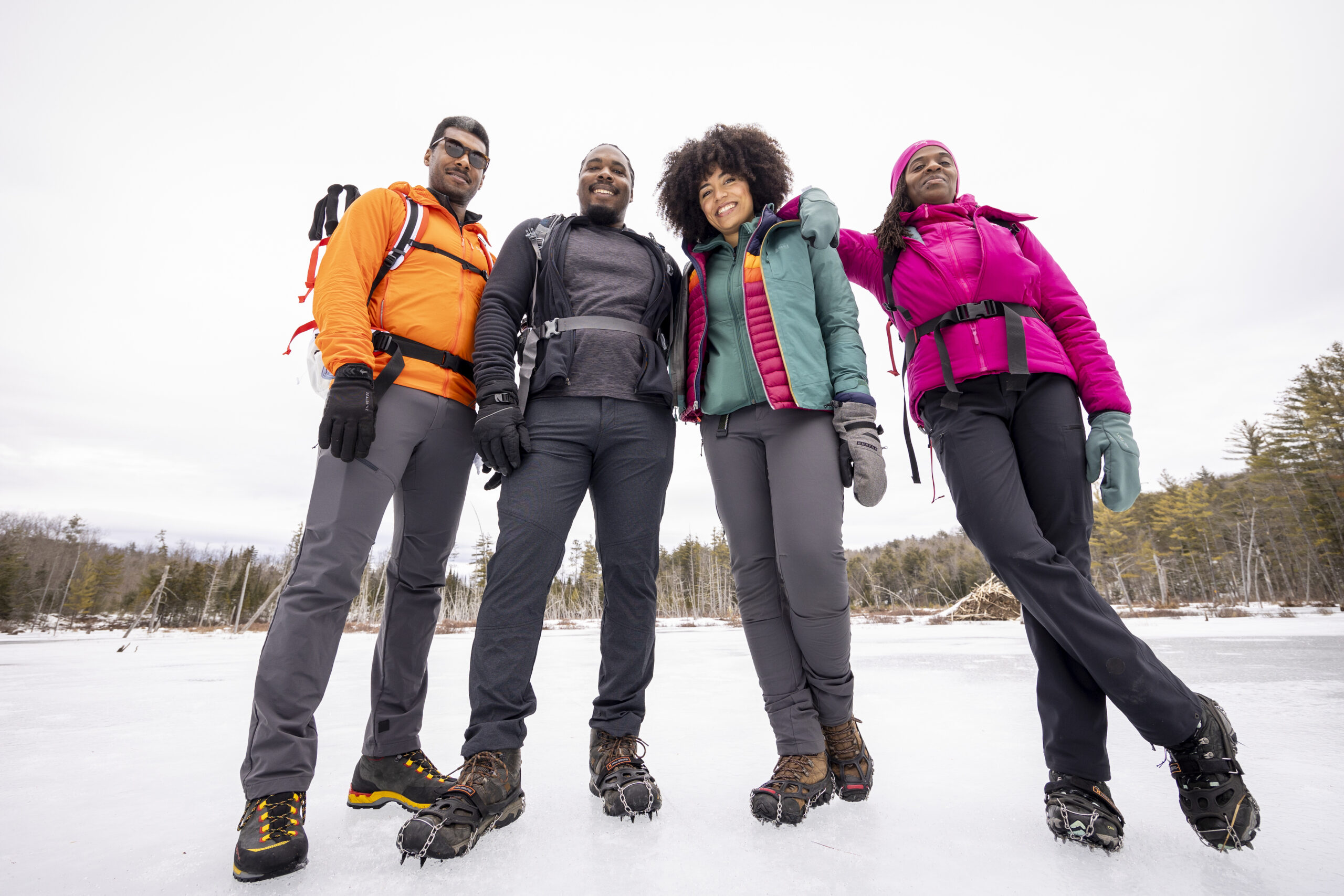
Annually, Outdoor Afro’s Northeast Region arranges area opportunities for cold-weather outings that help beat the “winter blues.” Recasting shorter days into celebrated, snowy moments with brand-new friends. “I’m a multitasker,” said Fuller. “The simple action of walking in the snow allows me to settle down and get into this meditative mind frame.” That Saturday, she exercised this form of nature medicine with three network frequenters – Xander Bennett, Keenan Augustus, and Thai Koenig (left to right in the above image with Fuller flanking the far right side). Better known as “The Frozen Chosen.” Together, the four toured the Chain of Ponds Community Forest Conservation Project. This soon-to-acquire property of Conway, New Hampshire’s Upper Saco Valley Land Trust blankets 625 acres. The land trust’s goal is to raise $1.3 million from local foundations, state grant makers, and individual contributions by November 2024 to purchase and permanently conserve the landscape.
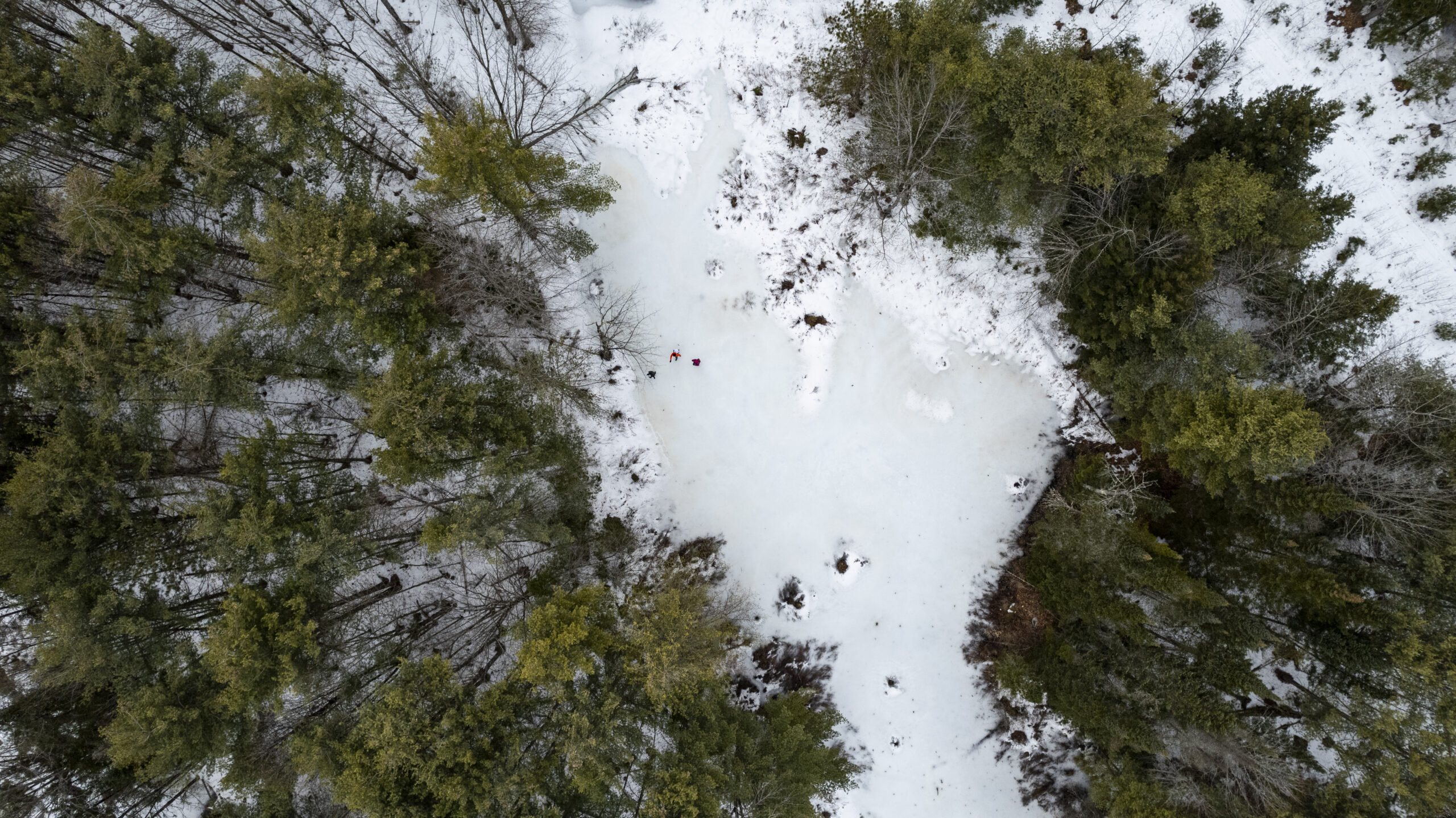
Chain of Ponds covers an ecologically significant glacial trough valley in neighboring Madison, New Hampshire. Connected to its forestland and inland waters, the project features headwaters of Pequawket Brook and Silver Lake’s North Inlet. The valley itself includes roughly 110 acres of wetlands; 25 acres of cliff and talus slopes; glacial eskers; surface waters and wetlands; 300 acres of mapped aquifers; and approximately 4 miles of surface water frontage along several streams and ponds. A peerless outdoor playground. Once the purchase completes, the public can access newer sites for biking, paddling, hunting (white tail deer, ruffed grouse, and small game like rabbits), fishing (Eastern brook trout and pickerel), and winter hiking. And only 3 minutes away from Madison Elementary School, experiential learning abounds. Mike Morin, 43, served as the land trust’s conservation director and assured that Chain of Ponds would become a nature backyard to a lot of local families.
The 20-year land conservationist added: “This site will provide interpretative education, allow us to implement better forest health management practices back into the community, and continue to expand our mission that already includes conserving other forestlands, popular recreation areas, and working farmland." The land trust developed in 2000 as a grassroots initiative to preserve land for community enjoyment and education. Specifically in the watershed of the upper Saco River in both Maine and New Hampshire. The following year it gained 501(c)(3) nonprofit status. Within a decade, the land trust preserved 38 land projects, doubling that number by 2019. To date, the trust has conserved more than 12,000 acres in its 11-town service area. Steadily advocating for local agriculture and water quality concerns as part of its mission work. Back at the Chain of Ponds site, the Frozen Chosen breathed in the 40-degree air (unseasonably warm for Northern New Hampshire in early March when 20 degrees is more likely) and trudged along an abandoned rail corridor.
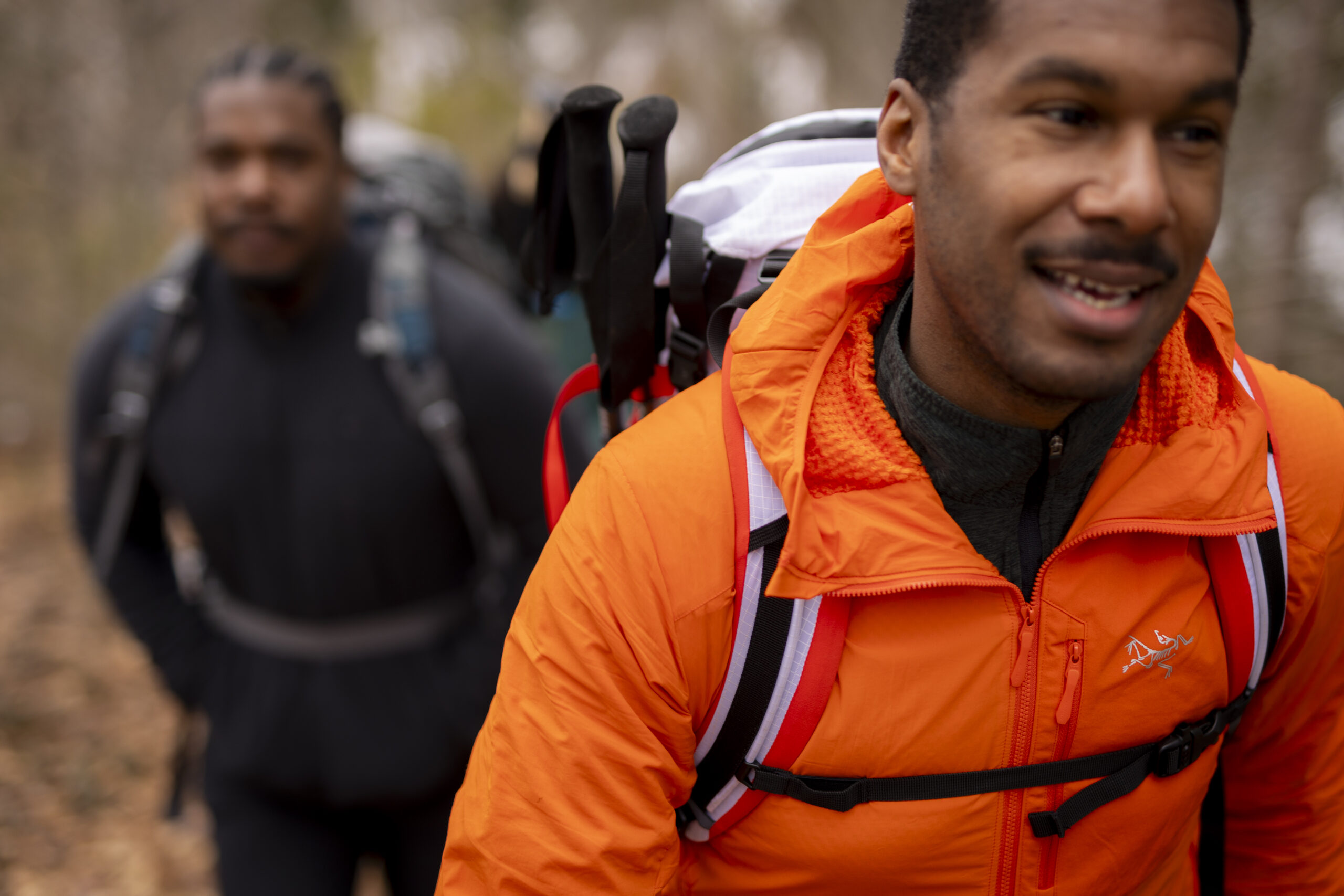
The track once carried traveling skiers from Boston to North Conway, said Morin. Part of the early 20th-century history of Gilded Age hotels like the Omni Mount Washington Resort and the beginning of the ski industry. A train stop to the left of the track brought the Outdoor Afro group to a beaver lodge on Cranberry Bog. Each whipped out their animal track pocket guides provided by the land trust’s Community Steward Carissa Milliman, 39. The former educator equipped the day’s guests with New Hampshire Fish and Game Department wildlife literature. “With this piece of land being so accessible, Chain of Ponds is a great place to connect with nature and find stillness,” said Milliman. Nothing matched the track patterns listed. The group tactfully circled and observed the conical-shaped beaver home. Then moved on. Two more ponds ahead: Blue Ponds and Mack Pond.
Chemical engineer Keenan Augustus, 31, advanced with excitement in his eyes. “You know,” he said with every microspiked step, “these types of activities with Outdoor Afro help me get back to our roots. Black people have always been travelers, explorers, and navigators.” Cold-weather comrade Xander Bennett nodded in agreement. Augustus has participated in Northeast network activities for almost two years now while Bennett entered his first year in 2024. Bennett’s introduction to Outdoor Afro started with an ice climbing event with Fuller earlier this year. Then, uphill skiing. “I previously approached the outdoors from individual activities,” said Bennett. “Mardi and Outdoor Afro have helped me gain the courage to get in this space through group experiences.” The win-win: learning new skills with folks who feel like family.
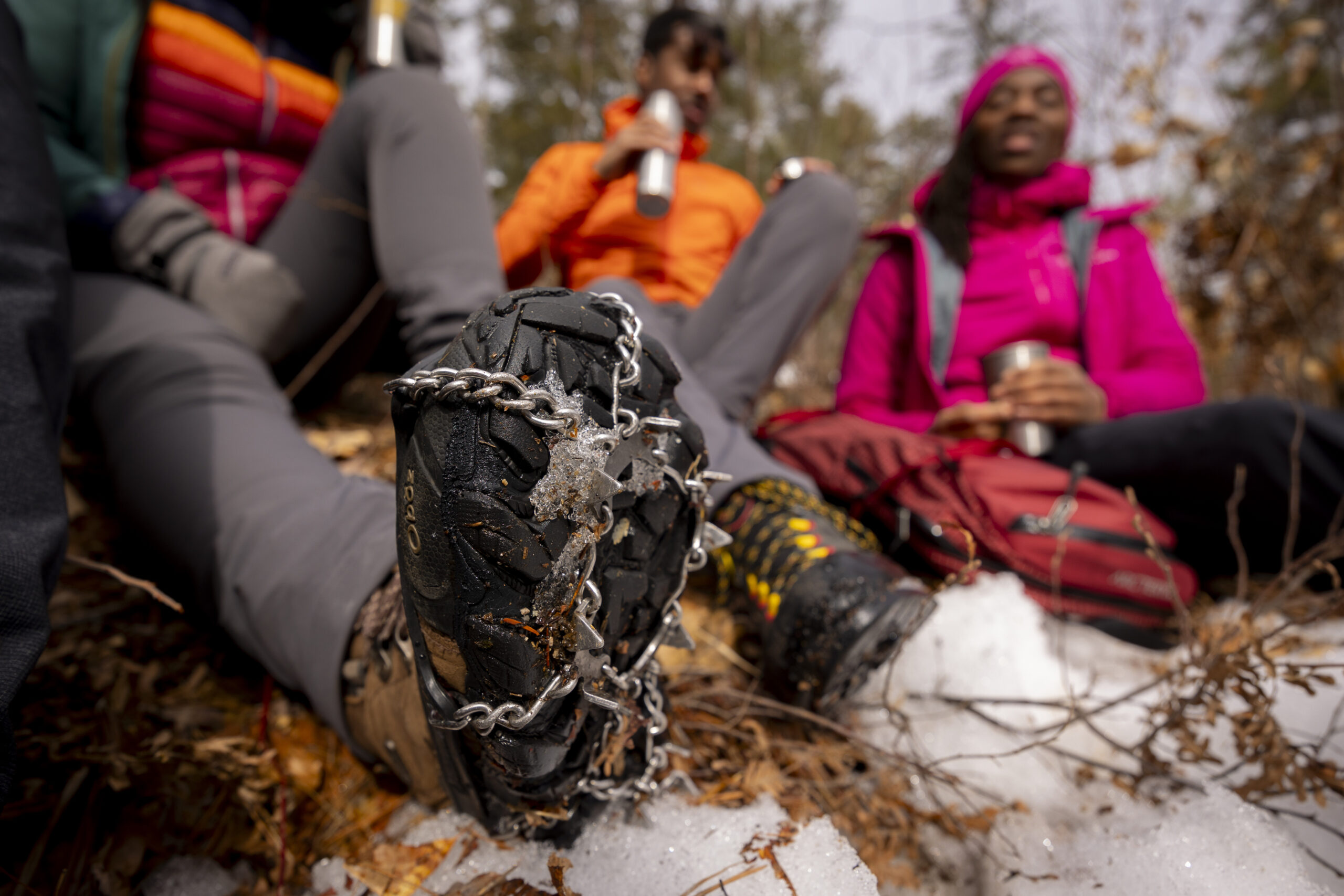
The Chain of Ponds camp took a break bankside for hot tea, snack bars, and more fellowshipping. Sharing favorable reactions to the property. Flashbacking to previous network fun. Already making new Outdoor Afro activity plans. The youngest of the Frozen Chosen, Thai Koenig, 24, dusted snow off her hiking pants, gathered her belongings, and started to lead the band back to the site entrance. But, wait! A scat IDing moment presented itself mid-trip. Was it a red fox? Bobcat? Coyote that traveled their route? The four couldn’t really figure it out from their wildlife scat cards. The majority leaned toward the red fox. Good guesses. “It’s so important to build community like Outdoor Afro does,” said Koenig, all smiles. “Our network is always happy. Mardi makes me feel comfortable and safe while trying something new.”
ABOUT OUTDOOR AFRO: Outdoor Afro is a national not-for-profit organization that celebrates and inspires Black connections and leadership in nature. What started as a kitchen table blog by Founder and CEO Rue Mapp in 2009 has since grown into a cutting-edge nationwide organization. Outdoor Afro’s U.S. networks include nearly 100-plus volunteer leaders who guide nature activities in up to 60 cities with network participation reaching 60,000 people annually. Outdoor Afro reconnects Black people to the outdoors through outdoor education, recreation, and conservation. Connect with @outdoorafro on social and visit outdoorafro.org to follow our year-round nature narratives.
Network leaders educate National Capital Region about health advantages of fly fishing
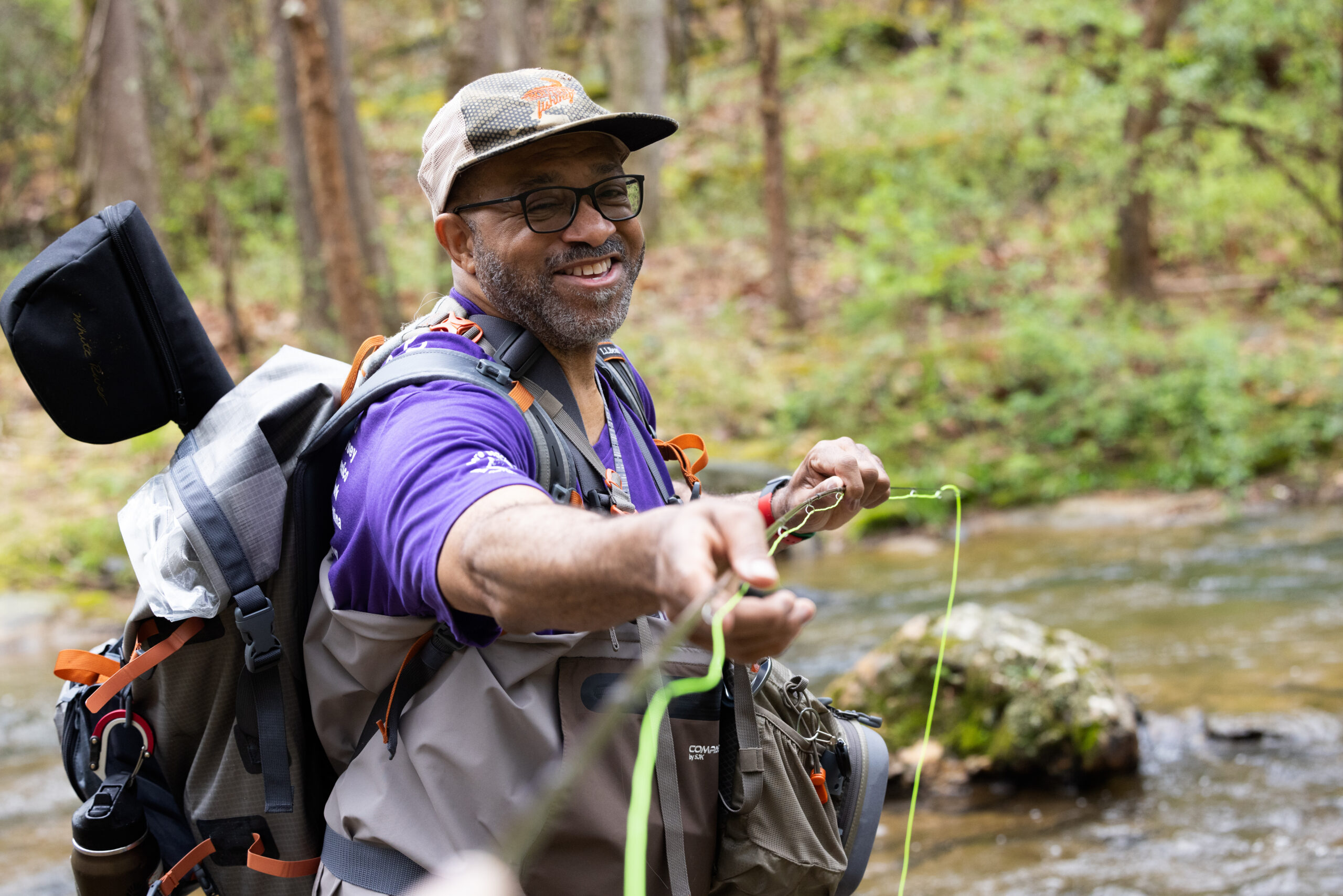
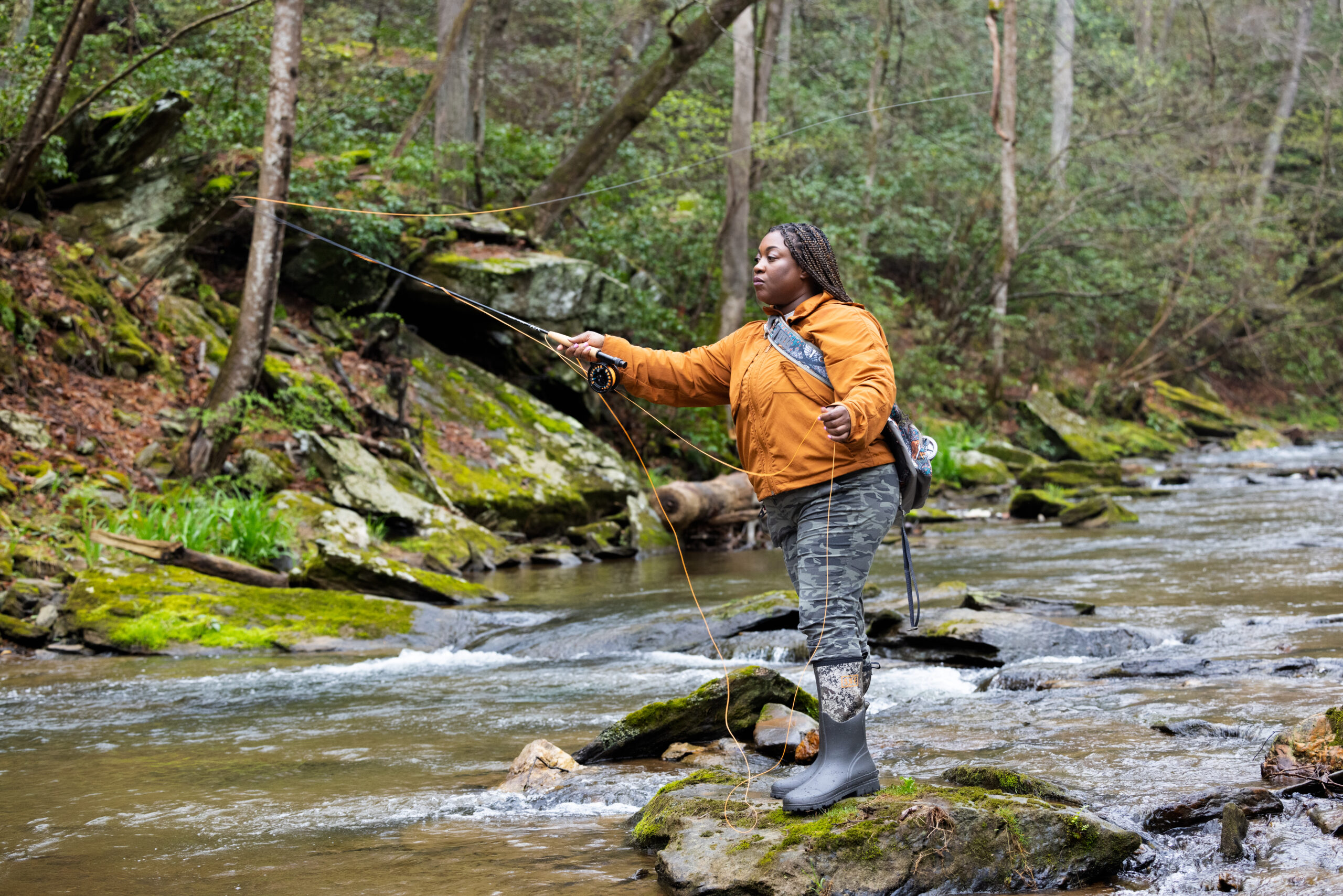
Daybreak casts patience. Reels in Black joy. Seven District of Columbia, Maryland, and Virginia participants trailed two Outdoor Afro volunteer leaders to experience these favorable side effects. Their April 15 waypoint: Maryland Department of Natural Resources’ 1,930-acre Morgan Run. Leader Raymond Smith Jr., 62, huddled the enterprising fly fishers to set activity expectations at the natural environment area: “Today, we’re going to work on our approach, mending, high sticking, setting the hook, and reading the water,” said the now nine-year volunteer leader and sophisticated fisherman. “We want tight lines.”
The group nodded then looked both ways before crossing Klee Mill Road. Once everyone cleared the street, they hooked a left. Trooped over a 9-foot-long wooden, jury-rigged bridge. Both Smith and co-leader Antonio Simmons, 51, guided their beginner fishers downstream, asking them to file off at earmarked openings along the path. "Give yourself space to practice your technique,” said Simmons. “Let’s see if we catch some trout.” Fly fishing counts as one of 1,200-plus nature activities hosted through the national not-for-profit organization’s Outdoor Afro Leadership Team.
More than 100 volunteer leaders help Outdoor Afro achieve its 14-year mission: celebrate and inspire Black connections and leadership in nature. This particular event invited local participants to learn fly fishing basics in their nature-shared backyard. “I remember watching the fly fishing film ‘A River Runs Through It’ in the ’90s,” said novel fisher Sarah Neal, 55. “What stood out to me in that movie was the characters talking as a family and the calmness that came with fishing.” Neal also thought this type of experience was something she couldn’t afford to do — until she attended her first Outdoor Afro event four years ago.
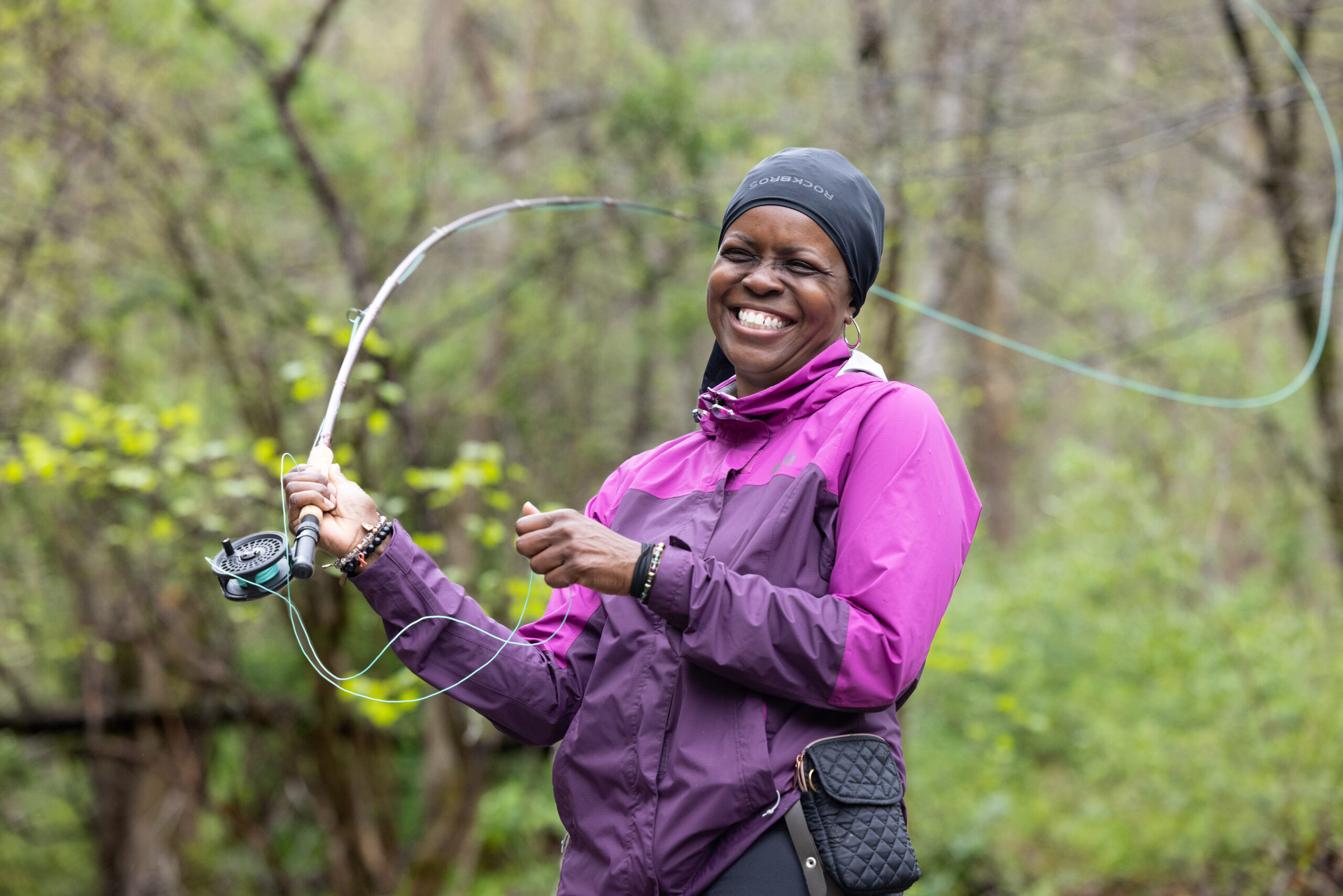
"Outdoor Afro taught me that most of the activities out here aren't so expensive as I initially assumed," said the elementary school educator. Neal has camped with Outdoor Afro. Even learned how to make deer sausage at a previous network event. While Smith continued to chaperone other participants downstream, Simmons held back with Neal and cautioned: "Pay attention to your surroundings before you cast," said the five-year volunteer leader. "We're in a wooded area with a shaded cover."
Neal surveyed the location and found her bearings. Set up her fly rod and reel. Fumbled to hook her fly a few times. Finally ready: She attempted an overhead cast. Again. And again. And again. And again. Her rod mimicked an insect as it hit the water. “Yes, fly fishing is ‘active’ fishing,” Simmons said to remind Neal of her good efforts. “Constantly mend and strip the line.” Nothing. After many misses, still nothing. Just six months into the sport, Neal accepted her repeated results with a twinkled grin. Tee-hees in between.
Natural reactions Outdoor Afro commonly pulls out of participants across networks nationwide. In addition to Neal, Smith and Simmons introduced 25 network attendees to fly fishing last year. “It was important to share this skill with participants because our people have so many health challenges,” Smith said, “especially high blood pressure. Fly fishing helps take the stress and anxiety away. Nature in general does." When Smith and Simmons incorporated this popular event into their network offerings for National Capital Region residents, deep-rooted family ties to fishing came with their nature adventures.
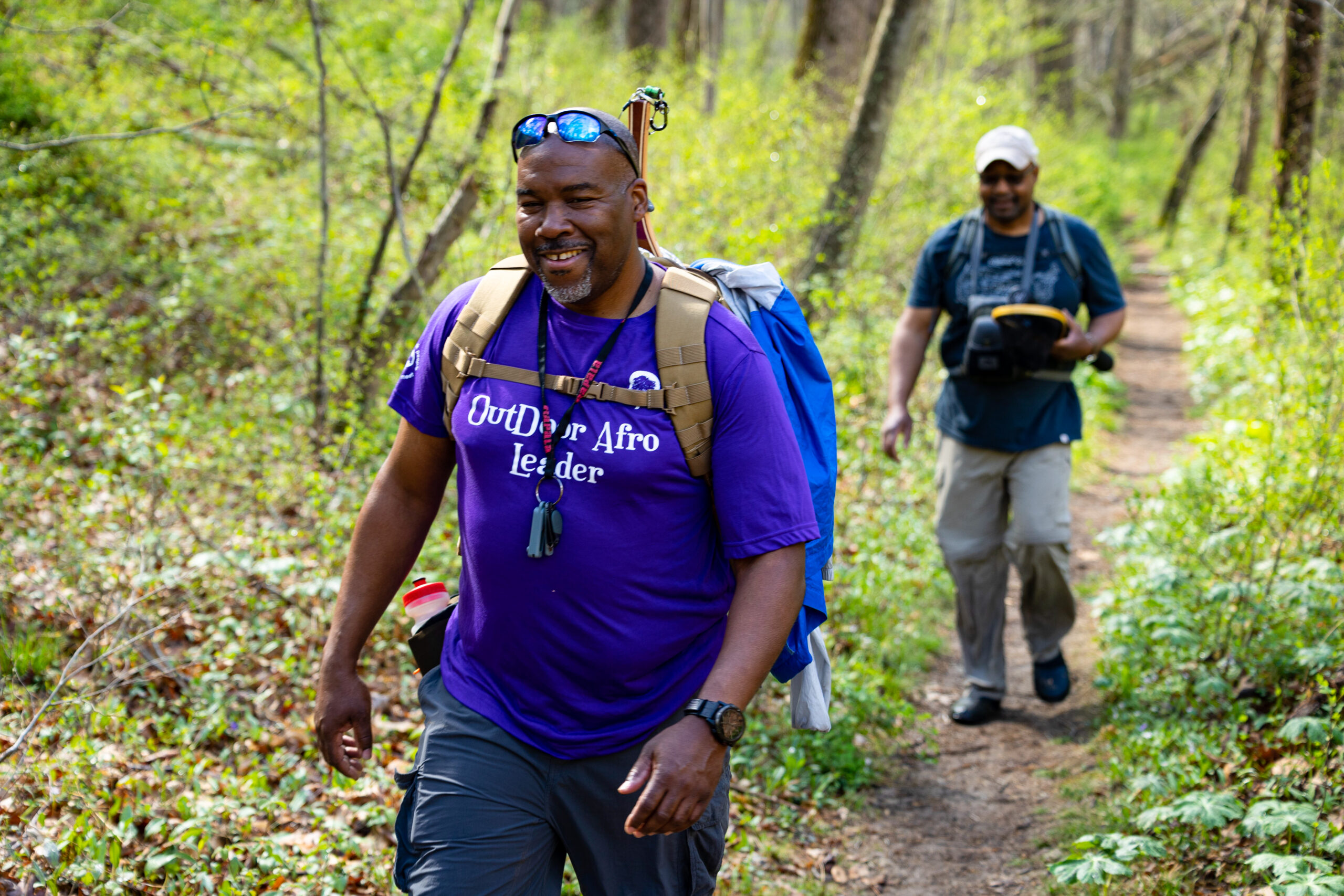
Simmons fished as a Baltimore kid with his father. Primarily catfish and carp. Along the Chesapeake Bay, his childhood fishing routine: Sculpt dough balls. Cast. Wait a few minutes before impatience kicked in. “I kept two rods with me back then,” the broad-built outdoorsman said. “I needed to move. Why fly fishing always worked for me.” Simmons has since upgraded to competitive fishing arenas. During 2022, he entered the Second Annual Snakehead Derby at Gunpowder Falls State Park in Maryland. He placed second in his category with a 5 pound, 3.5 ounce snakehead — an invasive species within the community.
Smith also gained angler expertise from his father. “Everyone in Glenarden knew ‘The Smiths’ fished,” said the veteran Outdoor Afro leader. “My dad, the late Raymond Smith Sr., was a professional barber. He fished almost every evening after work.” Raymond Smith Sr. casted his line into local waters until age 90. Living to reach 102 years old. Raymond Smith Jr. held onto his dad’s leisure and business habits. Currently owning Smith’s Barber Shop and buying his neighborhood’s takeout Horace & Dickies Seafood of Glenarden. Smith literally takes Outdoor Afro participants through the conventional process of catching their meal to re-imagining fishing as an entrepreneurship avenue.
“We serve five varieties of fish at Horace & Dickies — whiting, tilapia, catfish, trout, and croaker,” Smith said smiling and kneading his hands together. “People come from all over for the fish. And our lemon cake.” The two volunteer leaders plan to expand fly fishing site options for participants this year. Starting with Maryland’s Fly Fishing Trail. The first statewide course of fly fishing destinations in the nation. The brand-new, 2-site trail is positioned in Baltimore City and each of Maryland’s 23 counties. It constructed to help increase tourism to Baltimore waterways and deepen historical bonds to the pastime and sport.
Outdoor Afro fly fishing attendees woohooed when they heard the network news. “Fly fishing has taught me diligence on a new level,” said Devon Williams, 42, who is also a snowboarder and has joined Outdoor Afro in nature for a decade now. “Just by practicing casting I’m able to forget everything else going on.” Every few months, the expected DMV network activity offers newer opportunities to apply lessons learned. Provides another chance to release from work lifestyles, reconnect to the outdoors. “We caught absolutely nothing today, but that’s not the point,” said Smith. “The act of fly fishing is something our participants enjoy because this environment is so relaxing.”
California Coast Crabbing for the Holidays!
Crab, with is tender melt-in-your-mouth, sweet-salty goodness is an ocean floor delight for many. And this week, Outdoor Afro founder Rue Mapp decided to catch her own!
Crab is a staple of holiday festivities; shows up on date night plates, or an indulgent treat that requires you to get intimate with it using a combination of tools and tenacity if you want to get past the hard shell to its meaty reward.
It is a carefully portioned and coveted star of Louisiana gumbo, and Crustaceans restaurant fans travel far and pay a pretty penny for their "secret" crab recipe using roasted garlic. But fresh crab does not need much fanfare. It is lovely simply steamed with a hint of butter and lemon. For those who love it, crab always delivers in any form.

 Late fall in the San Francisco Bay Area signals the opening of the crab season, when Dungeness crab fishermen troll the Pacific Ocean along the California coast to harvest and deliver the native delicacy to restaurants, fish mongers, and boiling pots everywhere.
Earlier this week, I decided to show out my devotion to crab in a new way, by fishing for my own and inserting myself into the karma of consumption. Far too often, we consume without awareness of the context, complexity, and appreciation of the lives that bring nourishment and the pleasure of a delicacy to humans.
With the support of high-school friend and bass-pro fisherman Aaron Coleman, I was introduced to the snare method of crabbing. Unlike the more common and passive pot and net methods, snaring is more active in that it uses a pole and line, which was more suitable to use along the rocky coast.
The snare traps have a cage you filled with fresh fish such as squid or mackerel then the system is altogether tied to a hook to cast as far out as possible. Shown below
The trek to the secret location, where Aaron’s family has fished for decades was formidable. I’ve been contemplating it since, remarking to others my own sense of fear and trepidation as our journey included steep climbs over jagged rocks and thoughtful steps along a path in between the crash of waves during high tide. We had to pass our gear back and forth between us, while holding on to the contours of sea-worn stone. It was my guide’s familiarity with the area, and coaching that made it possible to arrive safely to the rock platform that looked out over the endless sea framed by the steep and unforgiving cliffs surrounding us.

Morning view from the edge
The set-up - click for larger images

First crab of the day!

All told, we reeled in 10 crab, which is the limit per person for a California sport fishing license.

Once we brought the crabs to dry land, we took the time to clean them and store them in fresh water sealed in freezer bags. Below is a fresh batch steaming with herbs and butter for my family dinner that night.

My children and I savored the hard-won meal, remembering and feeling grateful for the sea from which these fruits came. And we are excited to share our remaining stores with our loved ones as part of the holiday festivities.

Happy Holidays!
Where the Black Anglers Are

Outdoor Afro just received a note from Arthur Bronson, President of the International Federation of Black Bass Anglers (IFBBA) to let us know what his organization has been frying up these days. The IFBBA’s members are comprised primarily of people of color and its membership and outreach spans the globe. The organization also targets and mentors urban kids of color to participate in various fishing derbies and clinics.

Mr. Bronson says that fishing for African Americans is not new, “we have always fished for food first and recreation second. Our families came out of the South where we fished the river, creeks, and lakes for crappie, bass, and catfish.”

He is so right. And for those of us who don’t fish regularly now, most have memories. I recall catching my first crappy at age three in Clear Lake, California, along side my southern Daddy. As legend has it, once I had the fish on my line, I exclaimed, “Look daddy, the fish is laughing!”
Kudos to the IFBBA for doing its part to make fishing a more visible tradition and to create more memories -- and delicious fish frys for a new generation!

Please click their logo up top to learn more!