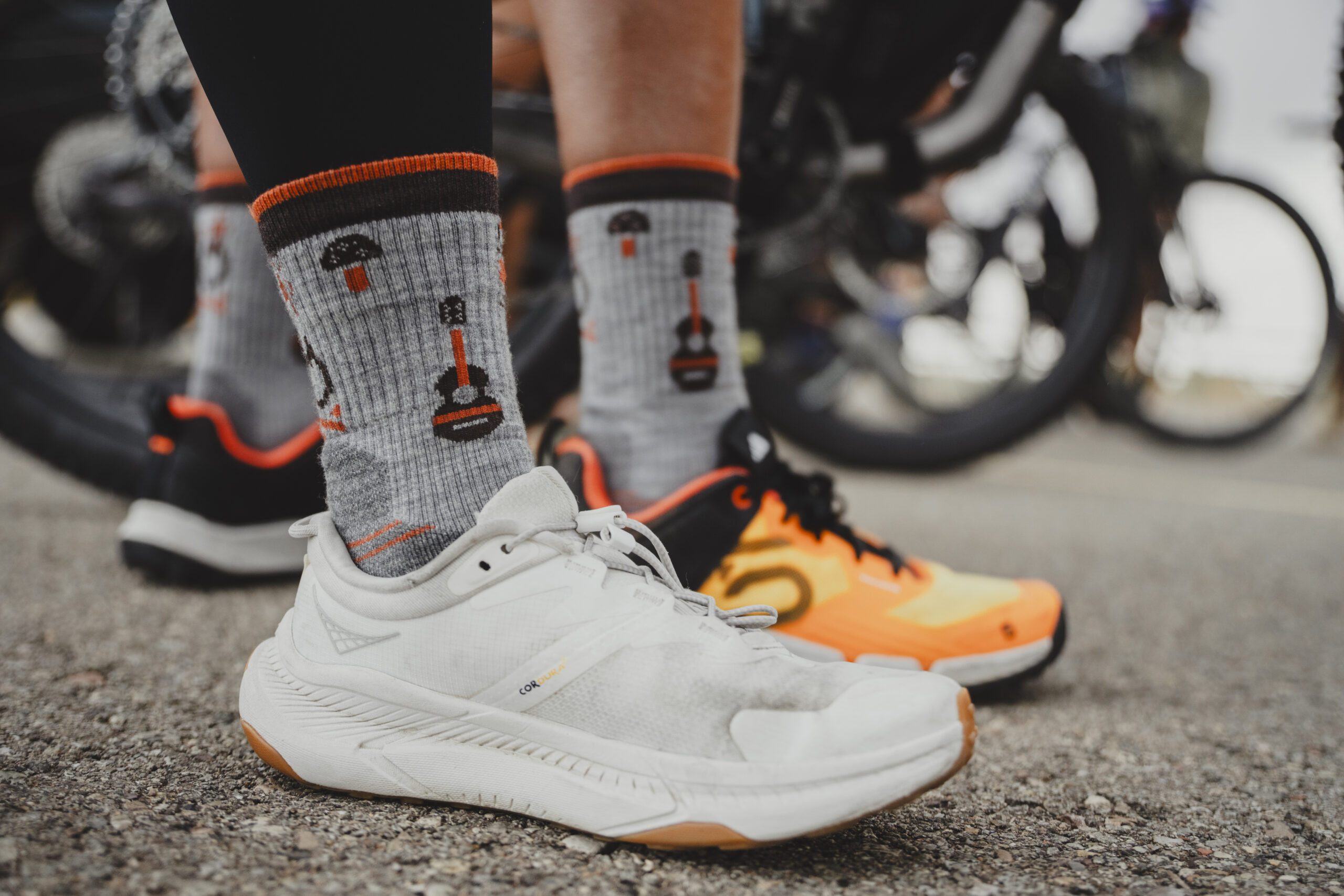
Outdoor Afro’s mountain adventure in Moab sporting these fly sock designs by Smartwool
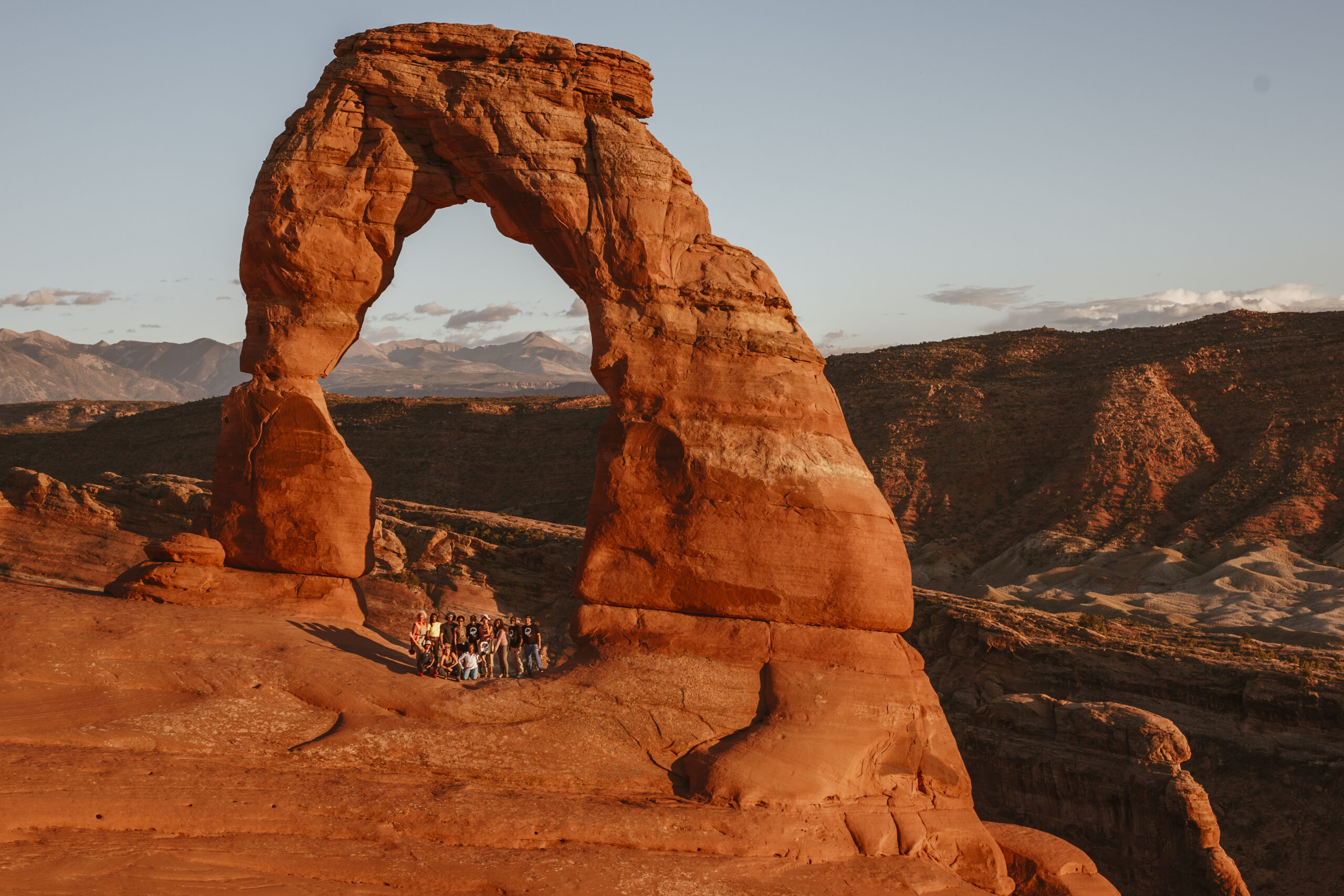
Ten Outdoor Afro volunteer leaders from across the United States swooped into Moab, Utah, during September to add new skill-building experiences to their monthly network activities happening across local communities. “We got to know Moab and its offerings so well,” said Mardi Fuller, a four-year volunteer leader who guides Outdoor Afro’s local Boston network. “After the February 2021 skiing Capstone, I felt equipped and empowered to implement annual ski programs into my network. This desert Capstone has me dreaming about mountain biking and e-biking events.” As one of the national not-for-profit organization’s annual professional development opportunities, this year’s Moab Capstone in Southeastern Utah traveled to Arches National Park and other nearby nature attractions.
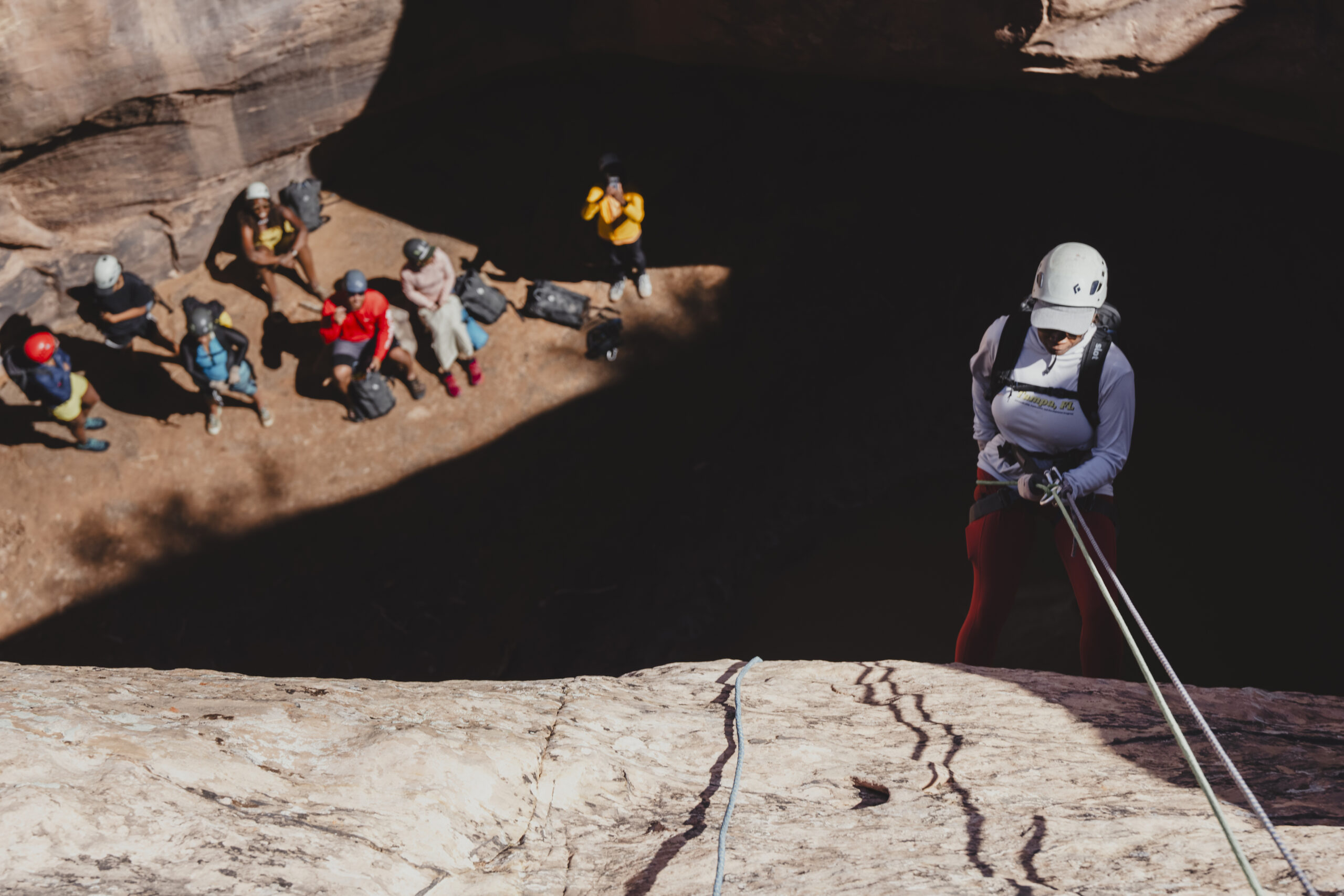
Outdoor adventure coach Shawn Brokemond of Sports Adventure led the capstone. She introduced volunteer leaders to some of the region’s most popular outdoor activities: canyoneering, mountain biking, packrafting, and stargazing. “It was super helpful to observe Shawn's leadership and teaching style – as well as all of the guides we worked with,” said Fuller. “I will incorporate these learnings into my general leadership practice. As one of my fellow volunteer leaders said repeatedly: ‘I'm here to learn and be led.’ It's a rare opportunity for us to receive rather than plan, coordinate, and lead. It truly gave me ideas, perspective, and reminders of what it feels like to be a participant.”
Outdoor Afro brand partner Smartwool joined the fun, providing volunteer leaders with the proper foot protection for every educational and recreational step. “The benefits of a good wool sock cannot be understated,” said Michael Casarrubia, marketing manager, community and partnerships, with Smartwool. “Our socks naturally wick moisture away from the body, helping regulate body temperature, resist smelly odors, are soft to the touch, and are essential equipment when heading into nature.”
Since 2020, Outdoor Afro and Smartwool have found common ground in community, sustainability, belonging, and the outdoors. Outdoor Afro celebrates and inspires Black connections and leadership in nature. Smartwool provides comfortable, capable gear that empowers outdoor enthusiasts and athletes to go far while feeling good along the way. Together, both make a classic pair in what a genuine partnership in nature looks and feels like. Continuing its shared mission to make the outdoors easily accessible, Smartwool lives for sustainability efforts. Designating the apparel brand as a natural collaborator and supporter of Outdoor Afro’s Volunteer Leader Program.
“The socks were extremely durable and provided comfort in the various Capstone events,” said Jimmy Allen, who leads the South’s Charlotte network. “It’s definitely my go-to sock for all future network activities.” In addition to annual Capstone experiences, Outdoor Afro’s selected and trained volunteer leaders guide their hometowns in year-round network activities. More than 100 volunteer leaders host innovative interpretations of fishing, biking, foraging, backpacking, camping, kayaking, canoeing, gardening, skiing, and more. Customized network events inspired and driven by community interests.
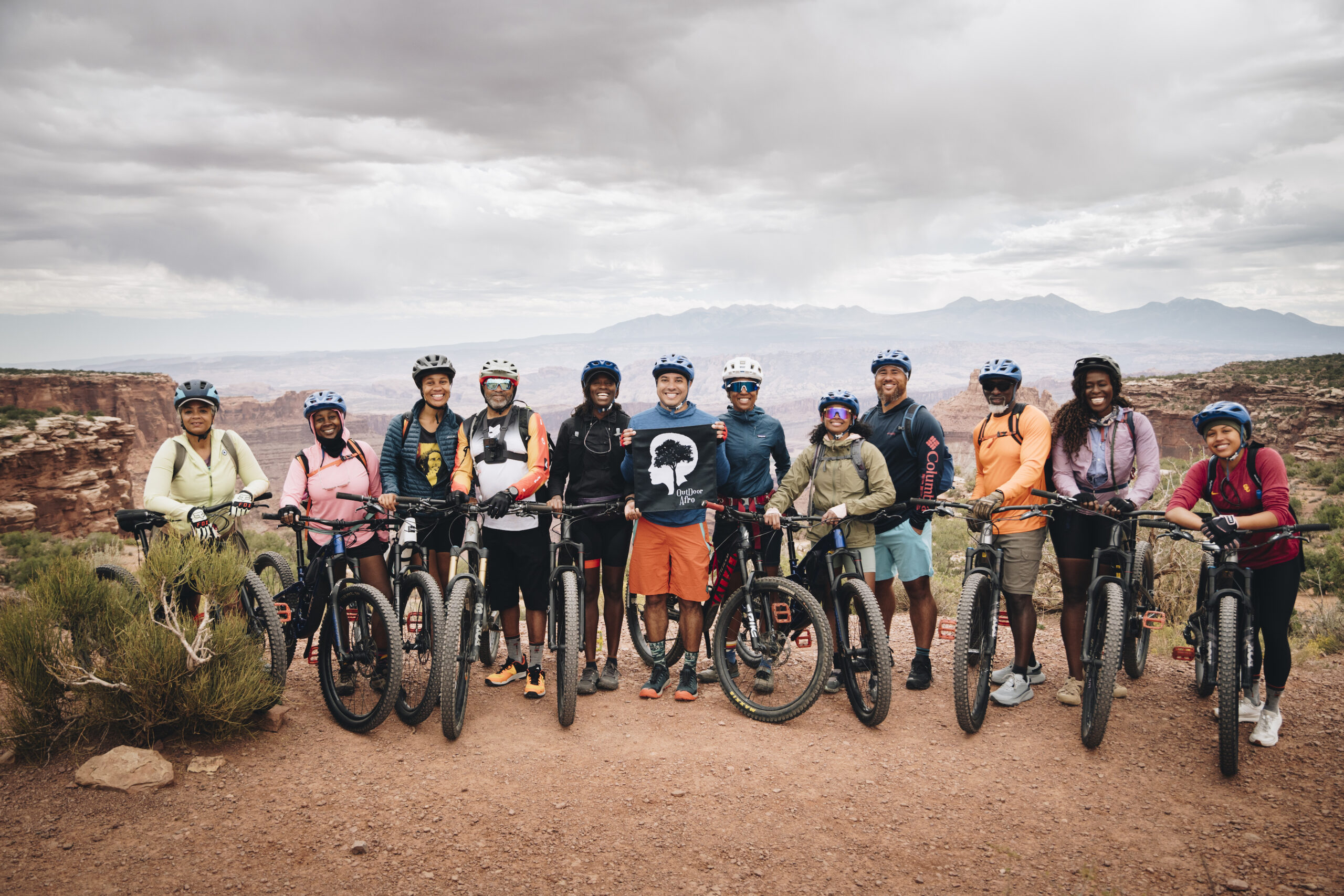
Annually, network participants in neighborhoods nationwide frequently ask: What is the best gear and equipment to invest in for their next Outdoor Afro adventure? Knowing what’s safe, sustainable, and comfortable is a request volunteer leaders often receive while guiding network experiences throughout U.S. communities. Exactly why Smartwool is Outdoor Afro’s top recommendation in foot protection and base layer support. Since 1999, the apparel brand has redesigned its base layers to provide all-day comfort and outdoor performance. “OMG! I have never worn a pair of Smartwool socks, but they were so awesome,” said Frances James of Outdoor Afro’s Bay Area and Northern California network, who received several compliments for her mushroom, campfire, and hatchet sock designs. “I wore them two days in a row. These socks fit me like a glove, providing a ton of support and padding while mountain biking, e-biking, and 4x4ing.”
ABOUT OUTDOOR AFRO: Outdoor Afro is a national not-for-profit organization that celebrates and inspires Black connections and leadership in nature. What started as a kitchen table blog by Founder and CEO Rue Mapp in 2009 has since grown into a cutting-edge nationwide network with 100-plus volunteer leaders in 60 cities with network participation reaching 60,000 people. Outdoor Afro reconnects Black people with the outdoors through outdoor education, recreation, and conservation. Follow Outdoor Afro at outdoorafro.org and @outdoorafro today.
ABOUT SMARTWOOL: Based in Denver, Colorado, Smartwool® is a sock, apparel, and accessories brand whose products are designed to get the most out of the inherent benefits of Merino wool to bring comfort, confidence, and community to a life lived outside. For information on the full range of Smartwool® products or to find a dealer near you, visit Smartwool.com. Smartwool, a division of VF Outdoor, LLC, is a brand of VF Corporation.

Wanderers Welcome: Tracking winter wildlife at Upper Saco Valley Land Trust with Outdoor Afro’s ‘Frozen Chosen’
Crunch. Crack. Crunch. Crunch. Crunch. Crack. Crunch. Crunch. The traction-spiked hiking boots shuffled at a potato chip chewing cadence. Oddly melodic as the animal tracking morning picked up pace. A warning from Outdoor Afro volunteer leader Mardi Fuller, 44, as she guided the March 2 New Hampshire winter experience: “Don’t consider moving to New England if you’re not a fan of winter,” the four-year leader said. “We have plenty of it throughout the year.” Winter sports to coincide as well: ice climbing, downhill skiing, snowshoeing, and mountaineering. All offered through Fuller’s Outdoor Afro Boston network. Community participants who sign up with Fuller are guaranteed innovative nature adventures with the diehard hiker. Sustainably and safely. During January 2021, Fuller became the first-known Black person to scale all 48 New Hampshire peaks – 4,000-footers – in the winter. See. In good hiking hands.
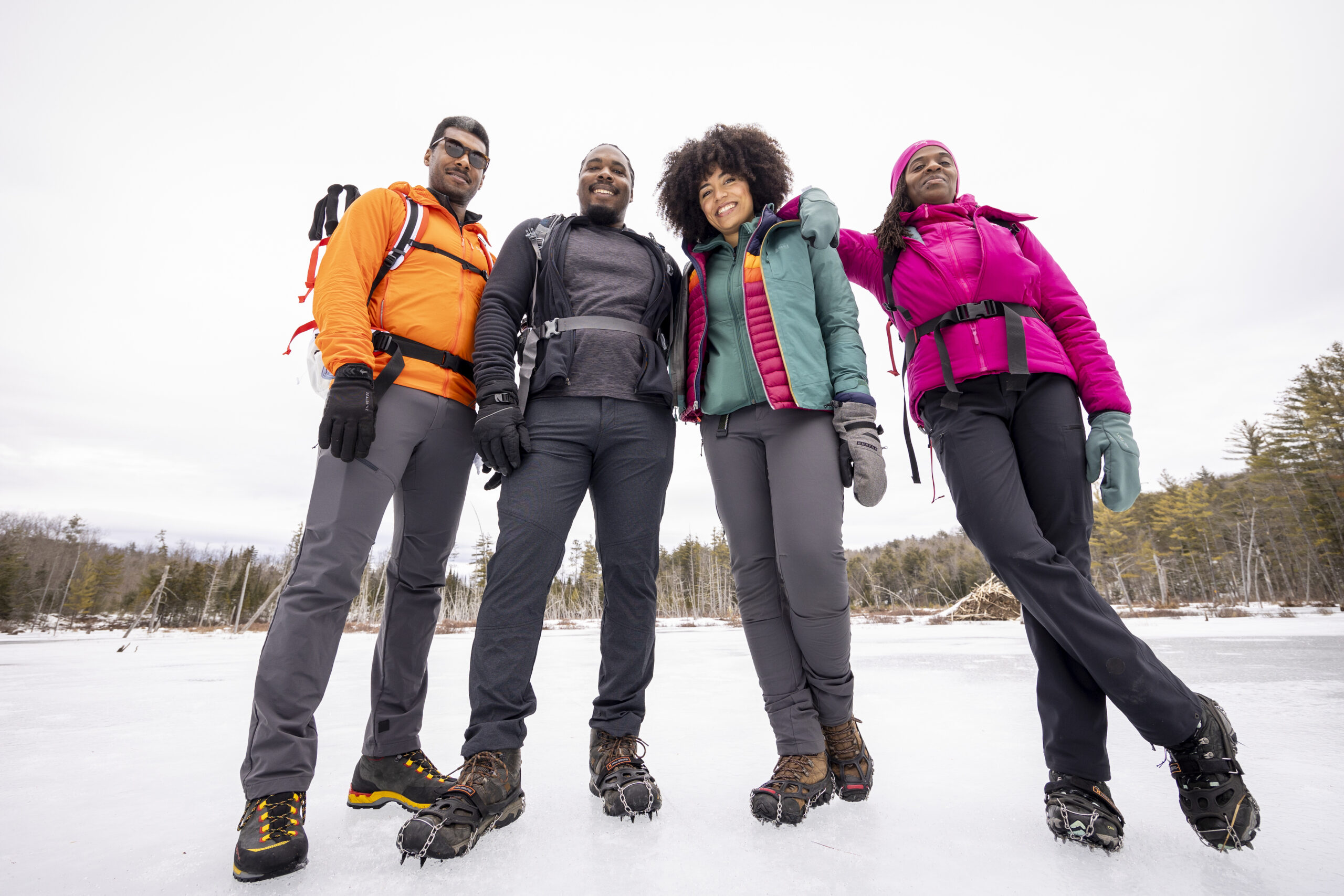
Annually, Outdoor Afro’s Northeast Region arranges area opportunities for cold-weather outings that help beat the “winter blues.” Recasting shorter days into celebrated, snowy moments with brand-new friends. “I’m a multitasker,” said Fuller. “The simple action of walking in the snow allows me to settle down and get into this meditative mind frame.” That Saturday, she exercised this form of nature medicine with three network frequenters – Xander Bennett, Keenan Augustus, and Thai Koenig (left to right in the above image with Fuller flanking the far right side). Better known as “The Frozen Chosen.” Together, the four toured the Chain of Ponds Community Forest Conservation Project. This soon-to-acquire property of Conway, New Hampshire’s Upper Saco Valley Land Trust blankets 625 acres. The land trust’s goal is to raise $1.3 million from local foundations, state grant makers, and individual contributions by November 2024 to purchase and permanently conserve the landscape.
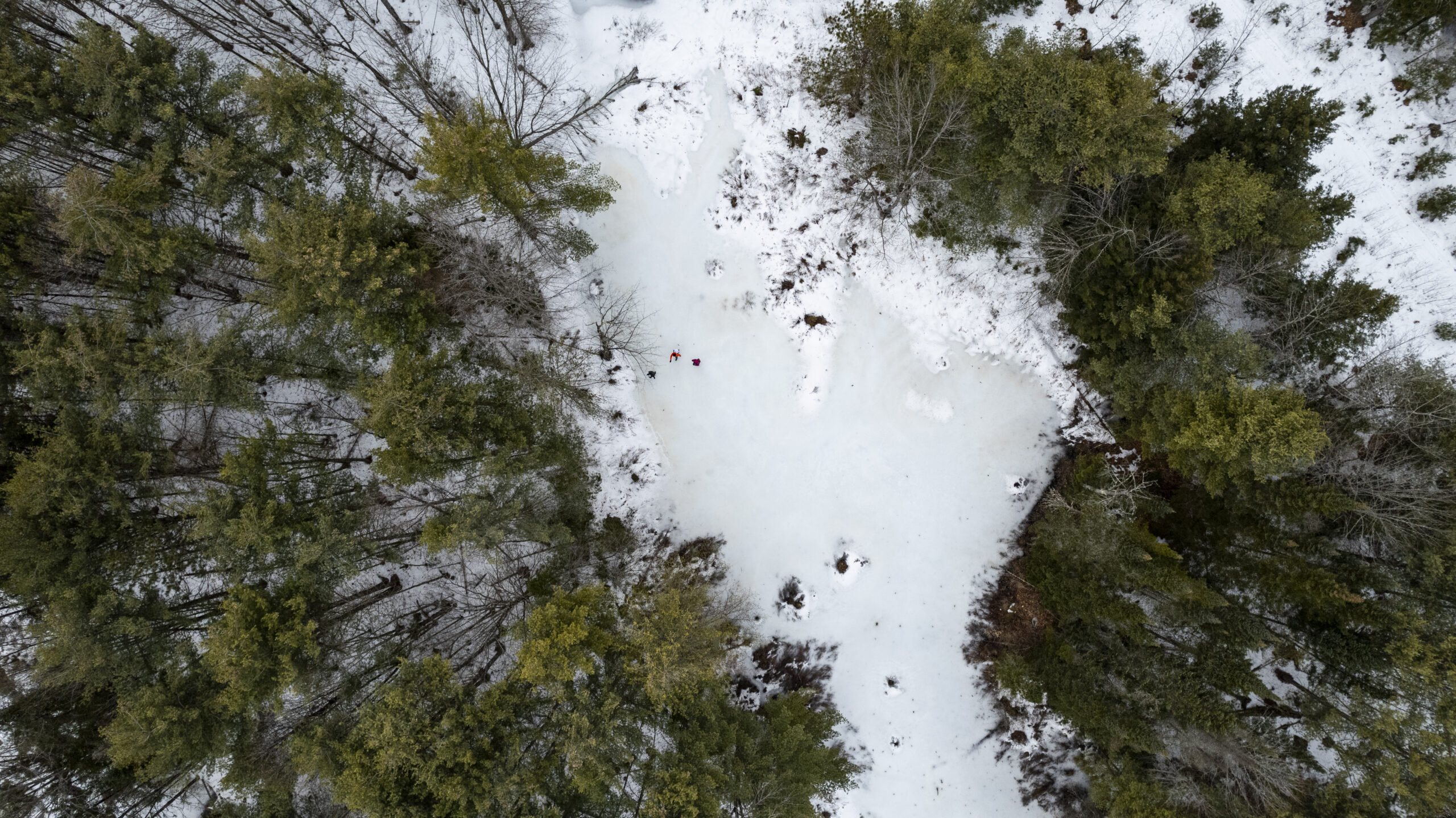
Chain of Ponds covers an ecologically significant glacial trough valley in neighboring Madison, New Hampshire. Connected to its forestland and inland waters, the project features headwaters of Pequawket Brook and Silver Lake’s North Inlet. The valley itself includes roughly 110 acres of wetlands; 25 acres of cliff and talus slopes; glacial eskers; surface waters and wetlands; 300 acres of mapped aquifers; and approximately 4 miles of surface water frontage along several streams and ponds. A peerless outdoor playground. Once the purchase completes, the public can access newer sites for biking, paddling, hunting (white tail deer, ruffed grouse, and small game like rabbits), fishing (Eastern brook trout and pickerel), and winter hiking. And only 3 minutes away from Madison Elementary School, experiential learning abounds. Mike Morin, 43, served as the land trust’s conservation director and assured that Chain of Ponds would become a nature backyard to a lot of local families.
The 20-year land conservationist added: “This site will provide interpretative education, allow us to implement better forest health management practices back into the community, and continue to expand our mission that already includes conserving other forestlands, popular recreation areas, and working farmland." The land trust developed in 2000 as a grassroots initiative to preserve land for community enjoyment and education. Specifically in the watershed of the upper Saco River in both Maine and New Hampshire. The following year it gained 501(c)(3) nonprofit status. Within a decade, the land trust preserved 38 land projects, doubling that number by 2019. To date, the trust has conserved more than 12,000 acres in its 11-town service area. Steadily advocating for local agriculture and water quality concerns as part of its mission work. Back at the Chain of Ponds site, the Frozen Chosen breathed in the 40-degree air (unseasonably warm for Northern New Hampshire in early March when 20 degrees is more likely) and trudged along an abandoned rail corridor.
The track once carried traveling skiers from Boston to North Conway, said Morin. Part of the early 20th-century history of Gilded Age hotels like the Omni Mount Washington Resort and the beginning of the ski industry. A train stop to the left of the track brought the Outdoor Afro group to a beaver lodge on Cranberry Bog. Each whipped out their animal track pocket guides provided by the land trust’s Community Steward Carissa Milliman, 39. The former educator equipped the day’s guests with New Hampshire Fish and Game Department wildlife literature. “With this piece of land being so accessible, Chain of Ponds is a great place to connect with nature and find stillness,” said Milliman. Nothing matched the track patterns listed. The group tactfully circled and observed the conical-shaped beaver home. Then moved on. Two more ponds ahead: Blue Ponds and Mack Pond.
Chemical engineer Keenan Augustus, 31, advanced with excitement in his eyes. “You know,” he said with every microspiked step, “these types of activities with Outdoor Afro help me get back to our roots. Black people have always been travelers, explorers, and navigators.” Cold-weather comrade Xander Bennett nodded in agreement. Augustus has participated in Northeast network activities for almost two years now while Bennett entered his first year in 2024. Bennett’s introduction to Outdoor Afro started with an ice climbing event with Fuller earlier this year. Then, uphill skiing. “I previously approached the outdoors from individual activities,” said Bennett. “Mardi and Outdoor Afro have helped me gain the courage to get in this space through group experiences.” The win-win: learning new skills with folks who feel like family.
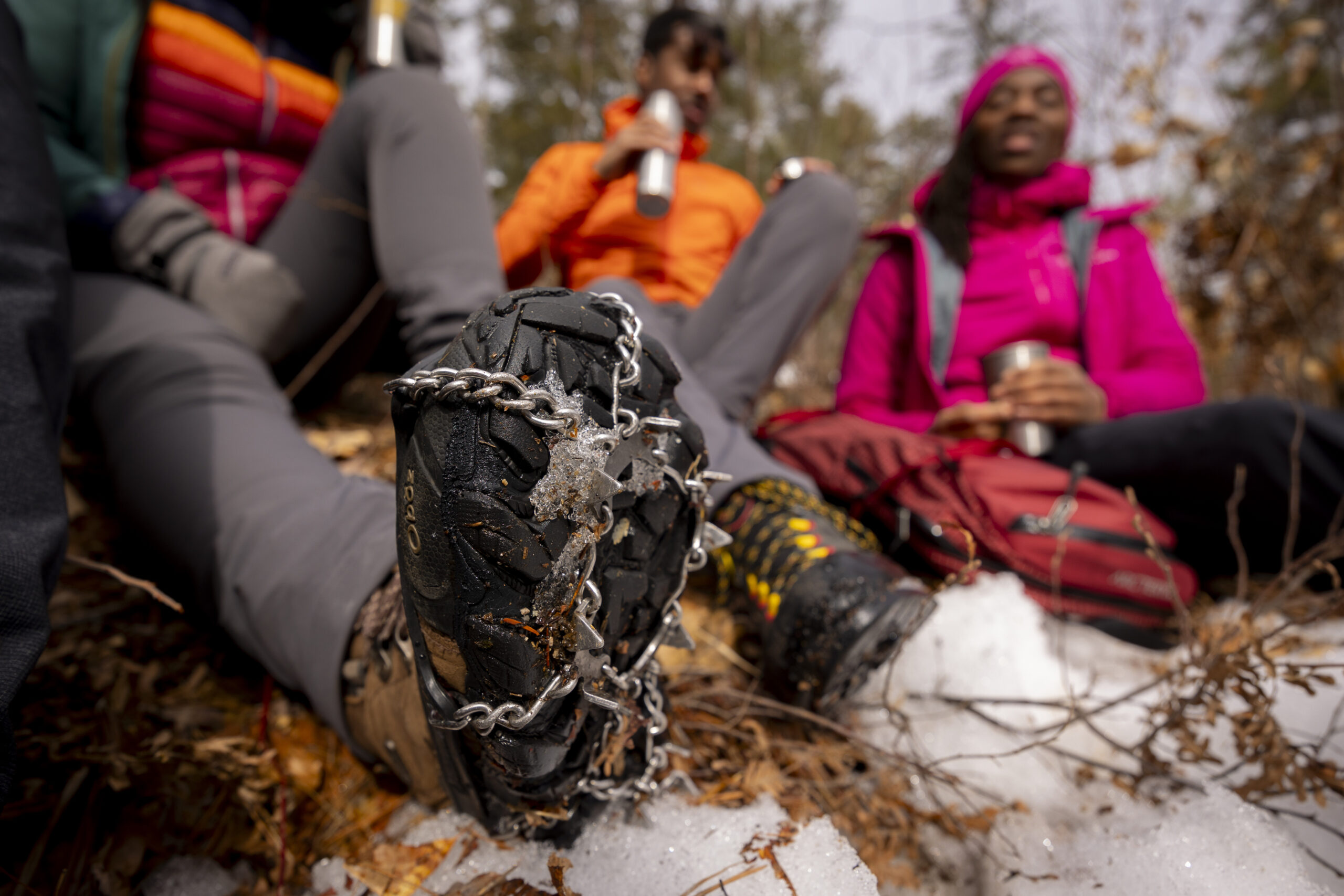
The Chain of Ponds camp took a break bankside for hot tea, snack bars, and more fellowshipping. Sharing favorable reactions to the property. Flashbacking to previous network fun. Already making new Outdoor Afro activity plans. The youngest of the Frozen Chosen, Thai Koenig, 24, dusted snow off her hiking pants, gathered her belongings, and started to lead the band back to the site entrance. But, wait! A scat IDing moment presented itself mid-trip. Was it a red fox? Bobcat? Coyote that traveled their route? The four couldn’t really figure it out from their wildlife scat cards. The majority leaned toward the red fox. Good guesses. “It’s so important to build community like Outdoor Afro does,” said Koenig, all smiles. “Our network is always happy. Mardi makes me feel comfortable and safe while trying something new.”
ABOUT OUTDOOR AFRO: Outdoor Afro is a national not-for-profit organization that celebrates and inspires Black connections and leadership in nature. What started as a kitchen table blog by Founder and CEO Rue Mapp in 2009 has since grown into a cutting-edge nationwide organization. Outdoor Afro’s U.S. networks include nearly 100-plus volunteer leaders who guide nature activities in up to 60 cities with network participation reaching 60,000 people annually. Outdoor Afro reconnects Black people to the outdoors through outdoor education, recreation, and conservation. Connect with @outdoorafro on social and visit outdoorafro.org to follow our year-round nature narratives.
Outdoor Afro’s Georgia networks offer silver- and small-screen views to capture nature, Southern living
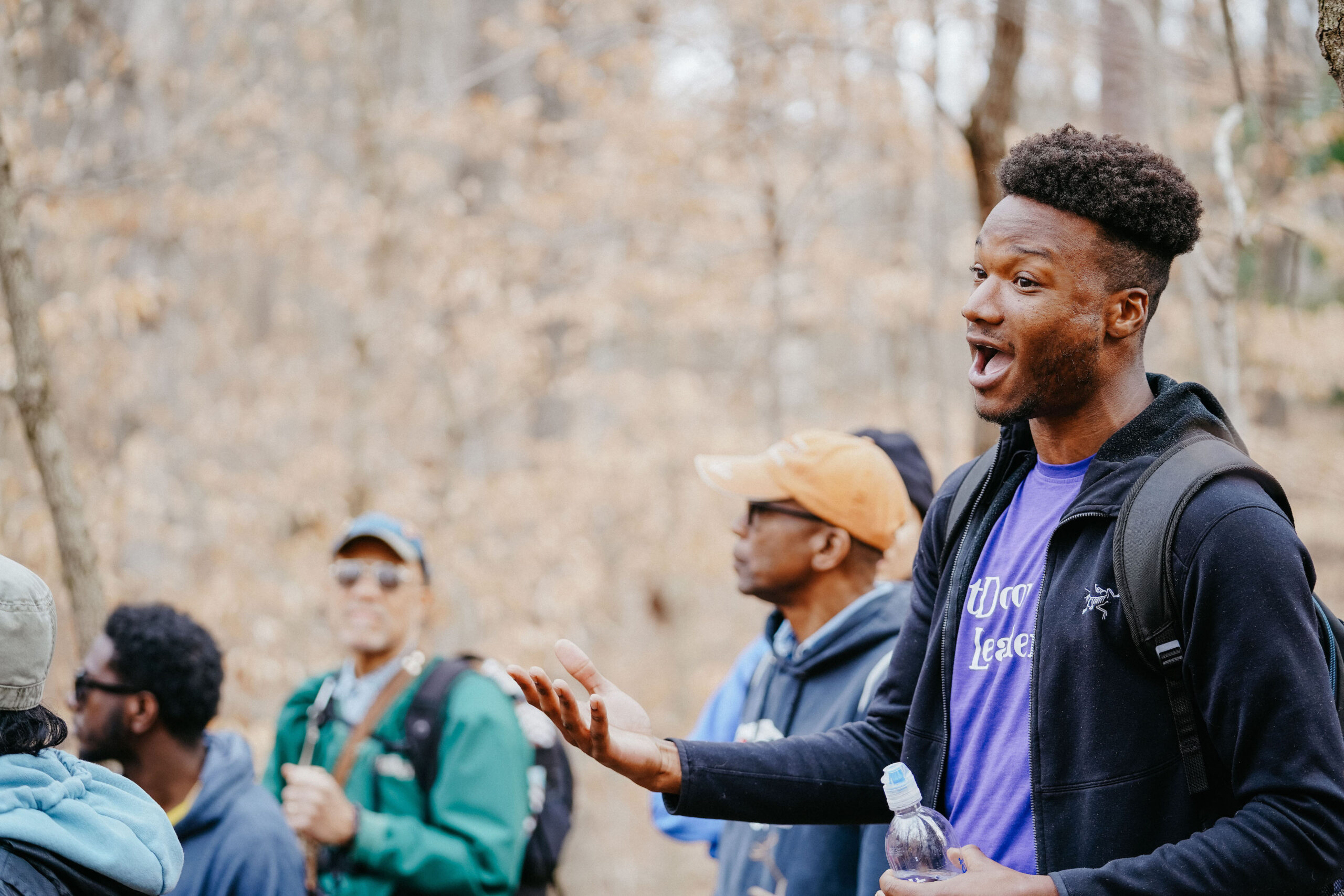
The future naturalist framed up the plant IDing scene with such fervor. Conviction. Even care. Every google-eyed expression and conductor hand gesture queued plant life. As if it was taking center stage. His soft smile pulled community participants into the Lionel Hampton Greenway Trail. The old-growth storyline voice-overed by Southern hospitality. “So, this is actually turkey tail mushrooms,” said Outdoor Afro volunteer leader Dajawn Williams, 27, “and guess what? It’s edible.” “Edible!” One hiker blurted in the background with an unsure side eye. Williams’ grin deepened with a few promising head nods. Oohs and ahhs then bounced around the forest floor. Promptly, he waved the group of 23 local explorers into a direction of more shocking nature sights along their 2-mile urban wander. This Feb. 10 Black History Month activity taught Atlanta attendees how to recognize special species within their Outdoor Afro network and neighborhood greenspace. The experience also unearthed Black contributions connected to the nature preserve.
To that point, the greenway trail is named after former landowner and famous Black jazz musician Lionel Hampton. Hampton donated much of the right-of-way for the trail during 1993. Designed today for cycling, hiking, agritouring, and picnicking. The historic Black district and site on Atlanta’s west side features the most archaeologically significant Civil War trenches in the region. “This area’s infrastructure included a mill, cemetery for enslaved Black people, and a rock quarry,” said guest speaker, naturalist, and local historian James Tyler. “After the Civil War, Black farmers who lived south of Atlanta moved up to become railroad and mill workers.” Over time, these stories evolved into backdrops to what’s now designated as the “Hollywood of the South.” It’s been more than a decade that metro Atlanta’s mushrooming film and TV industry generated blockbuster momentum. Primarily because of the Peach State’s benevolent tax break.
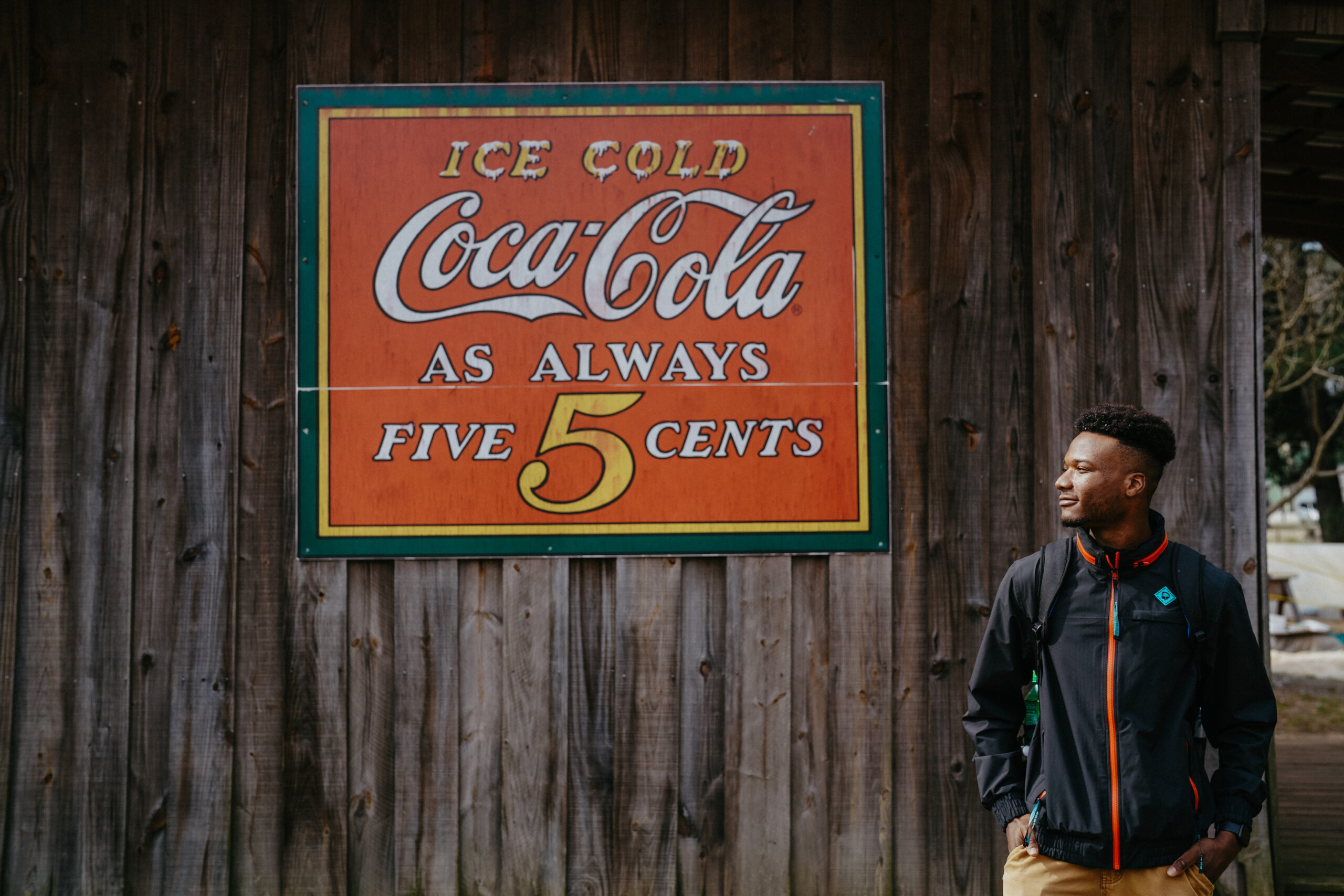
Major studios popped up and big-budget projects like “The Hunger Games,” “The Walking Dead,” and the Marvel franchise settled into their new Southern home. During 2022, Marvel’s “Black Panther: Wakanda Forever” became the highest-grossing movie with a female superhero lead at the U.S. box office – the latest example of the high-earning films attracted to Georgia. In recent times, production opportunities have tapered off for some creatives, too. However, Gov. Brian P. Kemp reassured Georgians that the silver- and small-screen industry is forging ahead: “Georgia remains a global leader in film, TV, and streaming productions,” said Kemp in a Sept. 13, 2023, press release by the Georgia Film Office. “Those who benefit most from the significant growth we’ve seen in this industry over the past couple of decades are hardworking Georgians who fill the many behind-the-camera jobs that come with each project. That’s why we’ve worked hard to attract these and other opportunities for those who call the Peach State home.”
Last year, the state celebrated 50 years of the Georgia Film Office, a strategic post within the Georgia Department of Economic Development that helps mature Georgia's film, TV, and commercial production industries through marketing, scouting, and coordinating project needs. The office reported productions spent $4.1 billion in Georgia during fiscal year 2023. Between July 1, 2022, and June 30, 2023, the state hosted 390 productions, represented by 31 feature films, 55 independent films, 40 commercials, 23 music videos, and 241 TV and episodic productions. Travel an hour and some change south into Middle Georgia where Outdoor Afro participants have the chance to explore newer rural trails, farm life, and film tours later this year. Williams’ next stop: Dauset Trails Nature Center in Jackson, Georgia – a 15-minute ride away from where Netflix's hit sci-fi drama series “Stranger Things” filmed. The nature center provides mountain and e-bike courses; backpacking and camping; and farmstead sightseeing.
Williams linked up with Outdoor Afro’s Founder and CEO Rue Mapp at the nature center. The two went on a site visit to reimagine what foraging, farming, and family-centric activities could look like for his network and others in the organization’s “Year of Innovation.” “I’m continually in awe of the natural resources found in our volunteer networks,” said Mapp. “To visit places like Dauset helps people discover opportunities to reconnect to nature close to home, and be inspired by the natural and human history you can always find in these places.” For 15 years now, Outdoor Afro has celebrated and inspired Black connections and leadership in nature across the United States. The national not-for-profit organization reconnects Black communities to outdoor conservation, recreation, and education through networks located in 60 cities and 32 states, including Washington, D.C. By way of more than 1,200 planned and hosted network activities, volunteer leaders like Williams reintroduce more than 60,000 people to the outdoors annually. “We’re on a journey to reach more rural and urban communities,” Mapp said. “Nature, travel, tourism, and the shows and movies we all grew up on are ways to imagine new connections.”
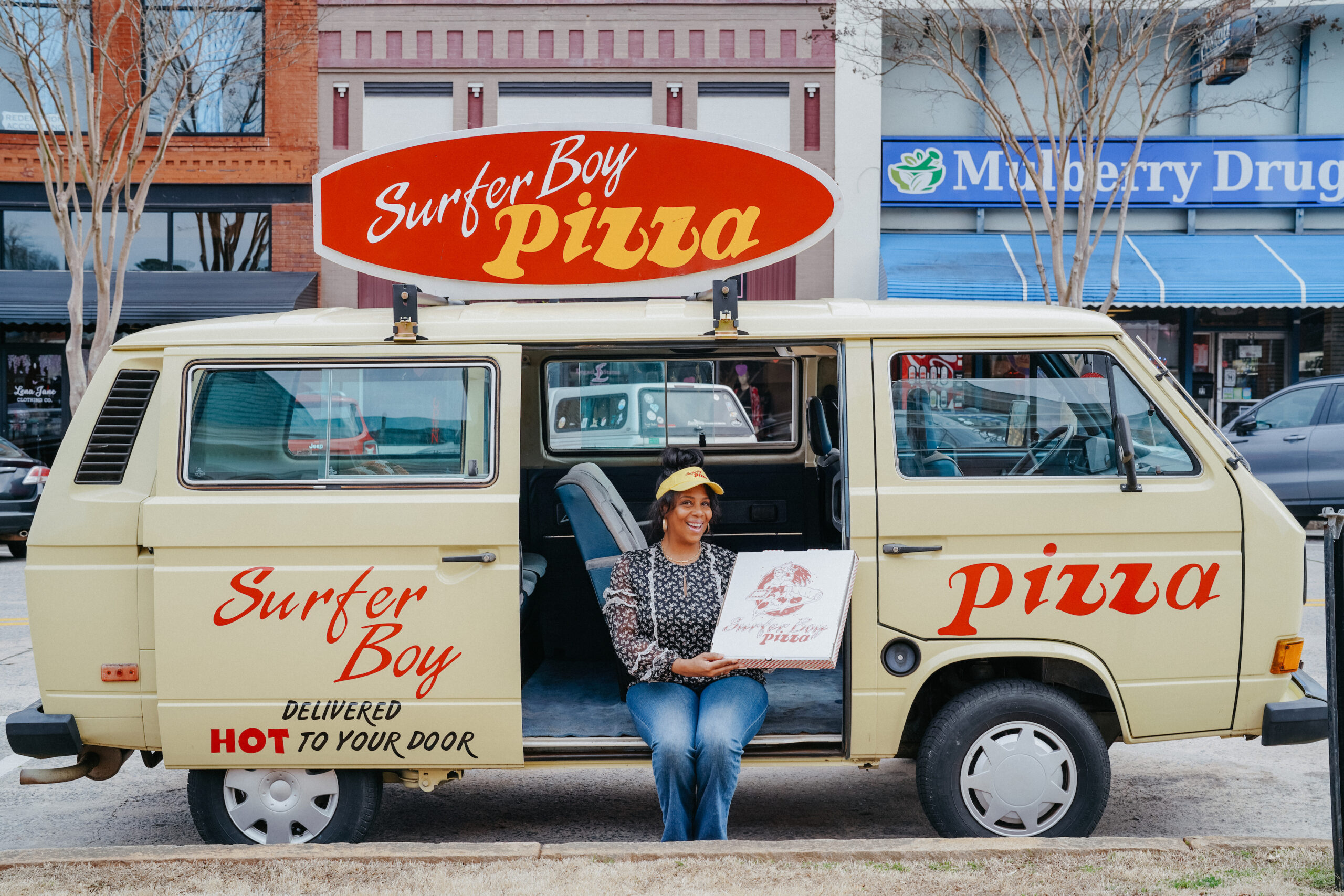
After Dauset Trails, a truck ride to downtown Jackson (the state’s outdoor capital) zapped Mapp into the make-believe town of Hawkins, Indiana, from the TV show “Stranger Things.” She toured real-life locations, replaying memorable scenes from the series’ Hawkins Library, back alley, and Radio Shack. The coolest Outdoor Afro clip of the day: Mapp propped with a pizza box and visor inside the iconic Surfer Boy Pizza vanagon, a.k.a. Pizzamobile. Headed back south on U.S. Hwy 23, a pitstop to Juliette, Georgia, revisited Cicely Tyson’s role in the 1991 comedy-drama “Fried Green Tomatoes.” Where the movie’s Whistle Stop Cafe is still open for business and serves Southern cuisine – most notably, of course, the menu’s crispy fried green tomatoes. Described in one word: De-lish! The final destination for Mapp’s agritourism and film-guided driving tour traveled 42 miles east along backcountry roads to Milledgeville, Georgia. The fourth capital of the state and where actress Julia Roberts’ character, Vivian, in “Pretty Woman” said she came from.
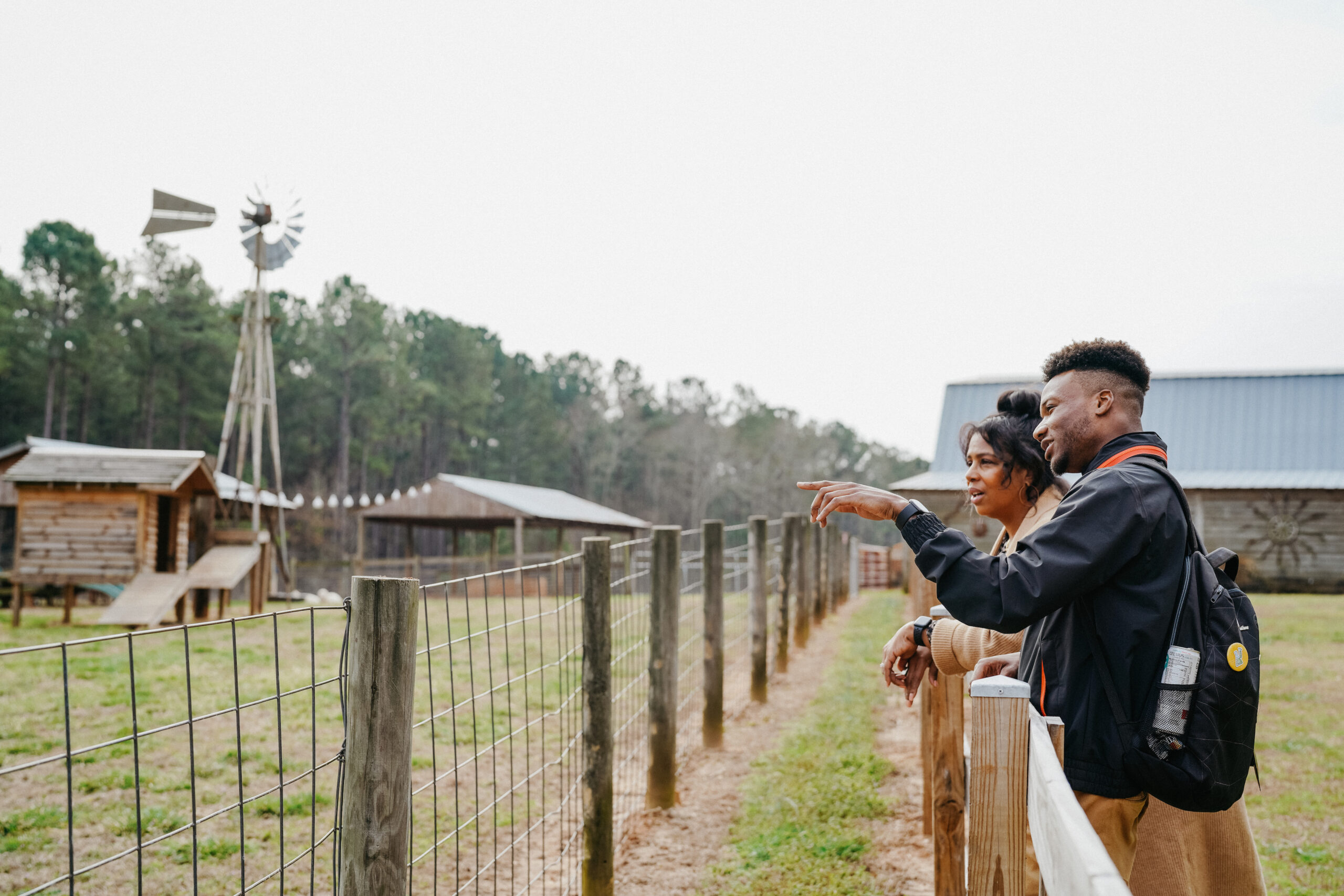
Mapp drove through camera-ready site Central State Hospital. Established in 1842, the campus became known as the “world’s largest mental institution” by the 1960s. It included more than 12,000 patients, 6,000 employees, and more than 8,000 acres of land. By 2010, the dilapidated complex closed. Four years later, “The Originals” (spin-off to The CW Network’s “The Vampire Diaries”) filmed episodes at the hospital. Interestingly, the eerie site still produces a pecan grove that attracts the community, schools, and families to year-round nature activities. “That’s the thing about nature,” said Reginal Black, 59, who joined the Feb. 10 Outdoor Afro plant IDing activity. Black relocated to Atlanta from California to live closer to family. “Nature ties us all back to our local histories and community stories,” he said. “Why I’ve been attending network events like this one with the organization and Rue since 2009.”
SUPPORT OUR STORYTELLING SERIES
ABOUT OUTDOOR AFRO: Outdoor Afro is a national not-for-profit organization that celebrates and inspires Black connections and leadership in nature. What started as a kitchen table blog by Founder and CEO Rue Mapp in 2009 has since grown into a cutting-edge nationwide organization. Outdoor Afro’s U.S. networks include nearly 100-plus volunteer leaders who guide nature activities in up to 60 cities with network participation reaching 60,000 people annually. Outdoor Afro reconnects Black people to the outdoors through outdoor education, recreation, and conservation. Connect with @outdoorafro on social and visit outdoorafro.org to follow our year-round nature narratives.
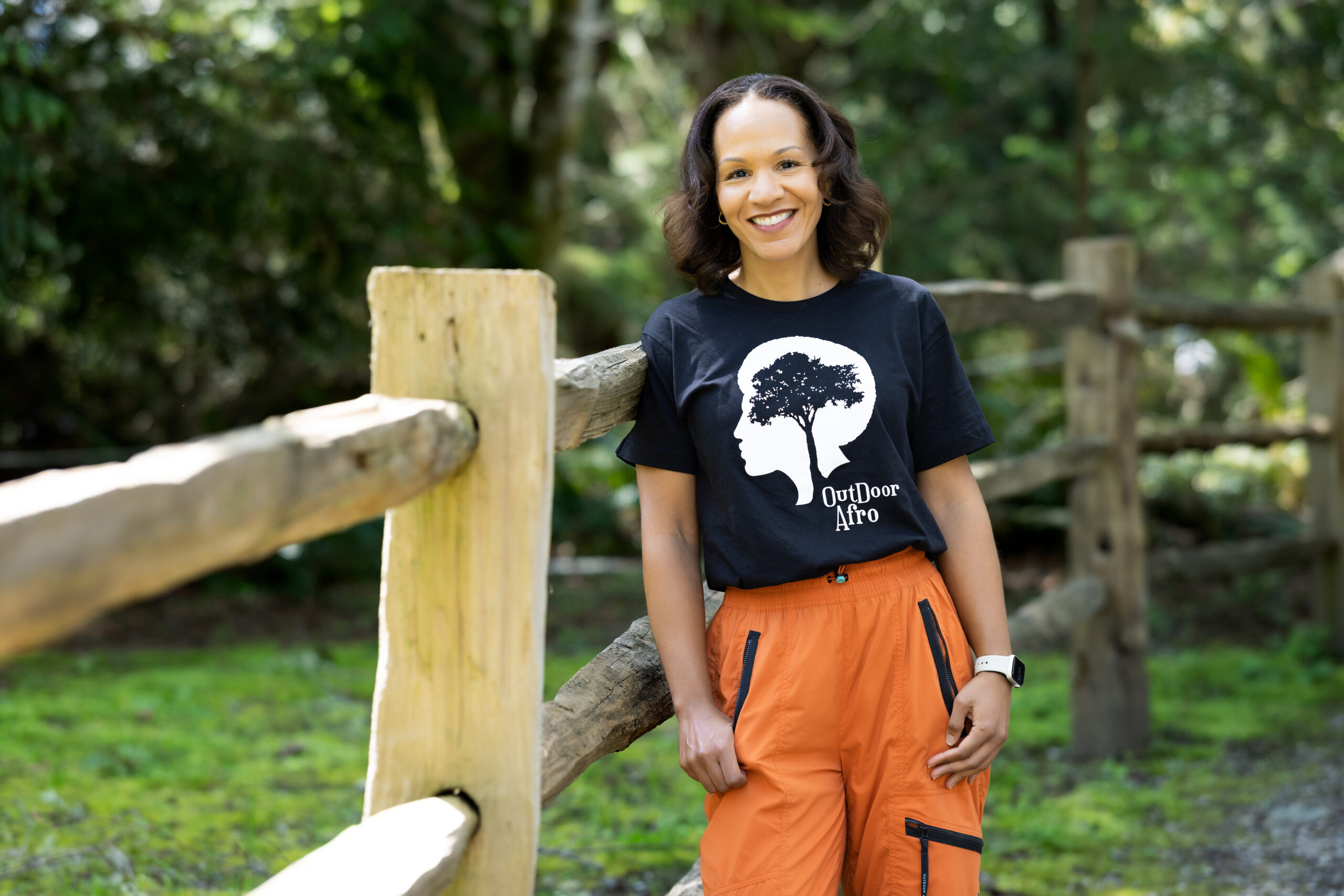
Elevated Experiences: 5 travel packing guidelines from an Outdoor Afro cycling expert
Cycling now scales outdoor activities that local participants of national not-for-profit Outdoor Afro mark off their summer travel plans. Just this month, Outdoor Afro volunteer leader Chasity Ramos guided an 8-mile neighborhood spin around Swamp Rabbit Trail in South Carolina’s Greenville County. “Our participants showed up from near and far,” said Ramos to her Instagram followers about the July 15 “Black joy” bike ride. “From Atlanta to Charlotte to Greenville and Greer, our people were outside.”
Her Greenville and Asheville, North Carolina, network supporters automatically accepted the fitness, health, and well-being challenge to a section of the original 22-mile, multi-use greenway. Ramos bonded with cyclists, delivered a few punchlines for laughs (as her personality calls for), and weaved the area’s Black history into pedaling pit stops. For those Outdoor Afro participants who have discovered or rediscovered cycling in their communities with the organization, these biking adventures can often lead abroad.
Curious about newer cycling destinations around the globe? Outdoor Afro’s executive director and international cyclist Lisa Bourne volunteers five travel packing recommendations. Bourne cycles nearly 4,000 miles annually at home and overseas. Whether road cycling, mountain biking, endurance cycling, leisure cycling, e-biking, or in cycling events, global cycling is definitely doable. Her suggestions to plan accordingly:
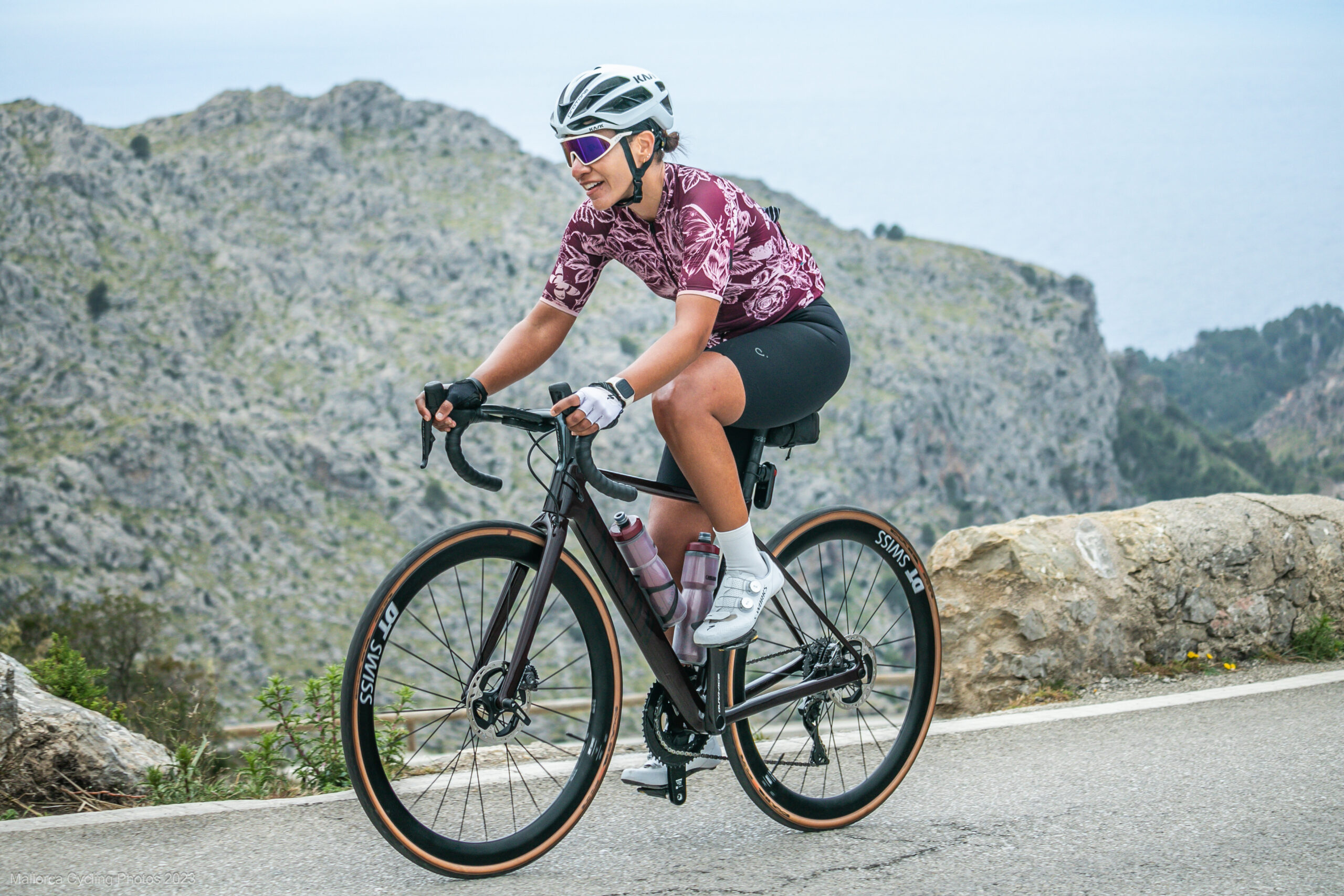

DECIDE WHAT TYPE OF CYCLING ADVENTURE YOU WANT. During May 2023, Bourne shipped her Canyon road bike to island destination Mallorca, Spain, and headed right along with it. The weeklong stay allowed her to bike more than 120 miles and climb close to 15,000 feet. “Ask yourself: is it a road, gravel, or mountain bike trip for you?” said Bourne. “I’m a roadie. I love climbing – and descending – mountains on my bike.” Bourne admits she’s partial to mountains, especially those near beaches. Hence, this recent trip to Mallorca. Laden with camouflaged coves, chalked mountaintops like the Tramuntana range, fresh market farms, and turquoise water beaches, “I was so blessed to travel for my fourth time to this gorgeous island,” she said.
CARVE OUT TRAINING TIME FOR SPECIFIC TRAILS. Bourne’s Spain trip in the Mediterranean Sea landed her east of the Spanish mainland. Mallorca’s breezy climate and network of paved roads offers dreamy routes for a medley of cycling adventures. Back in 2012, Olympic cyclist Bradley Wiggins trained for the Tour de France by clambering up Sa Calobra – one of the island’s famous cycling climbs with 26 tightly packed, hairpin turns. Today, Mallorca is a cycling destination hotbed for pro cycling teams and amateur cyclists worldwide. Bourne recommends dedicating at least 12 weeks of personal and professional instruction before pursuing new courses. “Hire a cycling coach like Black-owned and -operated CIS Cycling,” Bourne said. “Don’t forget strength training – the core, back, and lots of squats. Try yoga on your off days to open those hips.”
DETERMINE IF YOU WANT TO BRING YOUR OWN BIKE OR RENT ONE. Mallorca is built up with the best infrastructure to support diverse cyclists, confirmed Bourne. For refueling moments, the island provides bike racks stationed at community cafés, local bike shops, trained mechanics on standby, bike rental setups, and hotels with bike garages. “Bike garages allow you to build up your own bike if you’ve brought it along,” Bourne said. “You can even store your bike there when you don’t plan to ride. Mallorca is home to some amazing, local cyclists you can hire to lead you on the roads.” To help pick between bringing or renting a bike, Bourne points out two thoughts. First, look at the number of days you plan to spend on your bike. “If I’m spending one or two days cycling, I typically rent,” she said. “If I’m cycling for up to four or more days, I want to ride my own.” In both instances, Bourne stresses that the body should become well trained and adapted to your individual bike position. Warning: You risk injury riding on a rental for more than a few days if the position is incorrect. Second, calculate the cost of transporting your personal bike. Research if airlines will charge for special equipment. For certain situations, drill down on how much ground transportation will charge for hauling your bike and parts.
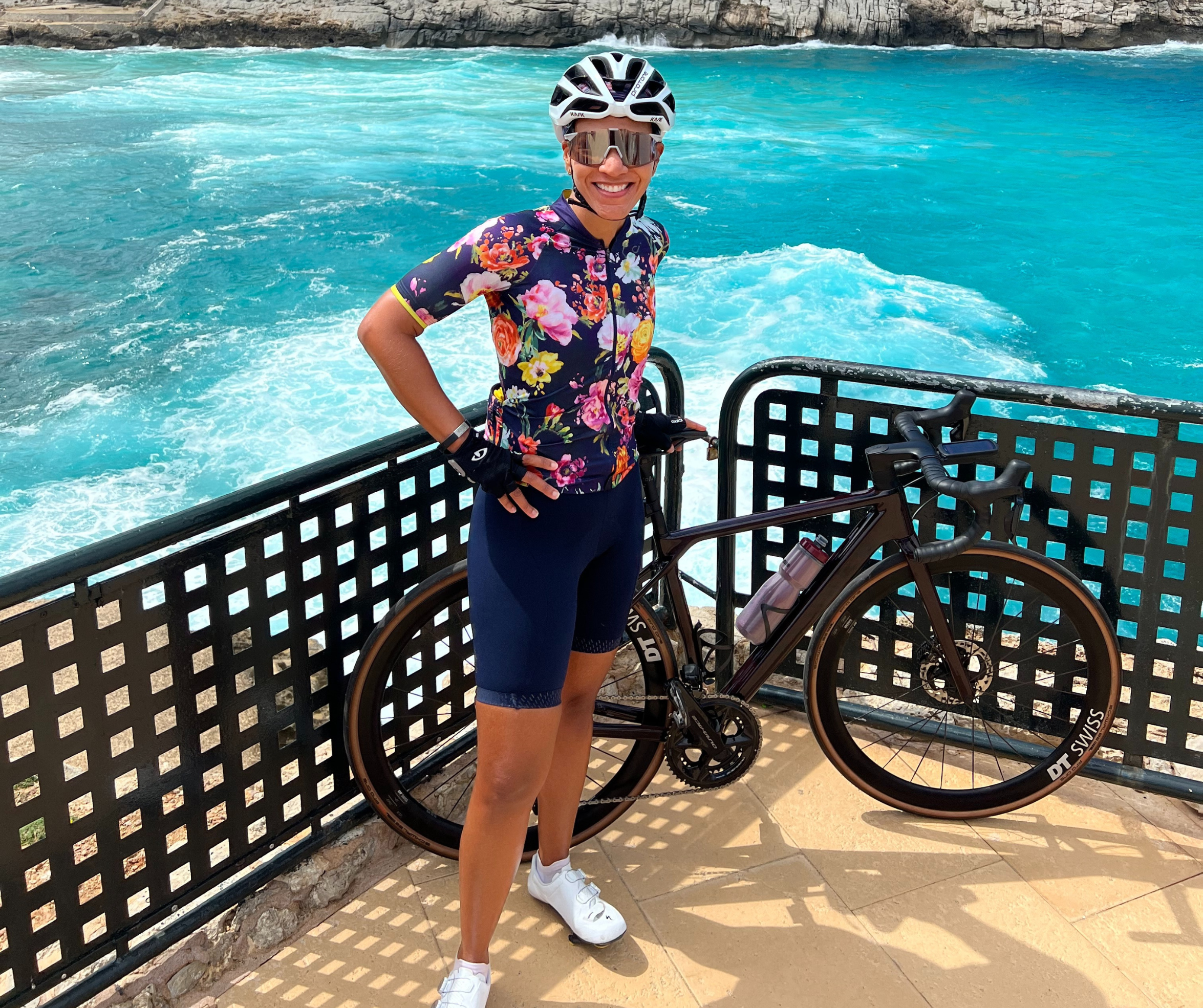

PACK FOR THE CONDITIONS (THE UNEXPECTED). Not everything during your adventure abroad will go as planned. “Assume there won’t be a bike shop nearby when you arrive at your destination,” said Bourne. “Cycling multiple days? You always want to bring extra.” Extra cleats for clipless pedals. Extra batteries and chargers for electronics. Extra gear and equipment for iffy weather forecasts. “If you're climbing at elevation, the weather will vary,” she said, “so pack layers.” Bourne recommends smart packing, including items like a base layer, jersey, wind vest, long-sleeve packable jackets, and arm/knee warmers. Cycling gear and equipment brands to consider: Rapha, Velocio, PEARL iZUMi, and Giordana.
GIVE YOURSELF GRACE. ABOVE ALL, HAVE FUN. A friend invited a then-amateur cycling Bourne to complete a three-day 350 AIDSRide in the year 2000. The AIDS awareness ride stretched North Carolina to Washington, D.C. Since Bourne loved her gym spin class, she thought “why not.” That experience led to her becoming a Luna Chix – CLIF BAR’s legacy ambassador program for cyclists that inspired more women to ride bikes and at the time supported breast cancer research. Throughout the decades, cycling has given Bourne mental clarity and strength; assisted her with lowering heart rate and blood pressure; and helped maintain her figure (legs and core especially). The years have increased her bike riding confidence and ability to incorporate cycling into the outdoor leader’s traveling lifestyle. She devoted 8 to 10 hours a week for four months straight to train for Mallorca trails. “I exceeded my personal goals,” she said. “In years past, this accomplishment hasn’t always been the case with factors out of my control – like my body’s response to jet lag, the elements, road closures, and at times falling sick.” Bourne has learned to go with the flow on her cycling journey: “Travel being grateful for your health and the freedom to just ride.” More about Bourne’s Outdoor Afro story here.
ABOUT OUTDOOR AFRO: Outdoor Afro is a national not-for-profit organization that celebrates and inspires Black connections and leadership in nature. What started as a kitchen table blog by Founder and CEO Rue Mapp in 2009 has since grown into a cutting-edge nationwide network with 100-plus volunteer leaders in 60 cities. “Where Black people and nature meet,” Outdoor Afro reconnects Black people with the outdoors through outdoor education, recreation, and conservation. Follow us @outdoorafro on social.