Black People Do
As I speak to more people these days about African Americans and the outdoors, a question that most often leads the conversation is, “Why don’t African Americans engage with nature?”, which admittedly prompts me to let out a little sigh...
Since founding Outdoor Afro, what has excited me most is the number of African Americans from around the country who share a variety of ways nature can be enjoyed. People post pictures, blogs, and videos that collectively shout, “Yes, we do love the outdoors!”

We sometimes forget that African Americans have always valued peace, recreation, and connection in natural spaces, but the way we connect with nature can sometimes look different than what others may define as “real” engagement and may not take on the form of activities such as primitive camping, rock climbing, mountaineering, or whitewater rafting.
Black participation in nature can also be difficult to measure, and is rarely featured within mainstream media representation. But it does exist. From Harriet Tubman, who knew how to navigate slaves to freedom because of the interpretive path nature provided her, to our mother’s vegetable gardens that nourished our homes, to the black vacationers at American Beach – we have thrived in nature.
"But I hike all the time, and I never see African-Americans on the trail!”
There are indeed some graphic historic associations and memories involving prohibited access to parks; terror in the woods and in open water that inhibit some African Americans from building on our relationship with nature to include more places and activities. Dr. Carolyn Finney of UC Berkeley, Dr. Nina Roberts of San Francisco State University, and authors Audrey Peterman and Dianne Glave have each done a remarkable job of both researching and documenting our fascinating history with nature; they all conclude that in spite of a sometimes tenuous past, positive African American relationships to land and place prevail.

But today, even as we work and conduct business together, Americans still lead somewhat segregated lives when it comes to where we live, worship, and recreate. Many African-Americans share on Outdoor Afro that they enjoy familiar nature easily accessible from home, such as local parks, lakes, or backyards in the company of family and friends, versus venturing miles away from cities to unfamiliar places where few people “look like them” and, in reality, may not welcome them.

So how do we dispel the myths?
Even those African Americans who swear they hate camping, and say they only do the outdoors if there is a 4-star hotel involved, can still admit to fond memories of fishing along the banks of a favorite lake with a family member, or might be found eagerly participating in family gatherings, celebrations, or reunions under the canopy of trees. Like this one:
So it is important to remember that engagement with the outdoors for African Americans, and other ethnic groups, can take on many forms in various places. It might look much different than mainstream adventure based activities. For these reasons, the work before those of us who are trying to create relevant outdoor programming, or share new experiences in nature should recognize and build on existing behaviors and preferences.
Therefore perhaps a more compelling leading query in the journey toward greater participation in the outdoors might be, “How can African Americans expand on their relationship to nature?” -- an elevating question that Outdoor Afro and many others are eager to answer and will continue to pursue.

Join us at Soul Food Farm: October 15th

Want to learn the best ways to break down grassfed beef into American and Italian cuts AND support urban school garden projects? If so, we invite you to take your love of good food and good deeds to the next level! Join Outdoor Afro at this fundraiser for Slow Food Solano’s school gardens project, the Farmer-Veteran-Coalition and Gleason Ranch, in Northern California.
After a demonstration by skilled butchers, the event will culminate with a drawing to distribute all the cuts to those attending.
The day’s offerings also include a bounteous spread of beautiful, delicious food and artisan micro brews.
Master butchers Angela Wilson of Avedano's, Chris Arentz, Dave the Butcher, Zach Gero from Shoppers Corner in Santa Cruz and Josh Kleinsmith of Piedmont Grocery in Oakland will be demonstrating the different styles of cuts and do a Q & A.
In addition, John Fink of The Whole Beast will be grilling Soul Food Farm chickens and talking about open fire cooking.
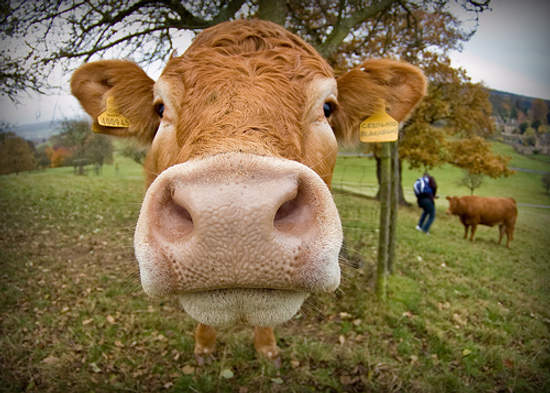
In short - a day of amazing food and good company!
To learn more about the event, go to Soul Food Farm’s face book page or follow the link :
We greatly appreciate any efforts on your behalf in spreading the word and fundraising for these three worthy organizations!
Spotted on Sunday (SOS)
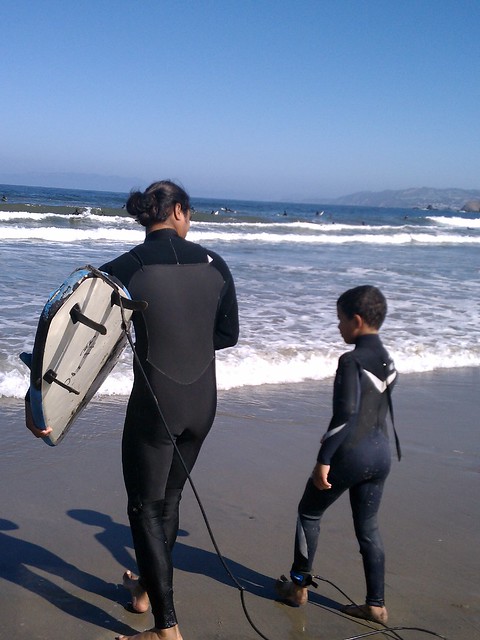
Glad to report my 8 year-old-son Billy had his first surfing experience today, courtesy of my awesome co-worker Manav Thapar. Billy had no fear, and much tenacity, as he learned and was successful standing up several times on the board! I was too busy cheering him on to catch him on the waves, but here are a few shots of his wetsuit experience:

And Teresa Baker followed up with a shot of natural beauty in Big Sur, California!

Where were you Spotted on Sunday?
September's Bird of the Month: Warbling Vireo
By Douglas "Birdman" Gray
I've seen some great birds lately. Some distinctive ones. Some rare ones. Some colorful ones. Some with very lovely songs. But the bird that impressed me most over the last month is, for the most part, none of those things.
This month's featured bird is the impressive (for me anyway) Warbling Vireo.

Walking through almost any wooded area in Indiana (or any wooded area in the United States for that matter) you will likely hear the Warbling Vireo singing its pleasant song. (The mnemonic of "If I see you, I will seize you, and I'll squeeze you till you squirt!" is very useful in identifying and remembering this bird’s song.)
While easily heard, the Warbling Vireo can be difficult to spot. They tend to perch themselves high in treetops. When they are seen, this common bird is often described as "nondescript". I’ve heard it said, amongst birders, "If it's in a tree and it has a totally nondescript plumage, then it must be a Warbling Vireo."
This vireo is indeed a rather drab bird. It has a grayish/olive-gray back, a somewhat whitish breast that sometimes has a yellowish wash, an almost indiscernible dull white stripe over the eyes, and bluish/grayish legs. No wingbars. No tail spots. No eye ring.
OK.........I know the Warbling Vireo is rather plain and isn't impressive to look at. But while most other birds are hunkered down and shunning the midday sun, in the "dog days of summer", this bird will be singing. It's as if this bird is saying, "I know it's hot, but I'm glad. I know it's hot, but I'm grateful. Things could be better, but I'm gonna sing." That impresses me!
I think humans could learn a thing or two by observing the impressive Warbling Vireo.

Douglas “Birdman” Gray has been birding almost all of his life. He grew up on a family farm near Clarksville, Tennessee, where they grew crops ranging from apricots to wheat, and most things in between. They also raised chickens, guineas, pigs, horses, and a cow named…….Apples. Doug’s grandfather identified the birds they would see daily on the farm.
Doug now resides in Indianapolis and works in Parenteral Engineering with Eli Lilly and Company. Most of his current birding takes place in Indiana, with a concentration on Central Indiana, where he leads bird walks for “Backyard Birds”. Doug can be reached at 317-255-7333.
A Trip to the Sequoias: A Family Discovers a National Park
Contributed by Outdoor Afro Gloria Knox of Los Angeles, CA
This summer my family took the opportunity to reconnect with nature. In planning the obligatory summer vacation, my husband and I realized we were short on time and funds. We decided that a trip to an in-state National Park would maximize our summer vacation experience and be cost effective. We visited both Sequoia and Kings Canyon National Parks in California, and it was one of the best experiences we could have had.
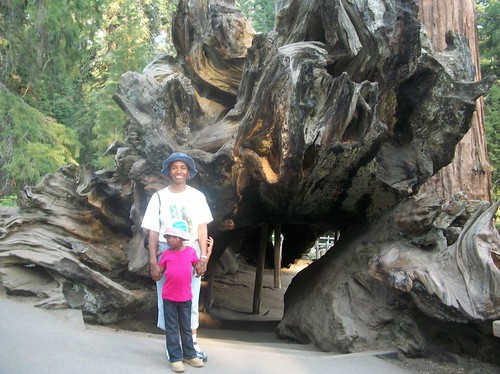
Our initial plan was to rent a recreational vehicle to take to the parks. But there were some maintenance issues with the RV we were going to borrow, so we ended up staying at a hotel just a few miles outside of Sequoia National Park. While it seems like it would be ideal to stay inside a National Park (and we will likely do that next time), I enjoyed staying outside of the park. There was a lot to see and do in the little town outside of the National Park. The hotel seemed to be much less congested than the campgrounds within the park. Also, there was a pool at the hotel that my daughter had to visit each evening after coming off the mountain.
Our first night we had dinner just outside of the park, at a restaurant that was built adjacent to a river. The restaurant was completely open, only floors and ceilings and one could see and hear the water rushing by. It was romantic and the experience of having dinner outside, in the mountains, with the sound of the water washing over the rocks was exhilarating.
The next day we set out for Sequoia National Park. We first visited the Giant Forest Museum. There they provided detailed information about the history of the Park and of the Sequoia trees. There were numerous displays detailing how large the Sequoia Trees were as compared with other common man-made structures such as a football field, etc.
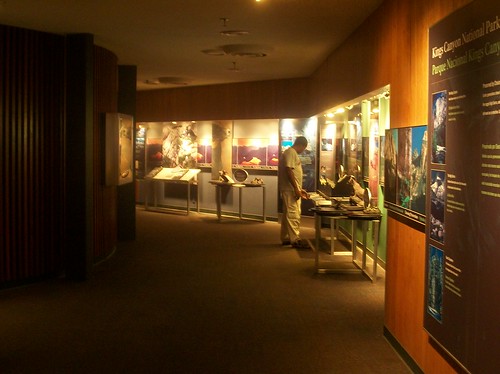
Next we took a self-guided hike on a nature trail. We saw many trees and plants that were native to the area, and a variety of birds. And a passing park ranger pointed out some relatively fresh bear paw prints, but we did not see any bears, although I was interested in seeing a bear…from a safe distance!
Sequoia National Park is divided into several villages. We drove to another area where there is an upscale hotel, the Wuksachi Hotel in Wuksachi Village. It looked very nice, somewhat isolated and very expensive. We drove to Lodgepole Village to have a late lunch. This was a major campground area, with RV’s and tents everywhere. There was an eatery, a wonderful gift shop/general store, laundromat and another visitor’s center - lots of activity. In the middle of it all, we enjoyed a wonderful lunch and followed by the Visitors Center.
Check out the rest of our photos:

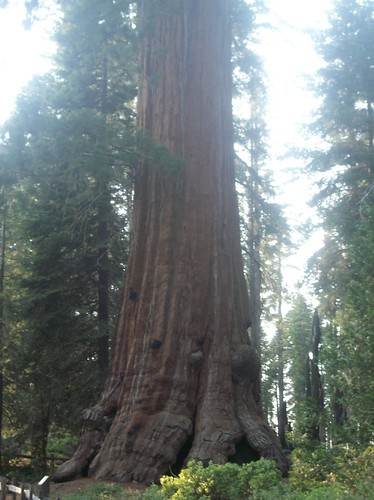
On Thursday, we planned to visit Kings Canyon National Park, but when we arrived at Sequoia, we were told that there had been an accident on the road between the two parks and that the road would be closed for the next 1-2 hours, so we decided to further explore Sequoia. We visited the Beetle Rock Education Center. It was an educational center designed for children to teach them about the great outdoors. My daughter loved it.
We finally were able to get on the road again and made our way to Kings Canyon. First, we visited the Visitors Center in Grant Grove Village to get an overall history of the National Park. We then took a hike to the General Grant Tree—the largest tree in Kings Canyon National Park. After that experience it was time to make our way home. We had a great time and learned a lot about our National Parks. We cannot wait to visit more of the many National Parks!

Outdoor Afro SOS! - Spotted on Sunday
Teresa Baker shared on Facebook her time today at the Muir Woods National Monument.
Where were YOU spotted on Sunday in the outdoors?

A Day of Service on the Underground Railroad
Contributed by Brother Yusuf Burgess

This event is part of Children and Nature Network's Serve Outside September Campaign. The Green Tech High BOYS OUTDOOR LEADERSHIP TEAM (BOLT) will participate in the clean-up and landscape improvement of one of Albany, New York's African American historic landmarks. The Stephen and Harriet Myers House (official name: Stephen and Harriet Myers Residence) is a historic home located in Albany County, New York. It was built in 1847 and is a 2 1/2-story brick townhouse in the Greek Revival style. It is three bays wide, and the basement is separated from the first floor by a sandstone water table. The second story features eyebrow windows set in the brick frieze cornice. Stephen Myers, who lived in this house in the mid-1850s, served as Chairman of the Vigilance Committee of the Underground Railroad of Albany and had actively assisted escaped slaves for nearly 30 years, starting in 1831.
Stephen Myers lived at this address with his wife Harriet and their four children. The Vigilance Committee was active in the Underground Railroad from the early 1840s into the 1850s and met at this location when the Myers' lived there. It was listed on the National Register of Historic Places in 2004 and the state historic register. It is also listed on the New York State Underground Railroad Heritage Trail and a site on the National Park Service's National Network to Freedom.

The Boys Outdoor Leadership Team will assist Paul Stewart, co-founder of the Underground Railroad History Project in a Day of Service on the grounds of this historic property. Trash removal and lawn maintenance will take place on Sunday 9/11 from 11:00 AM until 2:00 PM. More than 25 boys from Green Tech will participate in the clean-up, under the direction and supervision of Brother Yusuf Burgess.
The Underground Railroad was an informal network of secret routes and safe houses used by 19th-century black slaves in the United States to escape to free states and Canada with the aid of abolitionists who were sympathetic to their cause.
Event Location
Boys Outdoor Leadership Team (BOLT)
321 Northern Blvd.
Albany, NY 12210
Tight Lines: Sport Fishing in Alaska
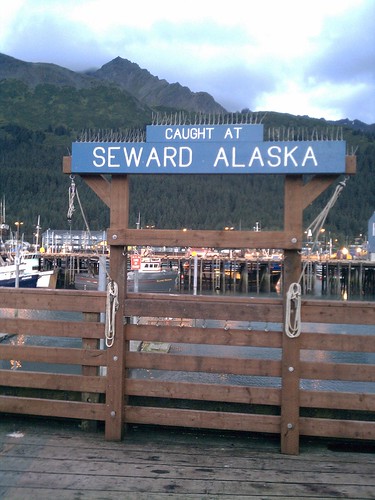
The Seward Military Resort has four deep-sea halibut charter fishing boats that operate seasonally from Memorial Day through Labor Day on Resurrection Bay. All fishing equipment is provided, but we obtained our fishing licenses, and brought our own rain slicks and rubber boots to help keep dry in anticipation of wet weather.
On the morning of the trip, we woke just after 5AM. Once outside, we were uncertain about the trip’s status, as we felt strong gusts of wind at the resort suggesting the bay might be too choppy for fishing.
But the resort, who arranged our reservation, assured us that there were plenty of fish to catch without care for the weather, so our trip was definitely on. I learned that in Alaska, you must be prepared for a variety of weather conditions. There is the local saying, “if you don’t like the weather, wait five minutes.” No truer words.
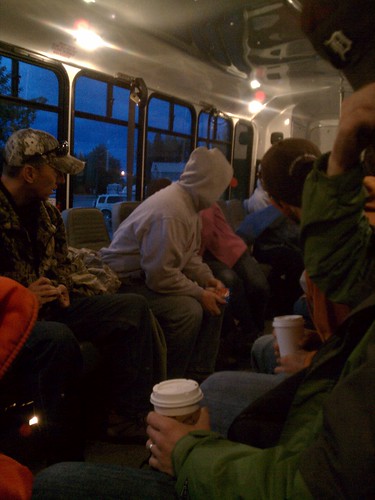
Around 6AM we boarded the bus with over a dozen other fishers and headed to the bay. Along the short drive to the docks, we received some instruction about what to expect then headed to our waiting boat, the M/V Top Cover for a lesson in salmon and halibut fishing 101.
We motored out of the bay for about 30 minutes, while I napped under the effects of a few preventative doses of Dramamine.
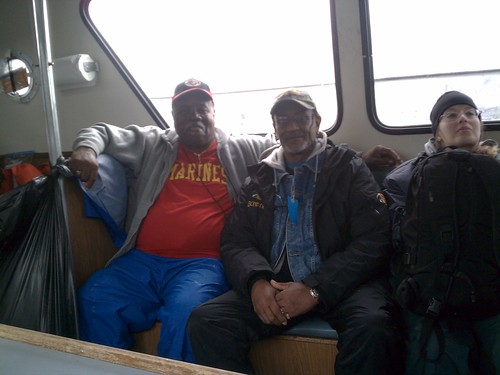
Among the group, I was especially glad to meet Luther and Eric, two brothers who shared with me they fish all over the globe in search of the best catch. And they were here in Alaska to fish each day for the entire week.
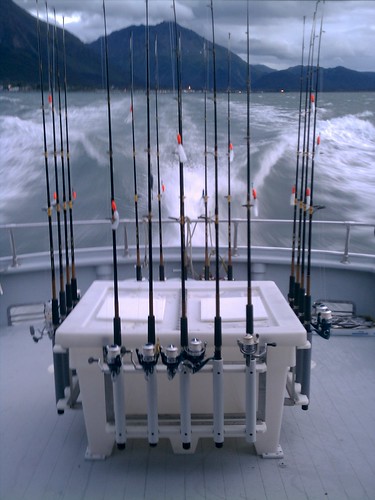
Our boat used sonar to detect fish, and sea depth. So we stopped at spots to drop our lines that had the best likelihood of catching either salmon or halibut.
To catch salmon requires constant, shallow, up and down movement of fresh bait on the line. Halibut requires a two-pound weight on heavy gauged line that drops to the bottom floor where these fish dwell. This kind of fishing is not of the pedestrian variety, and was definitely a workout!
At first, the bites on the boat were mainly rock fish and cod, and after hours of moving around the bay, with few of us catching the prized fish, we became uncertain about how the day would turn out. On top of that, the weather became very unstable.
The ocean swells moved our boat up and down several feet, and rain whipped us from every direction. It was necessary at times to set aside the poles and go inside the cabin, or hold on to avoid going overboard! Eventually, rain found its way into my boots, and through my clothes. Without the constant exertion from the movement of my pole, my body started to chill. We noticed these weather conditions also meant few other fishing boats and charters besides ours were on the bay that morning.
After several determined hours of moving around the bay guided by sonar in search of fish, we experienced more inclement weather, yet the views of the surrounding mountains and wildlife were stunning with sea lions and puffins on the horizon. But eventually with patience, we each began to have tight lines!
“Fish on!” we called out when we had a bite.
“Color!” we shouted, as reeled fish came close enough to the surface to be in view.
With these calls, the charter staff rushed over to help bring in the fish with their nets.
It was in the last two-hours of our journey that I caught all my fish for the day. Mark and I were proud to reel in halibut, salmon, rockfish, and cod. But there were two salmon that got away from me -- a real bummer, and now I can fully appreciate the saying that describes, “the one that got away.”
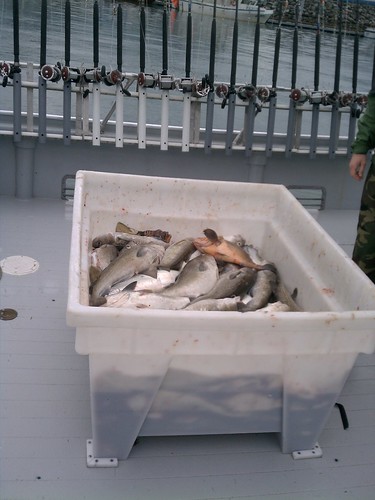
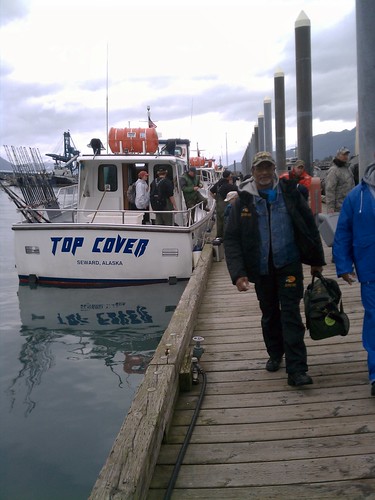
In the end, our group returned with dozens of fish, and headed to the resort fish house to fillet and vacuum seal our catches. We shared beers, filleting tips, and lots of camaraderie along the way.
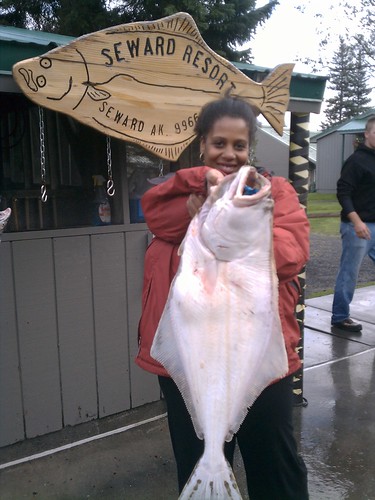
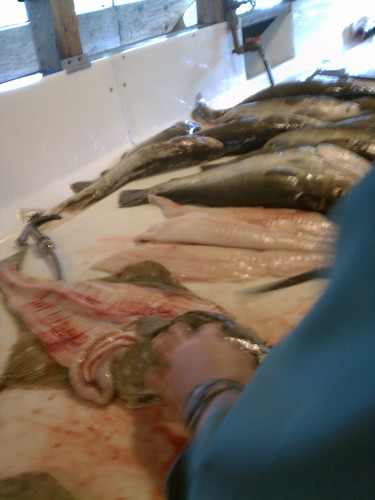
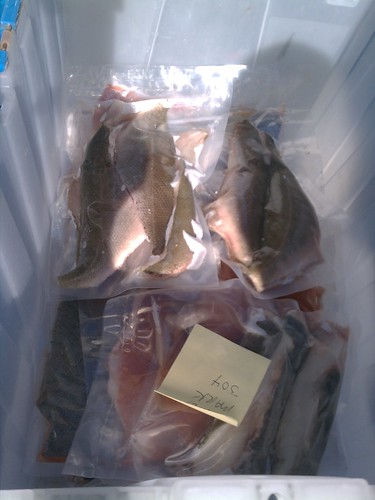
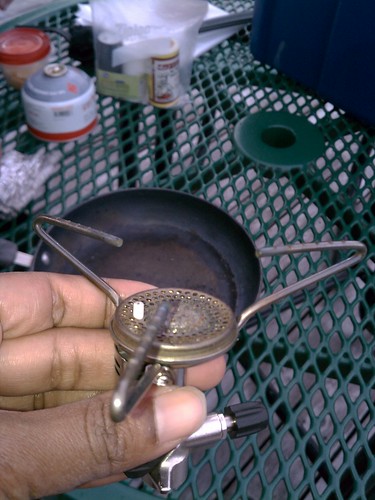
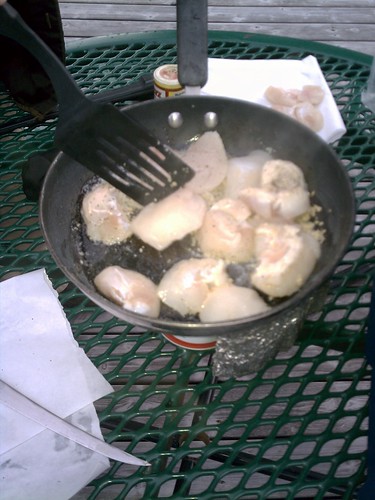
After all the processing was over, with our fish was packed away in the resort freezer, Mark and I set-up a portable stove outside our room to cook halibut cheeks, a favorite delicacy, with lots of butter and garlic with new friends Luther and Eric -- a wonderful sea-to-table experience.
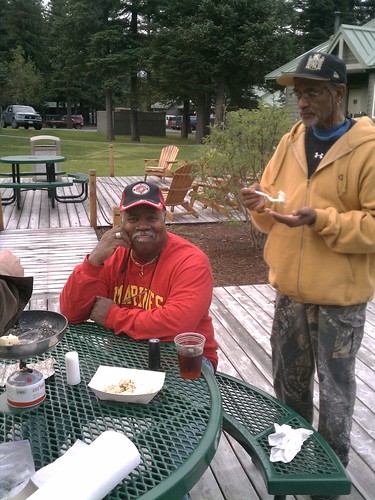
On my last night in Alaska, I went to bed grateful for dryness and warmth, but also for the exciting adventure of the trip to America’s last frontier.
And I cannot wait to return.
Outdoor Afro is grateful for Mark B. who hosted such an amazing and fulfilling tour of Alaska!
Click to follow my trip from the beginning!
Greenway Ride a Success!
In collaboration with the East Bay Regional Parks, Urban Tilth, and Richmond Spokes, Outdoor Afro helped to produce today’s “Greenway to Greenway” community bike ride.
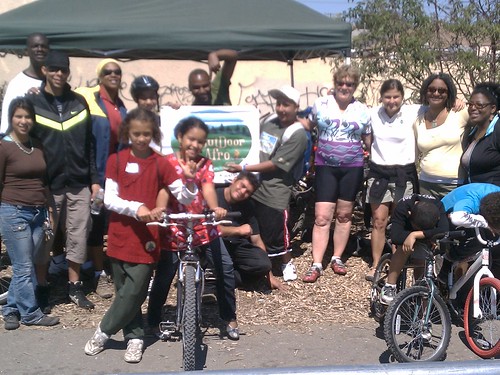
The ride was suited for all ages, and designed for riders to explore the benefits of local “green” transportation corridors that also connect us with nature.
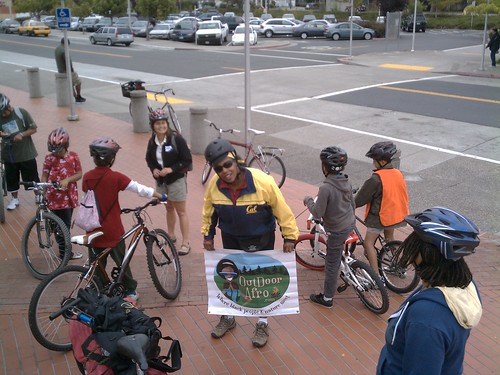

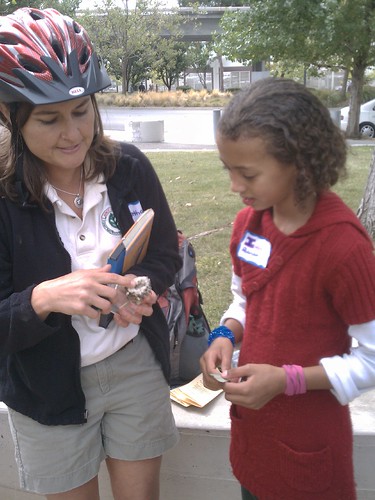
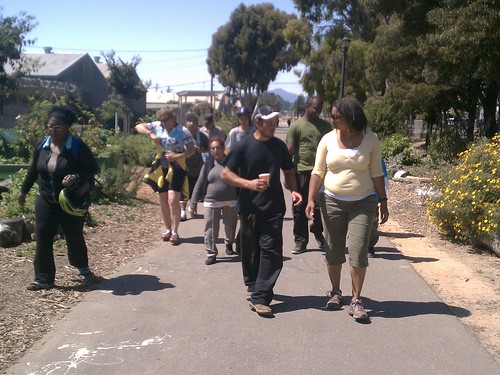
Our group assembled at the train station, where our bikes were checked by cycle wizard Brian Drayton, founder of Richmond Spokes. After a brief intro and safety talk, we cruised 14 miles along the Ohlone and Richmond Greenways.
We stopped along the way to learn from naturalist Bethany Facendini of the EBRP the many different plant and animal species that thrive along the corridor.
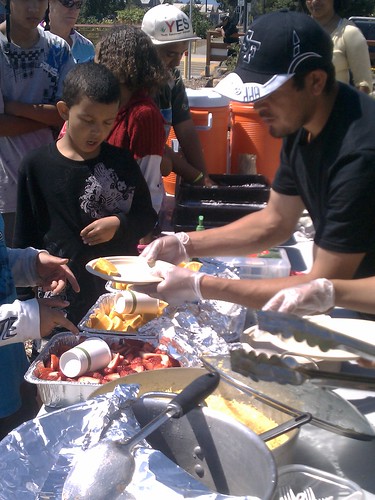
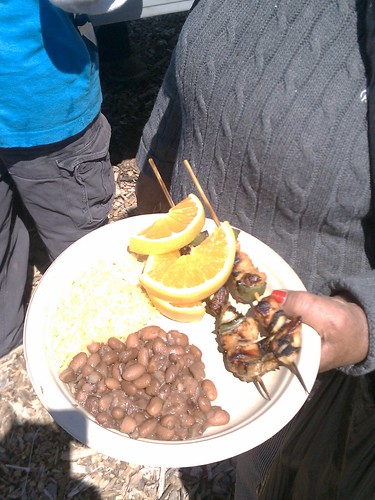
Effortlessly, we rode through the cities of Berkeley, Albany, El Cerrito then arrived in Richmond, where we were welcomed by the staff of Urban Tilth, who provided a delicious chicken kabob barbeque and refreshments.
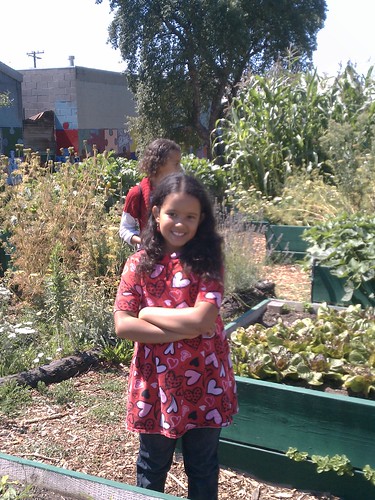
Doria Robinson, the passionate Executive Director of Urban Tilth, gave us a tour of butterfly and vegetable gardens created and tended by her local staff who are transforming their neighborhood, with great pride, one seed at a time.
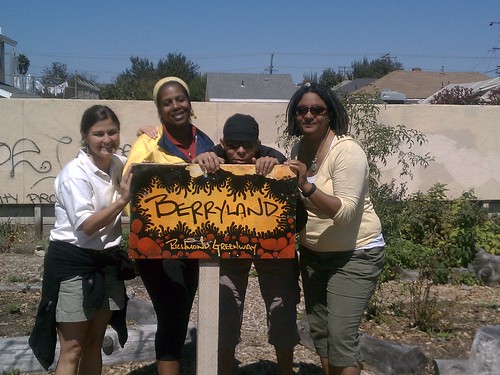
Thank you Doria Robinson, Brian Drayton, and Bethany Facedini for coming together to create yet another powerful experience connecting community with nature.
Read more about the Richmond Greenway and view more pictures!
What "greenways" exist in your community?
Hiking in Alaska's Kenai Fjords National Park
Ice Age Hiking in Alaska
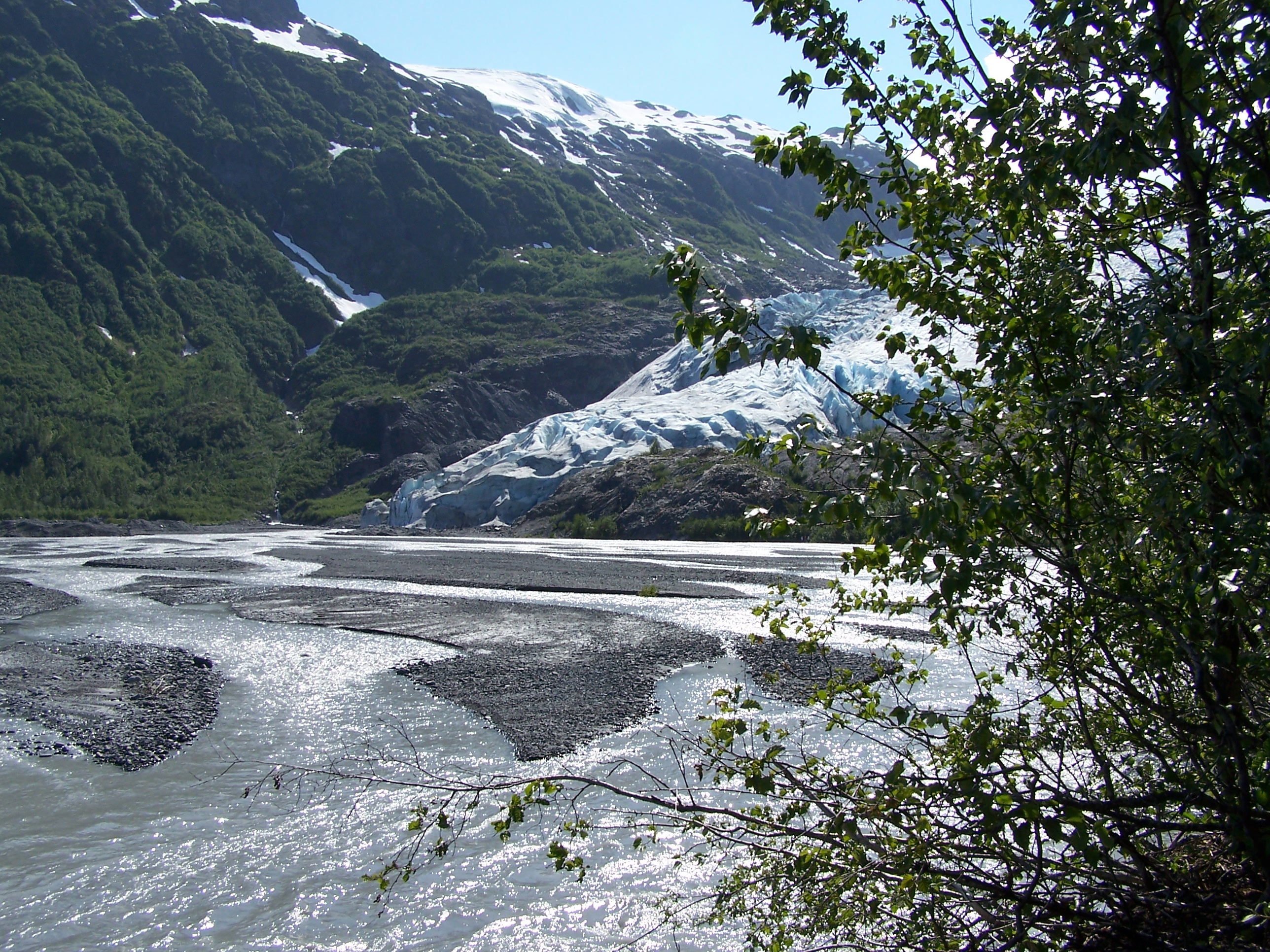
 After our visit to the wildlife refuge, we leisurely moved along the scenic road toward the coastal fishing town of Seward that edges Resurrection Bay along the Kenai Peninsula of Alaska. We landed at the Seward Military Resort, a popular yet understated destination for US active duty or retired military personnel and their guests.
The manicured grounds were beautiful, yet sensible. And they have a selection of yurts, guest rooms, or townhouses from which to choose. Since Mark is a US Army officer, it was an easy selection – and a perfect location for our planned activities. They also had an impressive Fish House I now realize was a key amenity to stage our activities for the next day.
But first, we took a tour by car around Seward then stopped for a bite to eat at Marina Café for some crispy halibut fish and chips. With calories to burn, we headed down the road for a  hike to Kenjai Fjords National Park to visit Exit Glacier. It is one of the few places in the area where you can safely witness up close an ancient glacier with Ice Age origins that still re-shapes the landscape, and observe how plant life adapts to the barren rocky land exposed by a glacier’s retreat.
At the park, I appreciated that there were several trails from which to choose, from flat and easy to challenging. We decided on a self-led one-mile gradual climb though a cottonwood forest to a scenic edge of the glacier. On our way back, we chose a different route, where we carefully traversed rocks over a gentle river to access the terminus of the melting ice.


Once we arrived, we stood in front of the vast blue to take it all in and capture the scene in photos. We had already noted interpretive signage that warned visitors not to stand under an overhang of ice, as it can fall without warning, so we were careful!

