An Alaska I Never Knew
Alaska is not much for words.
It is entirely about the experience. We have all grown up with the iconic byline of Alaska rendered on a US map in a tiny square smaller in scale than the state of California, almost as if an afterthought. But the state is much bigger than you think.

Wildflowers with Denali in the background
For years, the image of Alaska simply conjured up for me an unknown territory of unforgiving cold. But for many others, Alaska is imagined with much more complexity and considered the last American frontier.
The Alaska I finally experienced last weekend awed me with its tensions between immaculate natural beauty, deeply rooted Native culture, and sense of respite from the urban experience. But it also divulges a potential for peril for those not careful. Respect for nature in Alaska is simply not an option. And I learned quickly that for those who live, earn, and thrive in Alaska; they have discovered and adapted to the ways of the natural world that yield endlessly satisfying benefits.
Mark, a friend of many years and native of my hometown in California, generously shared a slice of his adopted state with me last weekend. It was a quick yet carefully planned trip that allowed me to sample a variety of opportunities to experience what this great state holds in abundance. We saw plenty of wildlife, hiked among ancient glaciers, and fished for Alaska’s iconic salmon and halibut.
Arriving in the evening, we drove to the cozy resort of Alyeska where we would stay the first night. It is located just off the scenic Seward Highway in the town of Girdwood, part of the Municipality of Anchorage. It is the premier destination in Alaska for visitors and locals alike. Nestled against the awe-inspiring Chugach Mountains, in view of many glaciers, the resort offers year-round adventures and activities.

We dined our first evening at the Double Musky Inn down the road that had a down-home Cajun theme. Yet we decided on two local specialties: a delicately flavored white salmon and a pork loin with rhubarb sauce. Each were butter-knife tender and delicious.
The next morning, we ventured to the Alaska Wildlife Conservation Center, an organization that provides land and refuge for orphaned, injured, and ill animals that cannot survive on their own in the wild, and educates visitors about Alaska's wildlife. In the mile-long path through the refuge, we saw bears, elk, moose, reindeer, porcupines, protected birds and wild felines. There, I felt fortunate to safely observe and capture in photos some of these important native species:

A Moose and a Brown Bear

After a morning of viewing inspiring wildlife, we meandered by car southwest several scenic miles between mountains and mineral dense turquoise lakes toward the town of Seward to explore Kenai Fjords National Park’s Exit Glacier at the tip of the Kenai Peninsula.

Next Up: Our Hike among the Ice Age


Outdoor Afro is in Alaska!
Hi Friends! I am off now on a four-day run in Alaska to take a quick survey of some of the adventure and beauty the state offers.
We have a full itinerary that includes hiking along glaciers, viewing wildlife, and halibut fishing.
Please follow us on Twitter (Hashtag #OAAK) to follow our moment-by-moment adventure. Expect photos as we go and a full blog once we return next week!

Discovering Important History During Our RV Experience
 Our last stop before turning in our teardrop trailer on Sunday was to check out nearby Marshall Gold Discovery State Historic Park. It was our intention to learn about gold panning and history of the California Gold Rush.
James W. Marshall discovered gold in 1848 on the South Fork of the American River in the valley known as Cullumah by the Nisenan Indians who lived in the area sustainably and peacefully. But Marshall’s discovery led to the greatest mass movement of people in the Western Hemisphere, and it was the spark that ignited the rapid appropriation of the West during the ensuing decades. The gold discovery site, located in the still visible tailrace of Sutter's sawmill, in present day Coloma California, is one of the most significant historic sites in the nation.
But as my children and I moved about the site, we were surprised to learn about a nugget of African American history in the area: The Monroe Family.
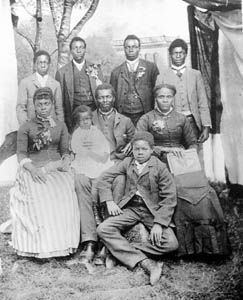
According to Bill, our interpreter, Monroe was the grandson of Peter and Nancy Gooch, who were freed from slavery when California became a state in 1850. The Monroe family in particular became successful fruit farmers and prominent property holders in Coloma. The family grew and prospered with an estate that grew to eighty acres.

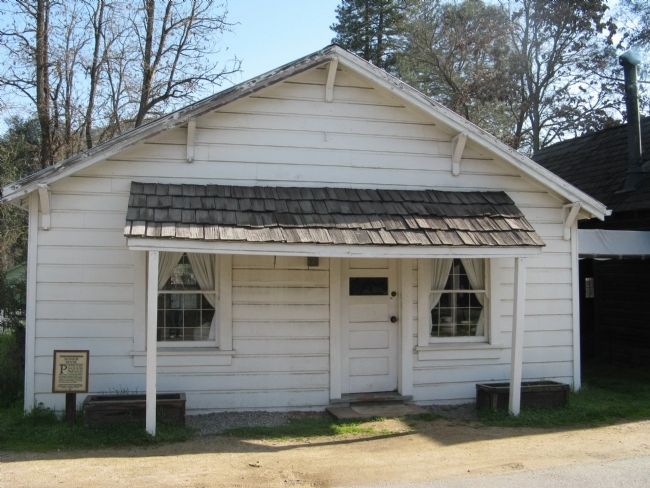
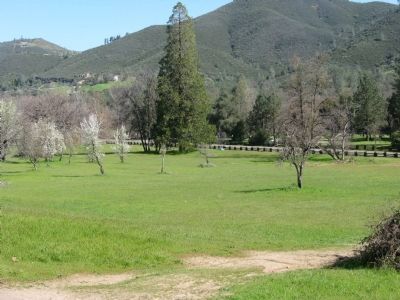
For decades, the Monroes were well liked and respected for their integrity, good citizenship, and an insistence on being accepted as they were. The end of this pioneering family came in 1988 when its last member, Jim Monroe died at the age of 99. Unfortunately, the Monroes did not have any heirs; therefore their land is now preserved as a public monument to remember an important era of California history.
Follow the trip from the beginning!
Outdoor Afro Goes White Water Rafting!
It was important that our RV adventure last week include activities to help us explore the surrounding, beautiful Sierra Nevada region. And with the American River in sight of our campground, whitewater rafting made perfect sense.
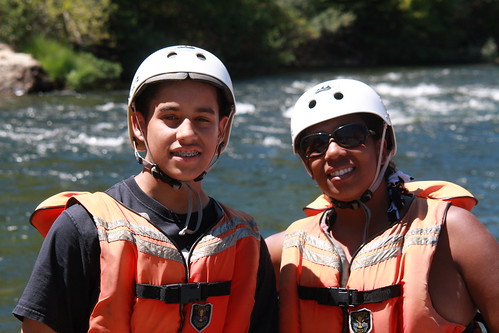
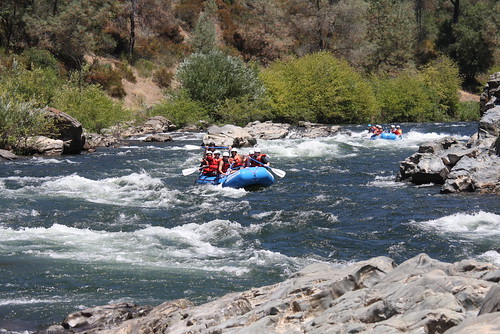
Along the American River there are several companies that provide a range of whitewater experiences. You can choose half or full day tours, and each typically come with meals, and experienced instructors who educate and enliven the experience.
American Whitewater Expeditions (AWE) has been around for over 30 years as a premier whitewater rafting company on the American River. While researching them, I learned they have a reputation of quality rafting adventures that are exciting, relaxing, and most importantly, lots of fun! Jon, the owner, suggested we take the a full-day tour of the Lower Fork of the river, as a trip more suited for beginners, but with lots of whitewater action.
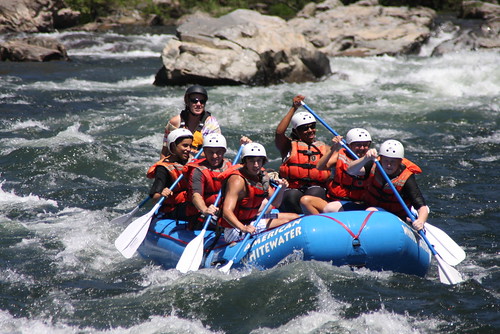
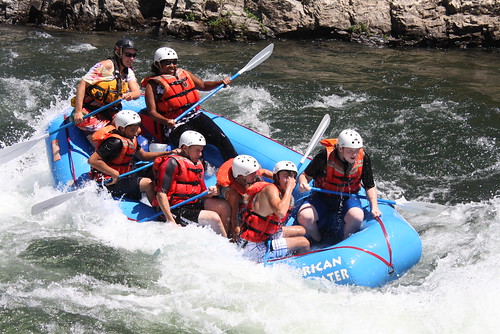
Our trip covered about 15 miles, which lasted five hours, with breaks to jump in the water for a cool swim, and a terrific spread for lunch along the river. Kaitlyn was the source of much laughter with her funny jokes and river trivia. The views of the canyon were simply stunning on this summer day, and we saw interesting birds and other wildlife, such as a rarely spotted river otter!
As the ride went on, I noticed my son cared less about his shoes, and became more courageous! And at the climax of the trip, at a rapid named Hospital Bar, he volunteered to “ride the bull” and take on the rapid while sitting atop the front of the raft. We all wailed with laughter as he predictably got soaked, and fell back into the raft with his feet sticking straight up!
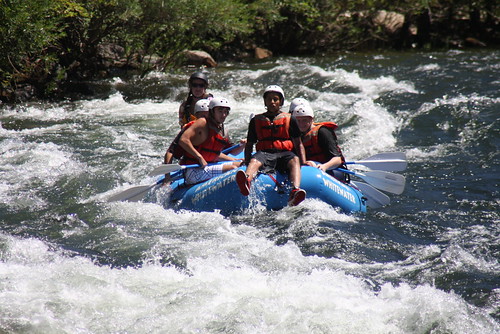
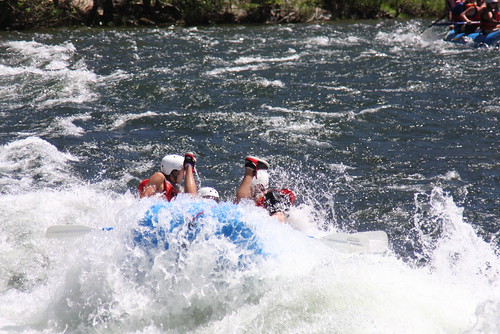
Would we do it again? Oh yes! American Whitewater Expeditions provided an exceedingly competent, fun, and accommodating experience for all. AWE provides raft trips on the three forks of the American, South, Middle & North Forks, Class III -V, and I also discovered they have a fabulous family-friendly campsite on the river that provides camping the night prior, lunch on the river, and use of a thick foam sleeping pad. Two and four person cabin tents are available to rent, some with cots, tents if you need one, and great food you can purchase as a weekend rafting package!
So if you plan to visit the area, I highly suggest connecting with AWE to help you have an awesome rafting experience, but also to help create memories with your family to last a lifetime like I did with my son Seth.
Outdoor Afro thanks American Whitewater Expeditions and Sierra Nevada Photos, and their staff for sponsoring such a perfect day!
Next up: African American Connections to the Sierra Nevada!
A First Time RV Experience
It’s been a wonderful summer of travel for Outdoor Afro, but the highlight was our RV Trip to the Sierra Nevada region in California last week! Check out our story...

 We are also thankful for proud sponsor American River Sales in Auburn, who generously provided us with one of their innovative teardrop trailer designs, and Ponderosa Resort who provided a rich base camp for our Sierra Nevada adventure.
This was the first time my family had ever had an RV experience, and in this case, towed a trailer along to set up camp in an RV Park, in spite of many years of tent camping and a range of other outdoor experiences. Over these two years in the Outdoor Afro community and beyond, I have heard the persistent concerns about wildlife and dirt as being a major reason why some African Americans choose not to camp.
Therefore, it was our goal in this trip to demonstrate that you can camp with comfort, yet find ways to enjoy nature too! In our case, we planed to use both the teardrop trailer and a tent to accommodate the entire size of our party. Getting the trailer hitched was a cinch thanks to the expertise of Gary from American River Sales. The trailer came with a long list of cooking supplies, utensils, and a stove, so all we had to bring was food and our favorite spices!


With limited time to spend at a site like this, there was also a more immediate sense of welcoming among our fellow campers that maximized a sense of neighborhood. Everyone who walked by our campground had a friendly word or a smile, and our teardrop trailer was the belle of the ball with a design unlike any other at our resort.


Preparing our food was also a wonderful experience using the stove provided in our teardrop, I was especially inspired by Evanne Schmarder’s website the RV Cooking Show, where she shares many recipes tailored to the RV experience. The kids and I enjoyed creating together our own recipe improvisation of grilled salmon with garlic and lemon, steamed veggies, and a Caesar salad our first night. Yum!
My younger kids did not even mind doing dishes!
Next up: American River Rafting!
Kansas City Youth Overcome Fears and Enjoy Nature
"How big will the piranhas be?"
Submitted by Outdoor Afro Brandon Pope, CIG, Education Specialist at the Anita B. Gorman Conservation Discovery Center. His blog exemplifies the need for relevant outdoor leadership to help youth feel more comfort and at ease to explore nature for the first time. Click to enlarge the wonderful pictures below:


Birding Basics
I always remind people that there are many ways to engage with nature. I have found bird watching to be a very satisfactory pursuit in that it compels me to engage with nature in an observant and deliberate way. Here is an article by Outdoor Afro contributor Max Wood, who shares the basics of how to get into bird observation and ways to create a bird sanctuary of your own .
.
Bird watching (formally known as birding) is an exciting hobby for anyone with a general interest in the outdoors and wildlife. Whether you’re an avid birder traveling around the world in search of new and rare birds or a simply a casual outdoor enthusiast on a weekend hike, you’ll find that birding offers a unique combination of excitement and tranquility. After learning the basics of birding and identifying just a handful of local birds, I promise you’ll be hooked!
First, it’s important to find a good area in your region for bird watching. Ideally, the area will consist of a diversity of natural habitats untouched by human activities (although many interesting birds can be found in urban areas). The greater the diversity of habitats, the greater the diversity of bird species you’re likely to observe. For example, a walking path that starts in an open meadow, winds through a forest, and ends along a stream (called a riparian zone) would be ideal for birding because each of these three habitat types is home to a unique group of birds. Many local parks, nature preserves, outdoor education centers, and bird sanctuaries are likely to have such an area. If you’re region has a local Audubon organization, this is another great resource for finding a good birding spot.
In addition to location, birding watching is also heavily influenced by the time of year. This is because different groups of birds are present in a particular area during different seasons. In North America, birds can be divided into three main groups in this respect. Neotropical migrants are birds that come from Central and South America, Mexico, and the Caribbean during the spring and spend the summer breeding in North America, eventually returning south in the fall. Examples of such birds include most of the songbirds (e.g. warblers, tanagers, vireos). Other species of birds migrate from the north in the fall, spend the winter in Central of Southern North America, and then return north in the spring when it’s time to breed (e.g. Song Sparrow and Swamp Sparrow). Birds with this migratory pattern are known as winter residents. The third group consists of those that do no migration at all and instead remain in a single area all year round. Common examples of such birds, which are referred to as residents, are the Northern Cardinal and the Red-winged Blackbird.
 This knowledge of where and when to look for birds is essential for successful bird watching. There are also a handful of techniques and tools that you’ll need to become acquainted with before hitting the trails. Most importantly, you should learn how to use binoculars and a field guide. Binoculars allow one to see the details of a bird’s shape and coloration that are often needed to correctly identify the bird. Binoculars come in a range of styles and are generally described in terms of two important parameters: magnification and size. The magnification describes how much larger objects appear in the binoculars compared to with a naked eye, thus a magnification of 8 means that an object will look 8 times larger when viewed through the binoculars. The size of the binoculars (which specifically refers to the diameter of the objective, or larger, lens of a pair of binoculars) determines two important factors: how much light is let in (the more the better) and how big the field of view is (with a larger field of view you’ll be looking at a larger area through the binoculars, and thus birds can be easier to locate). Binocular specifications are listed as a pair of numbers, such as 8X42. The first number, 8, describes the magnification power while the second number, 42, indicates the size of the binoculars. Generally, birders use either 7X35, 8X42, or 10X42 binoculars.
In addition to having a good pair of binoculars, it’s also important to have a good field guide for the area you will be birding in. Field guides provide important information that is crucial for identifying a bird in the field. Field guides not only indicate telltale features, such as the black cap of a male Wilson’s Warbler, but also provide important information regarding the calls and songs, habitats, regional distribution, and behaviors associated with each specific bird species.

About the Author:
I am a biologist pursuing a PhD examining avian neurobiology and behavior. I have conducted a wide variety of research projects ranging from cognitive and neurobiological laboratory studies to behavioral field experiments. As a writer for YourBirdOasis, a retailer of backyard birding supplies and an essential resource for burgeoning and expert birders alike, I have the exciting opportunity to share my knowledge of and passion for birds with many online communities. Visit YourBirdOasis for a huge selection of bird feeders, birdhouses, and everything else you'll need to set up your own backyard bird sanctuary!
SOS! Spotted on Sunday at the Sutro Baths!
Outdoor Afro Zoe Polk shared with us today a photo where she was Spotted on Sunday (SOS) at the Sutro Baths. From thier website, the Sutro Baths are:
"...a hallowed place in San Francisco, modern ruins on the edge of the continent. Crashing waves, labyrinthine structures, wild lilies, cliff-lodged cypress trees reaching towards the ocean, a thundering cave..."

Where were YOU spotted on Sunday in the outdoors?
Outdoor Afro Goes RVing!
THIS Weekend! - and you get to come too!
On Aug. 12th to 14th I will take Outdoor Afro to the foothills of the Sierra Nevada with my nephew and three children for a three-day camping trip at Ponderosa Resort in Lotus, California!
Camp-California.com and Ponderosa Resort are co-sponsoring my trip along with Auburn-based American River Sales and Rentals, which is supplying a teardrop trailer for our use. They are equally eager to learn of our experiences, and how they can expand their collective efforts to reach out to the African American community and get us involved in the Great Outdoors.
Another goal of this trip is to share an outdoor camp experience that still reserves a few creature comforts that the most tentative campers can appreciate. So I want to share how RVing or trailer camping is a terrific option for those who feel intimidated to try more rustic camping experiences.
Over the course of the weekend, we plan to do a day of white river rafting, thanks to our friends at American Whitewater Expeditions, and explore the surrounding California Gold Country. I also plan to test my culinary skills with some RV friendly recipes. From camp, I will tweet, blog and film all of our fun so that the Outdoor Afro community can follow our journey and share in our experiences.
See the full press releases HERE

We can't wait!
How many of you RV already?
Get Out. Get Green. Get Paid.
Recently, I had the pleasure of spending time on Maryland’s Eastern shore with colleagues, Akiima Price, Chief of Education Programs at the New York Restoration Project, David Greaves, the Black Employment Program Officer for the EPA, and Nick Clemons, a National Park Ranger at Assateague Island National Seashore. Hosted and organized by the Maryland Coastal Bays Program and Assateague State Park, Get Out! Get Green! Get Paid! was an important opportunity to connect with nearly 200 youth, ages 14-25, to help them consider a sustainable career and lifestyle within nature.

The Maryland Coastal Bays Program exists to protect and conserve the waters and surrounding watershed of Maryland’s coastal bays to enhance their ecological values and sustainable use for both present and future generations. Participants in the symposium included students enrolled in the Upward Bound program at the University of Maryland Eastern Shore and those involved in conservation-related job programs including Coastal Stewards, the Maryland Conservation Corps, Maryland Conservation Job Corps, Youth Conservation Corps and the Chesapeake Conservation Corps.

While my colleagues and I began our weekend with presentations at the University of Maryland, Eastern Shore about our inspiration to embark on careers within the environmental field, what followed were two days filled with amazing local outdoor activities, such as fishing, kayaking, hay rides, air rifling, pontooning, exploring the coastal bays, swimming on the beach at Assateague, and best of all, great conversations and relationship building.
Carrie Samis, the Education Coordinator for Coastal Bays, really gets it, and designed a summit that was not just about talking the talk, but walking the walk. Unlike other experiences where I have come to present to a group only to leave the same day, time was planned over the weekend for my colleagues and I to get to know the program youth individually, and learn what mattered in their day-to-day lives in Delmarva, as called by locals (Delaware, Maryland, Virginia).
One Coastal Bays Steward, Tashonna Grant fast became my partner in fun, and in our time together doing recreational activities, I got a chance to observe and learn from her about pushing through obstacles. “I hate snakes,” she told me, but as we talked about the importance of wildlife in our daily lives, something clicked. And later when we had a chance to visit a nature preserve with a display of wildlife, Tashonna was among the first to handle one of the native snake species -- and giggled through the experience.

But as I got to know more Coastal Stewards, I learned Tashonna’s courage to engage with nature is typical for this group, but not without careful intention and effort. Even though many of the program youth come from underserved communities, the program goes the extra mile to engage families and trusted institutions over time, such as local churches, to help foster a pathway of trust that help program youth feel supported. Importantly, these youth gain valuable work experience, participate in professional and personal development opportunities, and receive a paycheck. I also learned that many of these students later secure positions with state and federal agencies, local parks and nonprofits.

Maryland Coastal Bay’s Program has also earned the deep respect of numerous local business, and community partners through its ongoing collaboration and critical bay and wildlife stewardship. And as a result, wherever our group went, we were treated like royalty!
My deep thanks go out to the Maryland Coastal Bays Program for such a moving program. Most especially for Carrie Samis and Nick Clemons for all their tireless coordination and enthusiasm, Dave Wilson (Executive Director) for great beaching and birding; the exceedingly hospitable folks at Fager’s Island, The University of Maryland, Eastern Shore, Hazel Outdoor Discovery Center, Assateague Island National Seashore staff, ALL the amazing youth, my awesome colleagues, and each person along the journey who contributed in big and small ways to make my trip to Delmarva a lasting and inspired memory.
Click below to see photos from the event!