Outdoor Afro x Foss Swim School make national splash, life-saving impact through Making Waves Program
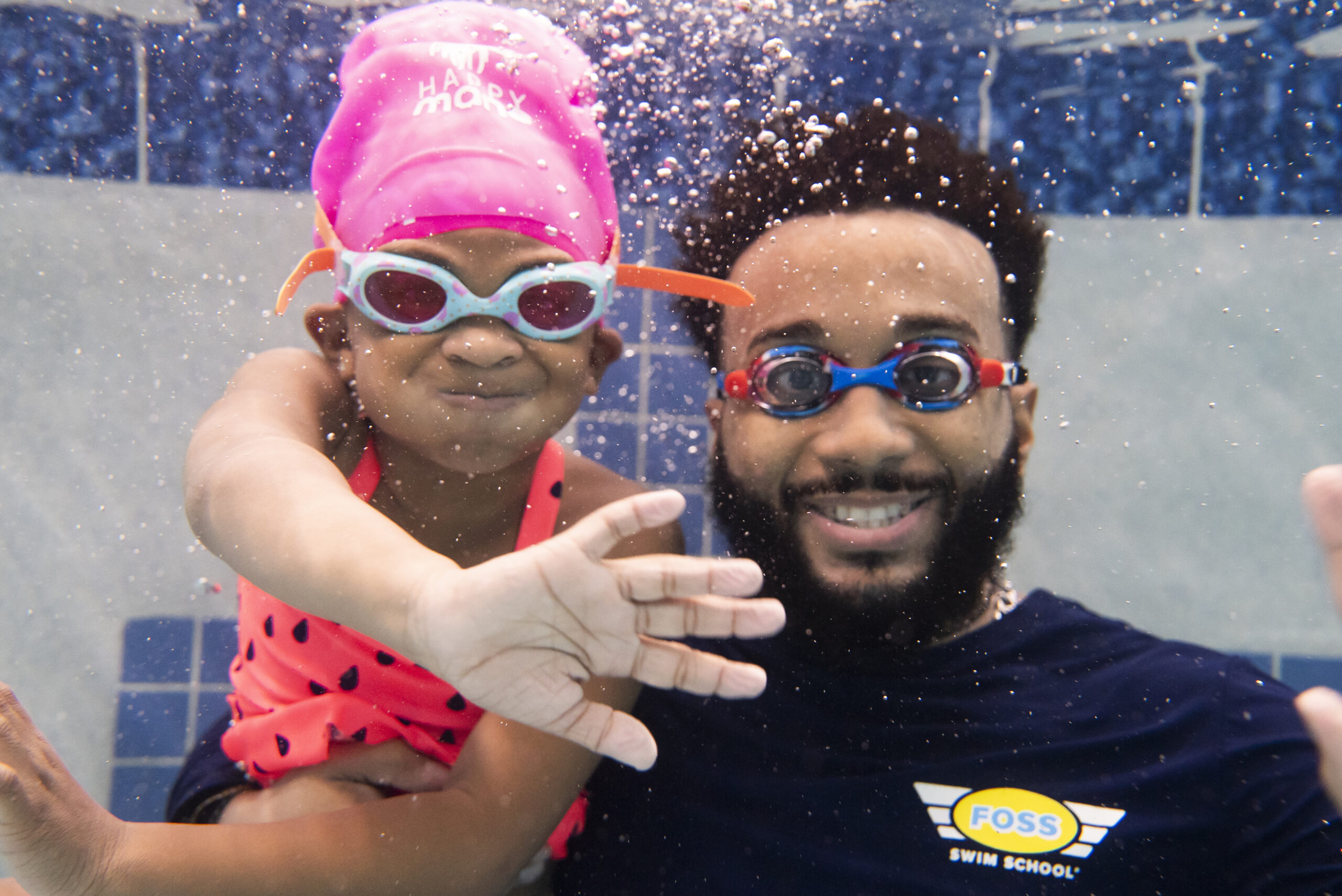
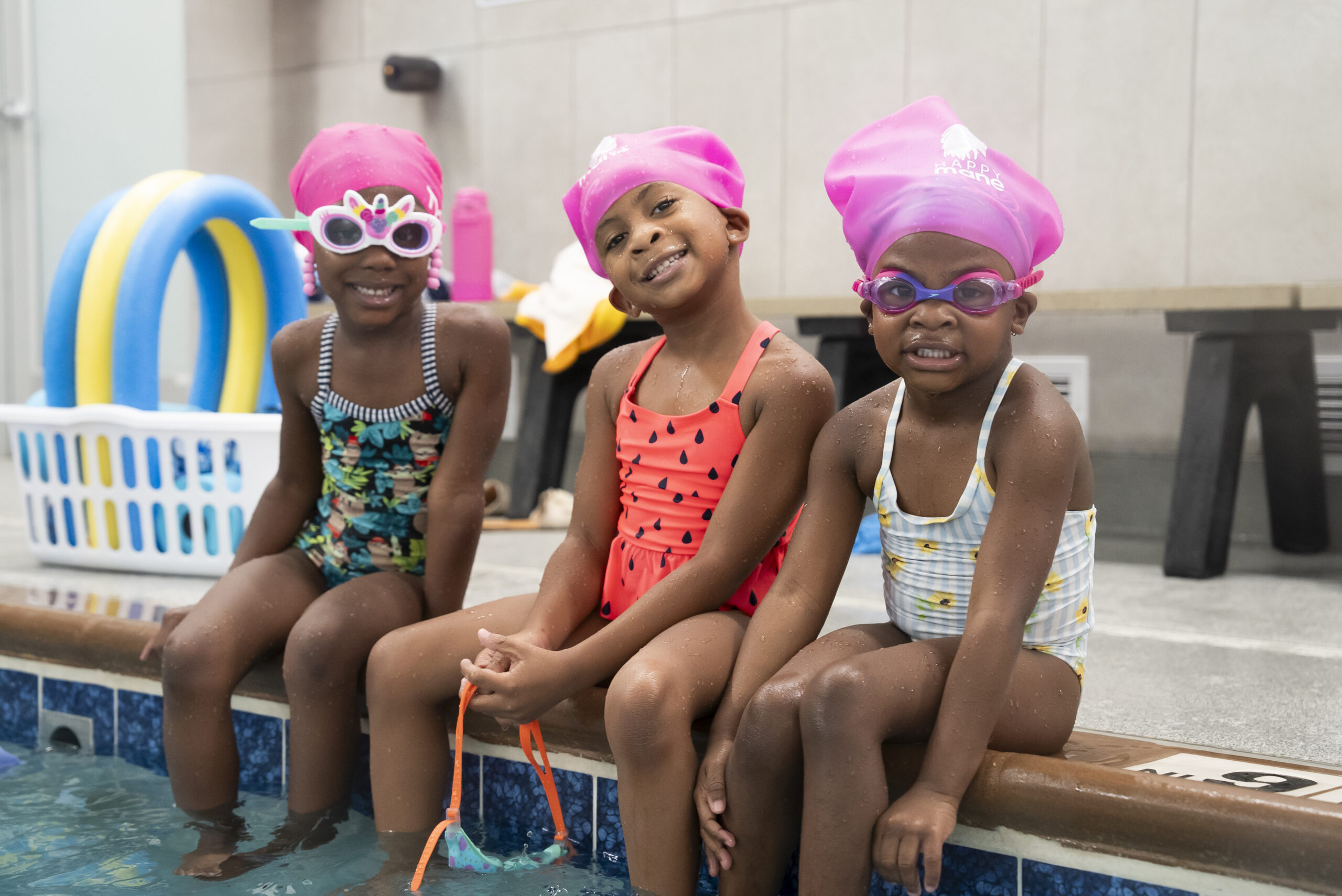
National not-for-profit organization Outdoor Afro and U.S. swim provider Foss Swim School have poolside partnered for the past year to teach kids and caregivers the basics of swimming. The neighborhood result: a major splash for local families to transition their lessons confidently from community pools to waterfront parks. “Cannonball!” belted 6-year-old Making Waves Program participant Denver Post at Foss Swim School’s Rock Hill, Missouri, location. “I like swimming 100 percent. My favorite part is jumping in the pool. I feel like I’m going to the Olympics.” Since 2019, Outdoor Afro’s swim program Making Waves has funded swim lessons and water safety courses nationwide so younger generations like Denver can cultivate relationships with water at an early age. Outdoor Afro’s 2024 goal is to provide more than 1,500 new families with the same opportunity Denver had to learn and continue to develop this life-saving skill by the end of the year.
APPLY FOR SWIM SCHOLARSHIPS HERE
Already, Outdoor Afro has funded more than 1,500 new swimmers this year in partnership with swim providers like Foss Swim School and certified swim instructors who put care in the forefront of each lesson. “I don’t ever want a kid to fear water,” said Kendra Williams, 21, swim instructor at Foss Swim School, “and there’s no real timeline for you to become a good swimmer. I always want to ensure they’re comfortable and safe as we segue into each lesson.” Donating at least $200 to Making Waves here provides a swimmership to a children and their guardians for a series of four to six swim lessons. Families have the option of selecting their preferred swim vendor.
“Collaborating with Outdoor Afro has helped us bolster our purpose of providing a lifetime of confidence and safety around water,” shared FOSS CEO Craig O’Halloran. “We’re passionate about helping close the gap between the racial disparities in swimming abilities and thankful to be working with partners to help us do just that.” Outdoor Afro’s CEO and Founder Rue Mapp echoed O’Halloran’s words, adding: “In addition to the urgency to save lives with the help of supporters like Foss Swim School and Winnebago Industries, we know that if a child does not know how to swim they won’t ease into a tippy kayak, cast a pole in a lazy lake, or care about the crisis of plastics filling our oceans,” Mapp said. “Positive connections with water start with learning how to swim. And Outdoor Afro is proud to continue our efforts with providers who are also true partners.”
CLICK HERE TO WATCH MAKING WAVES IN ACTION
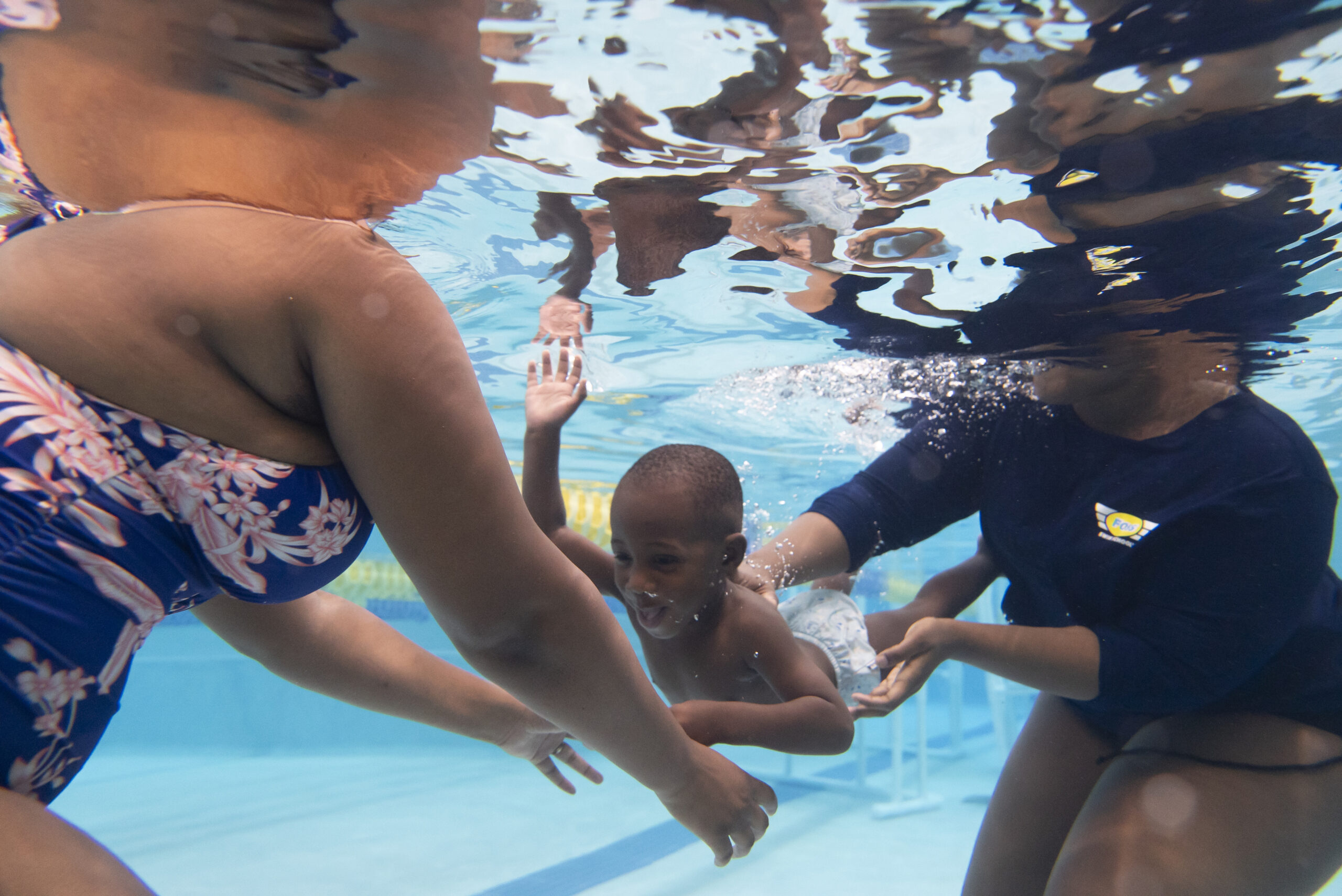
Through Making Waves, Foss Swim School has provided 294 students with swimming lessons across all 29 of its locations. The Winnebago Industries Foundation supports the program’s efforts by helping to fund Making Waves swimmerships through Foss. “At Winnebago Industries, we believe that time spent outdoors is time well spent,” said Jil Littlejohn Bostick, president of the Winnebago Industries Foundation. “We know the great outdoors is a place to find health and happiness and to create cherished memories with family and friends, and being comfortable in and around water is an important part of that experience. We believe in investing in programs that eliminate barriers, promote access and connect all people with the social, mental, and physical health benefits of the outdoors.”
Open to all ages, these lessons are another way to bring awareness about U.S. drownings. According to the Centers for Disease Control and Prevention, Black youth ages 10 to 14 drown in swimming pools at a rate more than 8 times that of white peers. Outdoor Afro launched Making Waves five years ago in response to the growing and alarming number, providing a solution to help families unlock the joy of developing positive connections with water. “I’m so grateful for the Outdoor Afro scholarship because everybody needs the opportunity to swim and have good swim instruction,” said Williams. In addition to Foss Swim School, Outdoor Afro collaborates with the following U.S. swim providers to fund 2024 swim lessons: Black People Will Swim in New York; Evolutionary Aquatics in Charlotte, North Carolina; LEGITswim in Washington, D.C.; Oshun Swim School in Seattle, Washington; and Yu Ming Charter School in Oakland, California. “Since I've learned about Outdoor Afro’s Making Waves, I've noticed a huge change in my daughters,” said Denver’s father, Zachery Post. “In their confidence, comfortability, and desire to know how to swim.”
ABOUT OUTDOOR AFRO: Outdoor Afro is a national not-for-profit organization that celebrates and inspires Black connections and leadership in nature. What started as a kitchen table blog by Founder and CEO Rue Mapp in 2009 has since grown into a cutting-edge nationwide organization. Outdoor Afro’s U.S. networks include nearly 100-plus volunteer leaders who guide nature activities in up to 60 cities with network participation reaching 60,000 people annually. Outdoor Afro reconnects Black people to the outdoors through outdoor education, recreation, and conservation. Connect with @outdoorafro on social and visit outdoorafro.org to follow our year-round nature narratives.
ABOUT FOSS SWIM SCHOOL: Jon and Susan Foss opened their first swim school in 1993. They created an age-appropriate curriculum, helping even the youngest swimmers confidently learn water adjustment, safety, strokes, and technique. With 31 years of expertise, FOSS has redefined the swim lesson experience by providing a fun, original, technically sound, and safer style of teaching. FOSS currently has 29 wim schools in Illinois, Iowa, Missouri, Minnesota, North Dakota, and Wisconsin. Connect with @fossswimschool on social and visit fossswimschool.com. Photos by Techboogie.

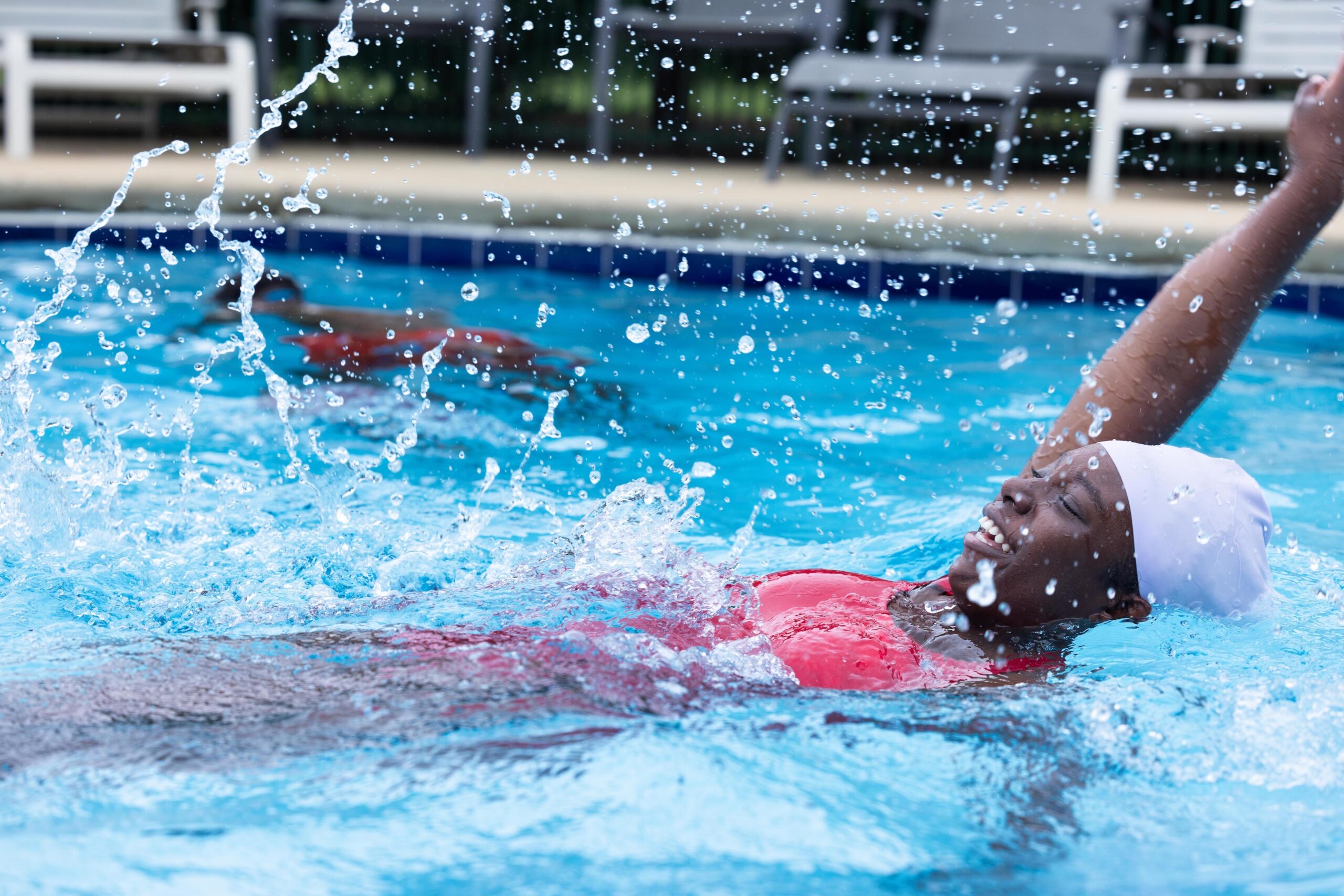
Outdoor Afro x Black People Will Swim enter ‘World’s Largest Swimming Lesson’
Jump in! Outdoor Afro’s annual Making Waves program will partner with Black People Will Swim (BPWS) for the second year in a row – this time making a cannonball splash Thursday, June 20. A summer day internationally known as The World’s Largest Swimming Lesson (WLSL). “This global lesson is a first-time experience for both our organizations and connects perfectly to Outdoor Afro’s sixth annual Making Waves program,” said Founder and CEO Rue Mapp. “Partnering with our swim provider, Black People Will Swim, makes the moment historic to support this life-saving skill.” Outdoor Afro will sponsor BPWS in offering free swim lessons to up to 200 Black kids and caregivers in a single day at York College Natatorium in Jamaica, Queens, New York. When registration opened Saturday, June 8, the day lesson already attracted 250 registrants. “Our sessions are always sold out,” said BPWS Founder Paulana Lamonier. “This free event is our way of saying we haven’t forgotten about you. Here’s your chance to practice water safety with us. Let’s make a splash by starting summer off on a safe note."
The two organizations are simultaneously providing free swim lessons with hundreds of swim schools across the globe. This epic pool experience will build on Outdoor Afro’s 2024 Making Waves goal to fund 1,500 new swimmers to learn water safety and basic swimming techniques by the end of the year. Open to all ages, the 30-minute pool sessions led by BPWS will rotate from 5 p.m. to 8 p.m. EST. These lessons are another way to bring awareness to drownings in the United States, said Lamonier. According to the Centers for Disease Control and Prevention, Black youth ages 10 to 14 drown in swimming pools at a rate more than 8 times that of white peers. During 2019, Outdoor Afro launched Making Waves in response to the growing and alarming number. Meanwhile, WLSL developed through the World Waterpark Association and became a worldwide public relations event to help educate the public about water safety and prevent drownings.
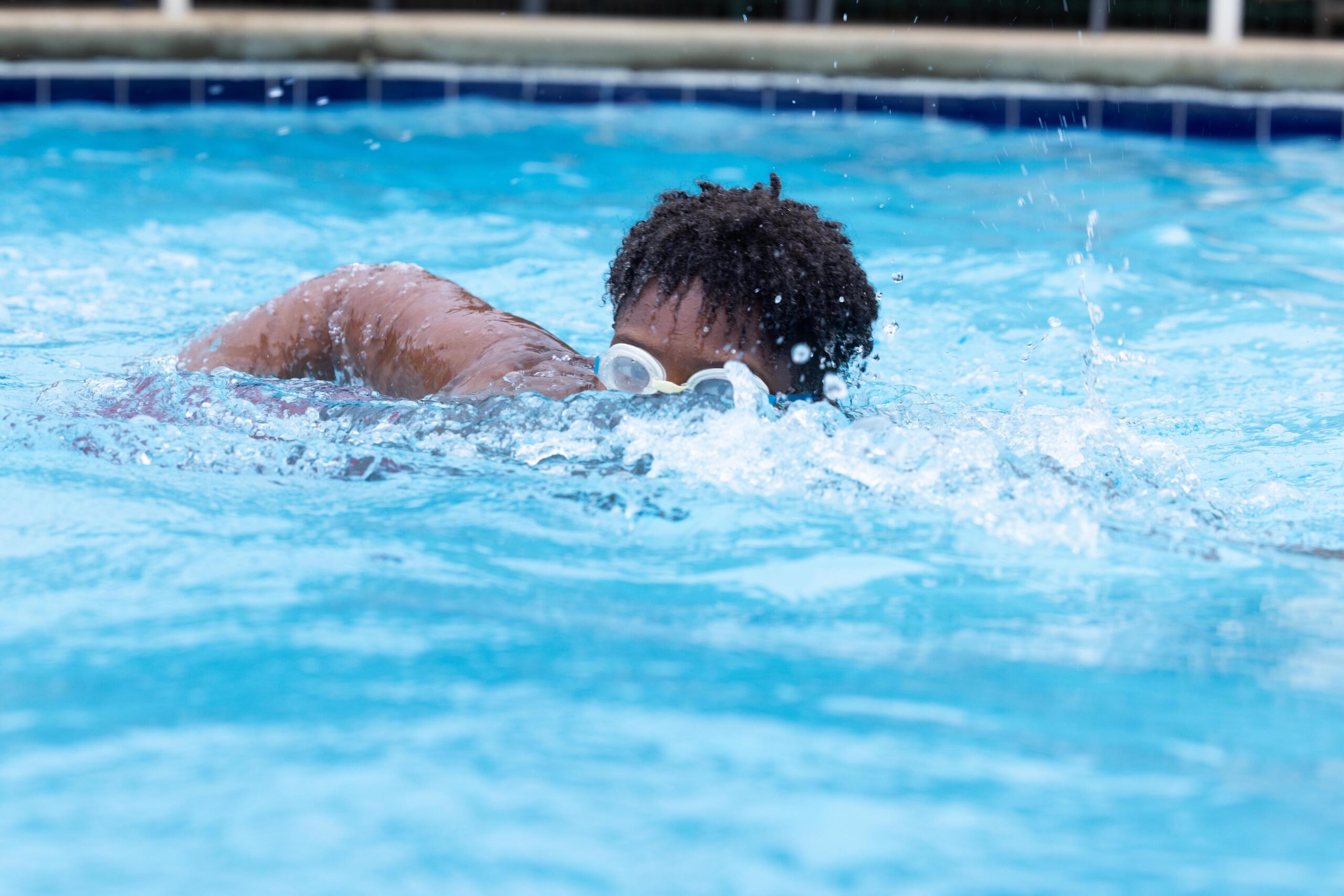
Supported by aquatic centers, waterparks, swim schools, and community pools, the awareness day is also celebrating its 15-year anniversary this year like Outdoor Afro. Both organizations collaborate with swim operations nationwide to help families unlock the joy of developing positive relationships with water. WLSL aligns with the opportunity Outdoor Afro and BPWS are creating to reach newer generations of confident swimmers, explorers, and conservationists, said Mapp. “In addition to the urgency to save lives, we know that if a child does not know how to swim, they won’t ease into a tippy kayak, cast a pole in a lazy lake, or care about the crisis of plastics filling our oceans,” Mapp said. “Positive connections with water start with learning how to swim. And Outdoor Afro is proud to continue our efforts with Black People Will Swim as part of this year’s roster of partner providers.”
FAST SPLASH FACTS:
- In addition to BPWS, Outdoor Afro collaborates with the following U.S. swim providers to fund 2024 swim lessons: Evolutionary Aquatics in Charlotte, North Carolina; Foss Swim School in Eden Prairie, Minnesota; LEGITswim in Washington, D.C.; SwemKids in Atlanta, Georgia; and Oshun Swim School in Seattle, Washington; and Yu Ming Charter School in Oakland, California.
- BPWS is the only swim school in the five boroughs participating in WLSL that is sponsored by Outdoor Afro.
- WLSL will serve as an Open House for families wanting to meet the BPWS team and take a swim assessment before registering.
- After this event, BPWS aims to expand to the Long Island area to provide further instruction.
ABOUT OUTDOOR AFRO: Outdoor Afro is a national not-for-profit organization that celebrates and inspires Black connections and leadership in nature. What started as a kitchen table blog by Founder and CEO Rue Mapp in 2009 has since grown into a cutting-edge nationwide organization. Outdoor Afro’s U.S. networks include nearly 100-plus volunteer leaders who guide nature activities in up to 60 cities with network participation reaching 60,000 people annually. Outdoor Afro reconnects Black people to the outdoors through outdoor education, recreation, and conservation. Connect with @outdoorafro on social and visit outdoorafro.org to follow our year-round nature narratives.

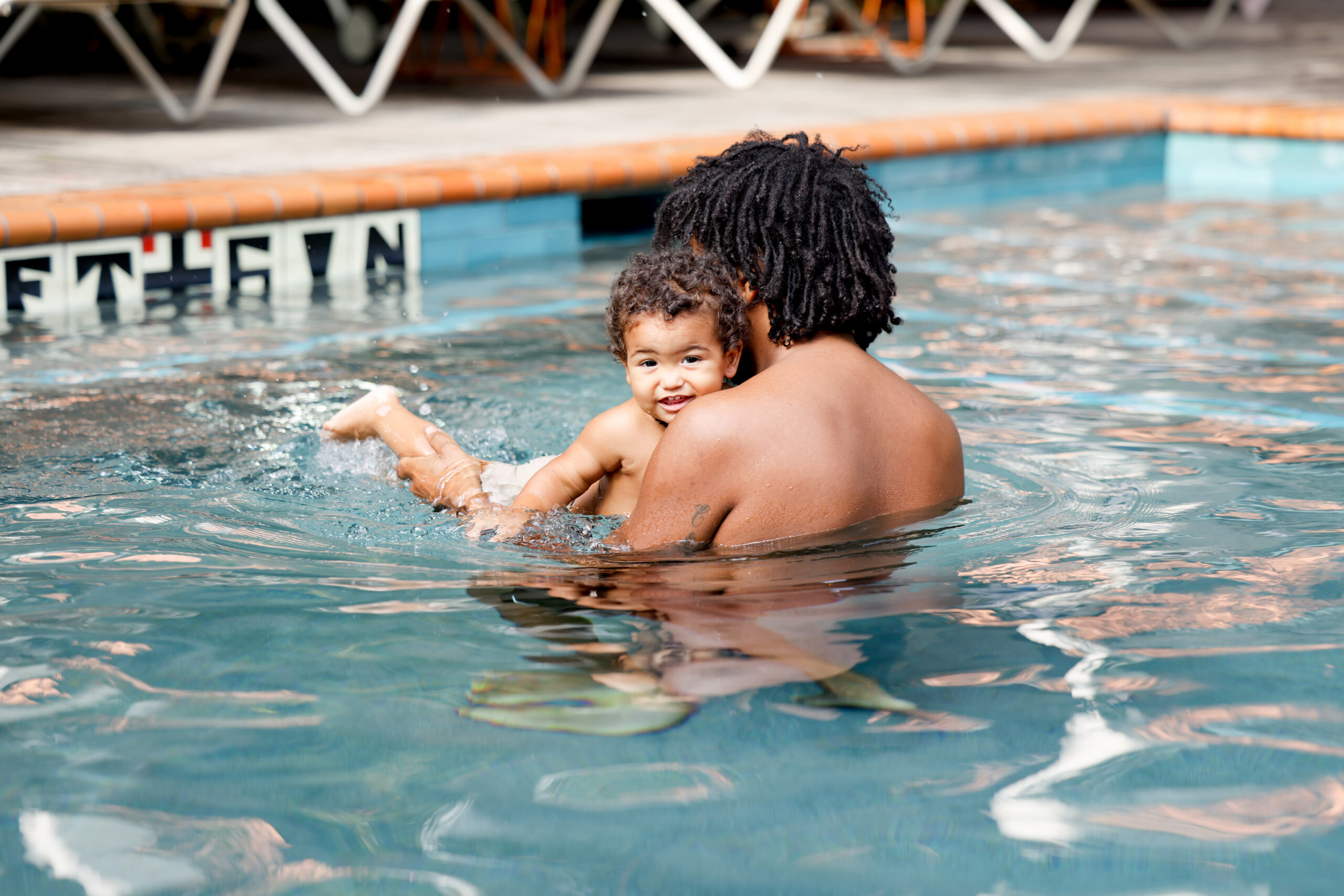
5 pieces of poolside advice for new Outdoor Afro swimmers
Calling for caregivers and kids: Register to Outdoor Afro’s Making Waves program and graduate with stronger relationships to neighborhood waterways. Since 2019, Making Waves has provided water safety, drowning prevention, and proper stroke technique for beginner poolsters. In short, swimming fundamentals. Outdoor Afro founded the nationwide program because natatorium research revealed rather shocking U.S. community news. According to Centers for Disease Control and Prevention statistics, Black youth ages 10 to 14 drown in swimming pools at a rate more than 7.6 times that of white children. A public health disparity due largely to decades of exclusion and segregation from beaches and public pools. “After learning of this alarming number and that it continued to grow, Outdoor Afro decided to make an impact within our sphere of influence,” said Founder and CEO Rue Mapp.
The national not-for-profit organization launched Making Waves four years ago in its hometown of Oakland to teach kids and caregivers how to swim at local pools. The program has undergone start-and-stop challenges with COVID. Huddles with identifying qualified swim providers with sufficient and welcoming instructors. Yet, the program has propelled forward. Making Waves has managed to provide lessons at no cost to nearly 400 new swimmers thus far. This year's goal: teach up to 1,000 new swimmers by the end of 2023. In collaboration with select swim providers across the United States, both kids and their caregivers take anywhere from six to eight, 30-minute lessons, valued at roughly $150 for the entire learning experience.
The program covers all lessons designed to teach safety precautions, water confidence, and the correct stroke styles. With each session, Swimmership recipients gain health and wellness benefits. Exercise that increases stamina, flexibility, and strength. Improvements in posture, coordination, and balance. Stress alleviation through peaceful and relaxing movements. Before signing up for this opportunity, carefully read these guidelines for a successful program adventure with Outdoor Afro:
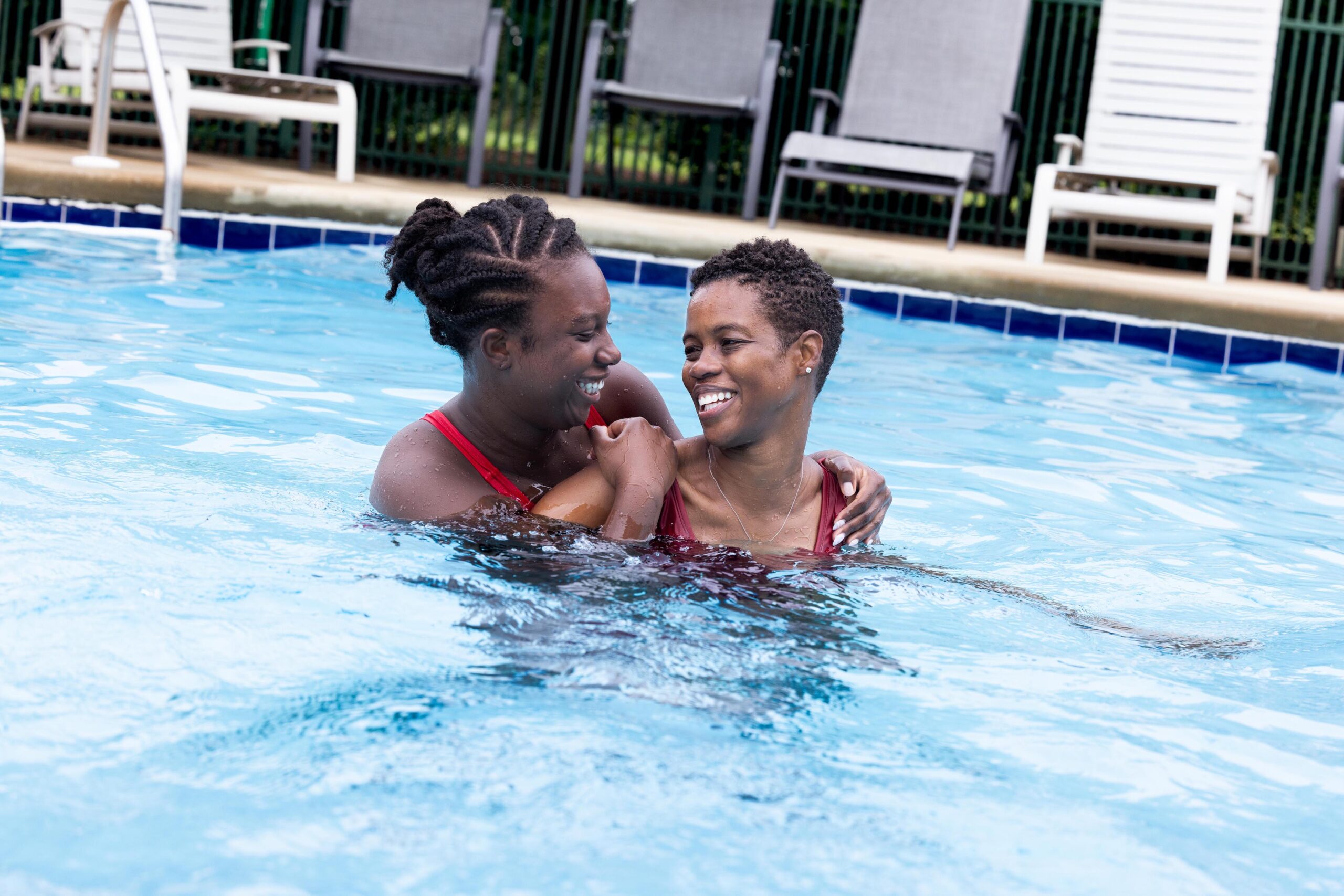
EQUIPMENT
Aside from swimming gear like swimsuits, trunks, ear plugs, goggles, and swim caps for hair protection, pool equipment is minimal to bring to beginner lessons. Swim instructors typically provide useful buoyancy aids. RUBBER RINGS: A great help mate for getting your feet off the bottom of the pool. Fitting snug under your arms, these water rings are a first step to building confidence in the pool. ARMBANDS: Providing body support, this aid gives the advantage of freeing up your arms and legs. As your trust in the water increases, you can gradually deflate bands. FLOATS: This effective aid comes in assortments. Still, each shape offers support to practice arm and leg movements. Outdoor Afro's select providers are Red Cross certified swim instructors who know exactly what types of water devices are best to advance each individual swimmer’s performance and confidence.
SAFETY
When engaged in any outdoor activity, safety is the highest priority. Know and respectfully adhere to swimming pool safety rules. By doing so, you will avoid a lot of dangerous and life-threatening accidents poolside. Even while visiting other waterways such as rivers, lakes, and beaches. Remain honest with yourself about your swimming experience. Stay within your water depth until becoming an adept swimmer. Also, create enough space between you and those who are in sections of the pool like the diving area. Pools are slippery scenes, so absolutely no running. If seaside, never attempt to swim when danger flags are up. And under no circumstance swim solo.
HEALTH & HYGIENE
Not in the best of health, don’t force a Making Waves swim session. That includes ear or nose infections. It’s also not a good idea to swim immediately after eating a hearty meal, which can lead to stomach cramps. As far as cleanliness goes, take a short shower before and after swimming to prevent recreational water ailments. Come gear and equipment prepared by using only washed towels and swimwear. For toddlers, swim diapers are highly recommended to preempt major potty accidents. After every swim lesson, make sure to dry thoroughly, especially between toes. Infections like verrucas and athlete’s foot easily spread in damp conditions.
CONFIDENCE BOOSTERS
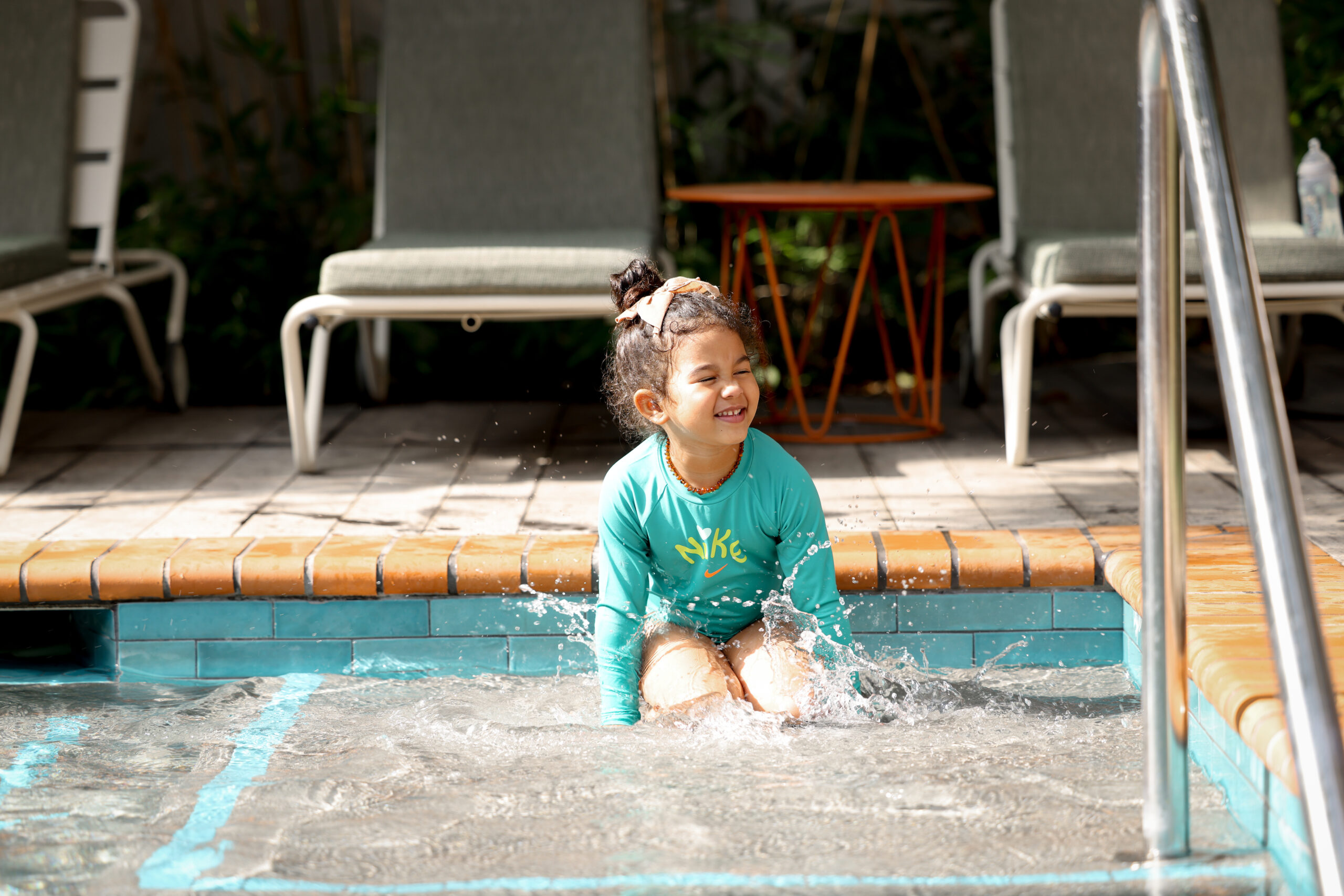
The very sight of a pool or open water intimidates some beginner swimmers. Trusting yourself in this new activity is a process. Outdoor Afro’s select swim providers teach confidence-building exercises to strengthen water relationships. Starting with relaxing. Some tasks to expect to increase poolside comfort: WALKING. Avoiding the pool’s deep end as a beginner, shoulder-deep water is a safe space to stand. Then, walking while your arms work underwater starts to develop a first-step sense of security. BLOWING BUBBLES. After getting your shoulders wet, practicing bubble blowing with your chin in the water is another foundational step toward rhythmic breathing techniques. TREADING WATER. With armbands and floats as your initial support, gradually lift and alternate your feet. You will increase your foot speed until holding yourself up without touching the bottom of the pool is achievable.
ELEVATING TECHNIQUES
Once your beginner lessons through Making Waves complete, don’t stop swimming. There’s still more to master. After you’ve become proficient in basic strokes and standard dives, check off these next steps to increase your swimming pool confidence. NO 1. Join your local swim club. They welcome new swimmers and offer additional support. Even new swim buddies. NO. 2. Register for competitions. Once you’re swimming like a fish, enter special events to fine-tune performance. NO. 3. Sign up for advanced diving, underwater swimming, and lifesaving technique coursework. Each reinforces and advances your technique. NO. 4. Explore newer water fun. Watersports like waterski-ing, windsurfing, scuba diving, kayaking, and canoeing help expand physical capabilities and allow you to try outdoor activities you probably would have never accessed before.
ABOUT OUTDOOR AFRO: Outdoor Afro is a national not-for-profit organization that celebrates and inspires Black connections and leadership in nature. What started as a kitchen table blog by Founder and CEO Rue Mapp in 2009 has since grown into a cutting-edge nationwide network with 100-plus volunteer leaders in 60 cities with network participation reaching 60,000 people. Outdoor Afro reconnects Black people with nature through outdoor education, recreation, and conservation. Follow Outdoor Afro at outdoorafro.org and @outdoorafro today.
The water is ours too — always has been
Like most instances in American history, the pioneering roles Black people have held in water-related industries has rarely been acknowledged, documented, or celebrated. For decades, there has been an ongoing myth that Black people — mostly in the Americas — have no or limited relationships with water. Outdoor Afro volunteer leader Hillary Van Dyke has been instrumental in not only uncovering our hidden history in the St. Pete and Tampa, Florida, areas, but she is also taking charge to ensure her local community strengthens its connection to water, like our ancestors did. Van Dyke, a Southern-based historian, has spent time conducting research on the Black men who helped establish and ultimately make the area’s sponge diving business what it is today.
“Sponge diving is a major industry in Tarpon Springs, Florida,” Van Dyke said. “It has now expanded into tourism where tour operators take people out on boats to see how the sponges were once harvested. However, when on these tours, the only pictures or faces you see are those of the Greek and/or white men who later built the industry.” The sponge used in modern times is now a synthetic material. Back in the day, Black divers helped collect sponge. Practical for cleaning and scrubbing purposes. In addition to maintaining personal hygiene, the sponge helped with filtering water and padding helmets.
It wasn’t until a 2008 Pinellas County survey released — the county in which Tarpon Springs (the “Sponge Capital of the World”) is located — that details on Bahamian male swimmers being the driving force of the industry were discovered. “The actual industry was built by these Black men,” said Van Dyke. “When the sponge fields were discovered in the area in the late 1800s, Bahamian divers were recruited and brought to the area to work in the businesses. But none of that is shared publicly or during the tours.”
According to the 2008 survey, boats from Key West made regular trips to the sponge beds and returned with rich harvests. An influx of Bahamian sponge fishermen established posts along the Anclote River. This led to more than 120 boats operating and new businesses springing up around the sponge fields at the helm of the Black divers. In 1905, Greek immigrants began arriving in Tarpon Springs after a Greek businessman working in the sponge diving industry made people in his homeland aware of the success of the industry.
Within one year, some 1,500 Greeks had come to Tarpon Springs, joining with the Bahamian residents to support a thriving industry, the survey explains. By 1908, sponge harvesting was one of the largest industries in Florida. Tarpon Springs as a major base of operations. The irony: “The Greek divers are described as helmet divers. They wore complex diving suits to harvest the sponges,” Van Dyke said. “This is also a major part of what is highlighted during the tours being operated today. However, the Black Bahamian men were all free divers, using no equipment at all to go under the water.”

Through her leadership role as an Outdoor Afro volunteer, Van Dyke wanted to correct local history. As part of her weekend activities with community participants, she asked participants if they wanted to take adult swim and scuba diving lessons in the area. They did. “I have close connections with the city and wanted to be able to offer this to adults who never learned to swim,” the 2021 Outdoor Afro “Leader of the Year” said. “It’s very courageous of any adult to make the decision to learn to swim later in life. There are often deep-rooted traumas associated with our reasons as Black people for not learning early in life. So, I know it takes a lot for them to join our classes.”
LEARN ABOUT OUTDOOR AFRO MAKING WAVES PROGRAM
While participants take their swim lessons, Van Dyke shares the history and impact the Black divers had on Tarpon County. Reconnecting them to the group’s generational relationships with water. “They always find it very intriguing, especially knowing that none of this is being shared elsewhere.” Van Dyke dives deeper into history by mentioning that in the mid-1950s local officials received funding to build a ‘Negro-only’ beach. A move that happened after conflict of trying to integrate the area’s segregated beach arose. However, rather than using the funds to do so, officials instead built North Shore Pool, which was for white swimmers only.
A song and dance Black communities have seen and experienced firsthand for generations. From the famed Inkwell in Oaks Bluff, Massachusetts to the countless ‘swim-ins’ that took place across the South — longstanding evidence Black people and Black communities have a deep love of and natural links to waterways. Van Dyke serves as a continuation of Outdoor Afro’s mission to inspire and celebrate Black connections and leadership in nature. Changing the narrative that Black people “don’t do water.”
10 beginner swimming pointers from leader Mardi Fuller
As summer draws nearer, anticipation for beach, pool, and lake days grows. Nationwide, Outdoor Afro looks forward to time outside with family and friends – as well as the wonder of weightlessness and the joy of cooling immersion that the water provides. Our network is in constant pursuit of deeper connections to nature, bringing Black people together in community and water-focused activities. Black people have faced exclusion from public pools and beaches over the course of the 20th century. Swimming areas were segregated through the 1960s, and Black people did not benefit from the pools and swim clubs built in white neighborhoods either. This deliberate prohibition has resulted in a great disparity in who has access to swimming and water safety, and by extension, the many sports and activities for which swimming is a foundational skill. I like sailing, fishing, kite surfing, or water polo.
Outdoor Afro is working to change this through its Making Waves program, a program designed to help increase access to swimming for Black families across the United States. The program provides swim scholarships to children and their caregivers. Learning to swim is first about survival: knowing how to gauge safe swimming conditions, gaining water confidence, and moving efficiently in the water in a relaxed manner. Once achieved, swimming opens the door to a new world, truly, as 70 percent of the earth is covered by water. It has been called the best form of exercise because it’s easy on joints and builds muscle tone all over as the body works against the water’s resistance. I am fortunate to have had my mother take my brother and me to swimming lessons when I was around 3 years old.
My mom didn’t know how to swim and took classes at the same time. To this day, swimming is the exercise in which she finds the most ease, and it has helped her manage chronic pain. Swimming has been a refuge for me as well. As a kid, I was always happiest when playing in any body of water, and I participated in swim teams throughout childhood. I became a lifeguard and swim instructor in high school and college. These roles allowed me to be around the water and were some of the best paying jobs around. In adulthood, I now swim for exercise and injury management; I’ve swam in triathlons, and I still enjoy open water swimming. Above all, it’s always brought me massive joy. If you are a beginner swimmer looking to increase your water confidence and have more fun at the beach or pool this summer, here are my recommended tips to get started and build a rewarding lifelong relationship with water:
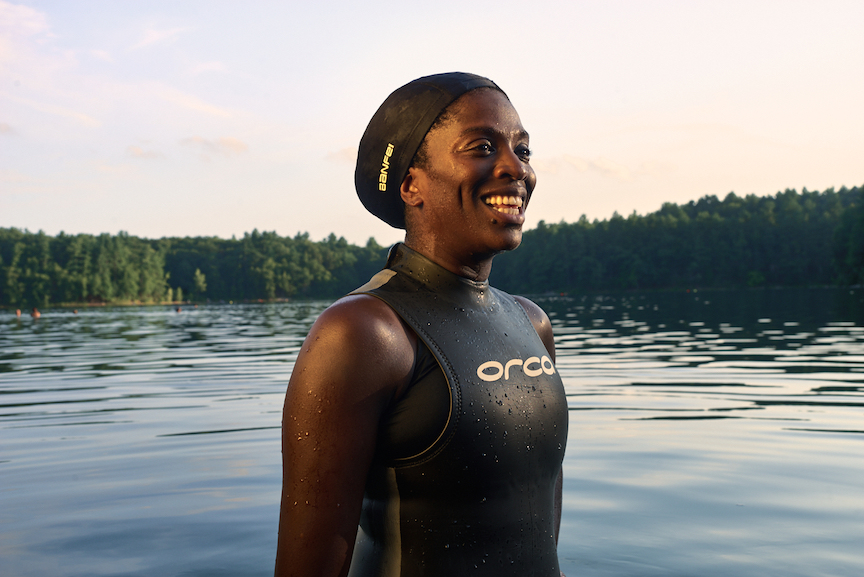
CHANNEL YOUR ANCESTORS. The most important thing for you to know about swimming is that you belong in the water; it is your heritage. Historically, West Africans were proficient swimmers at a young age. Swimming, boating, and fishing were integral to our cultural practice, including spiritual beliefs, economies, social structures, political institutions and worldviews. In Undercurrents of Power: Aquatic Culture in the African Diaspora, Professor Kevin Dawson’s research reveals how descendants of Africans demonstrated aquatic fluencies at home as well as while enslaved in the Americas. West Africans built and navigated the waters in dugout canoes. They spear fished. They evaded enemies by swimming. Reading this scholarship brought new meaning into my understanding of our powerful water-based legacy.
LEARN THE FUNDAMENTALS OF WATER SAFETY. Understanding the risks of being in and around water is the first step to becoming a strong and safe swimmer. Familiarize yourself with water safety tips from the American Red Cross, where you will find a national database of swim instruction available near you.
FLOAT ON. AND ON. AND ON. Once you’re comfortable in the water, floating is a survival technique as well as a restorative practice. You can float when you’re too tired to swim anymore, and you can float simply to relax and be present in your surroundings. Practice by laying on your back in shallow water with arms and legs extended. Have an experienced swimmer support you by standing next to you, gently placing a hand under your lower back. Press your hips to the sky. Cup your hands slightly, fingers together, and slowly move water towards your body, and then flip your hands and push water away. This is called sculling. Each body floats differently, depending on muscle mass, body fat percentage and your body’s surface area. Most people can’t float without some gentle movement, such as sculling or a gentle flutter kick. Practice and discover exactly how much movement it takes for you to float with ease.
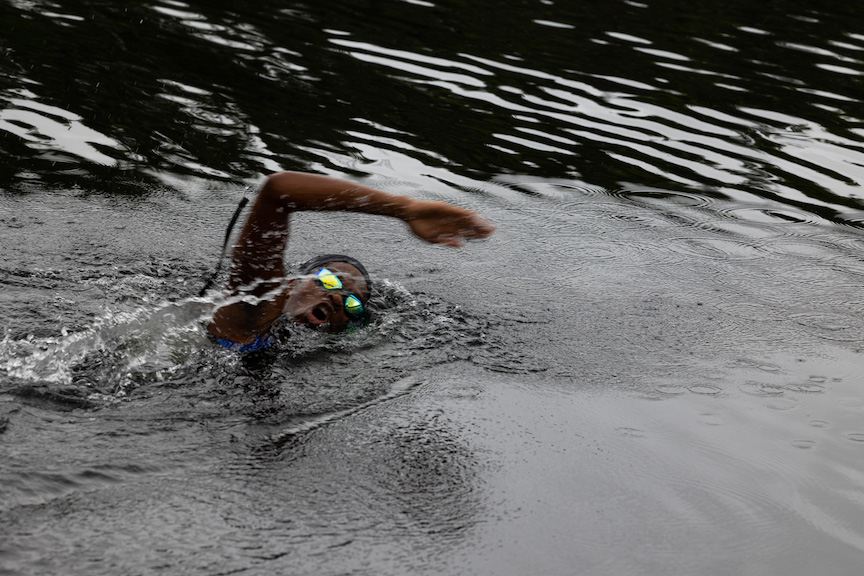
JUST BREATHE. After learning to float, your next priority is regulating your breath. Once you do so, the experience of swimming can be quite calming and beneficial to your overall health. Swimming increases lung capacity and breath endurance. Interestingly, one study compared swimmers’ lung capacity to that of elite football players and found that the swimmers had larger lungs and better cardiorespiratory function.
PRACTICE BLOWING BUBBLES. Swimming proficiently for any length of time requires putting your face in the water. You can try this at home. Fill a basin with water and get comfortable dunking your face right in. Whenever your face is in the water, you are always blowing air out of your nose and mouth – never holding your breath. After you’ve pushed the last drop of air from your lungs, lift your head out of the water and inhale through your mouth slowly. Repeat. As you gain comfort, practice turning your head to either side to inhale, as you will when you learn the crawl stroke or freestyle stroke.
TAKE A SHOWER. We are not trying to have damaged hair or dry, ashy skin. Not only is it good hygiene to rinse yourself off before going into a body of water, but also allowing your hair and skin to absorb fresh water means that your cells and follicles have less room to absorb damaging chlorine or salt.
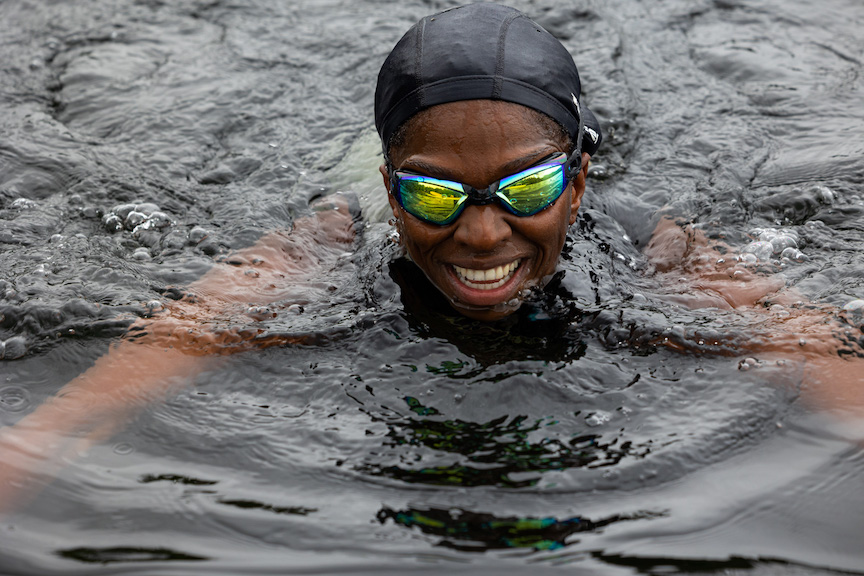
TRY TO CREATE GOOD CONDITIONS FOR LEARNING. Your local YMCA, YWCA, or community pool will offer lessons for children and adults. Outdoor Afro even offers “Swimmerships™” (swim lesson scholarships) through its Making Waves program. If you have options, shop around and find an instructor you’re comfortable with and in a supportive learning environment at that. It can feel hard to try to learn a new skill as an adult, too. Settle into a mindset in which you’re patient with yourself and open to learning and growth. Find a bathing suit you feel good in. Check out Black-owned soulcap.com for swim caps designed to fit our various hairstyles and hair volumes. Get a pair of swim goggles to protect your eyes from chlorine and to make it quicker to transition between being above and under the water.
WEAR FINS. When you’re practicing on your own, fins are a great support to use to learn how to kick. When you kick with fins your body naturally executes a flutter kick emanating from your core and hips. It’s easy for beginners to want to bend their knees to kick – a motion which will get you nowhere.
AVOID FLOATATION DEVICES. You will find varying opinions on this, but my opinion is that flotation devices are important for safety on open water, but while learning to swim, they can provide a false sense of security. Children who wear floatation devices often feel overconfident in deep water before they are truly able to keep themselves safe at that depth. Wearing a floatation device may tempt a new swimmer to not pursue stronger skills. Better to stay within a swim area where you can stay safe. Progress to deeper water as your skills advance.
DON'T STOP PRACTICING. Learning how to swim takes consistency – some estimate it takes 75-100 hours of lessons and practice to become proficient. It may take five years of swimming once or twice a week to become a comfortable lap swimmer, but you’ll become strong enough to be safe and enjoy yourself well before that. And of course, have fun! Find your own water joy, whether it is the peace and quiet that comes from ducking underwater, riding waves in the ocean, or floating for relaxation. Or picking up a sport like stand-up paddle boarding or windsurfing. Oh! And don’t forget to bring a friend or family member along with you.
Underwater, action shots by Joe Klementovich: @klementovitch; portrait shot by Philip Keith: @philipckeith_
