Elevated Experiences: 5 travel packing guidelines from an Outdoor Afro cycling expert
Cycling now scales outdoor activities that local participants of national not-for-profit Outdoor Afro mark off their summer travel plans. Just this month, Outdoor Afro volunteer leader Chasity Ramos guided an 8-mile neighborhood spin around Swamp Rabbit Trail in South Carolina’s Greenville County. “Our participants showed up from near and far,” said Ramos to her Instagram followers about the July 15 “Black joy” bike ride. “From Atlanta to Charlotte to Greenville and Greer, our people were outside.”
Her Greenville and Asheville, North Carolina, network supporters automatically accepted the fitness, health, and well-being challenge to a section of the original 22-mile, multi-use greenway. Ramos bonded with cyclists, delivered a few punchlines for laughs (as her personality calls for), and weaved the area’s Black history into pedaling pit stops. For those Outdoor Afro participants who have discovered or rediscovered cycling in their communities with the organization, these biking adventures can often lead abroad.
Curious about newer cycling destinations around the globe? Outdoor Afro’s executive director and international cyclist Lisa Bourne volunteers five travel packing recommendations. Bourne cycles nearly 4,000 miles annually at home and overseas. Whether road cycling, mountain biking, endurance cycling, leisure cycling, e-biking, or in cycling events, global cycling is definitely doable. Her suggestions to plan accordingly:
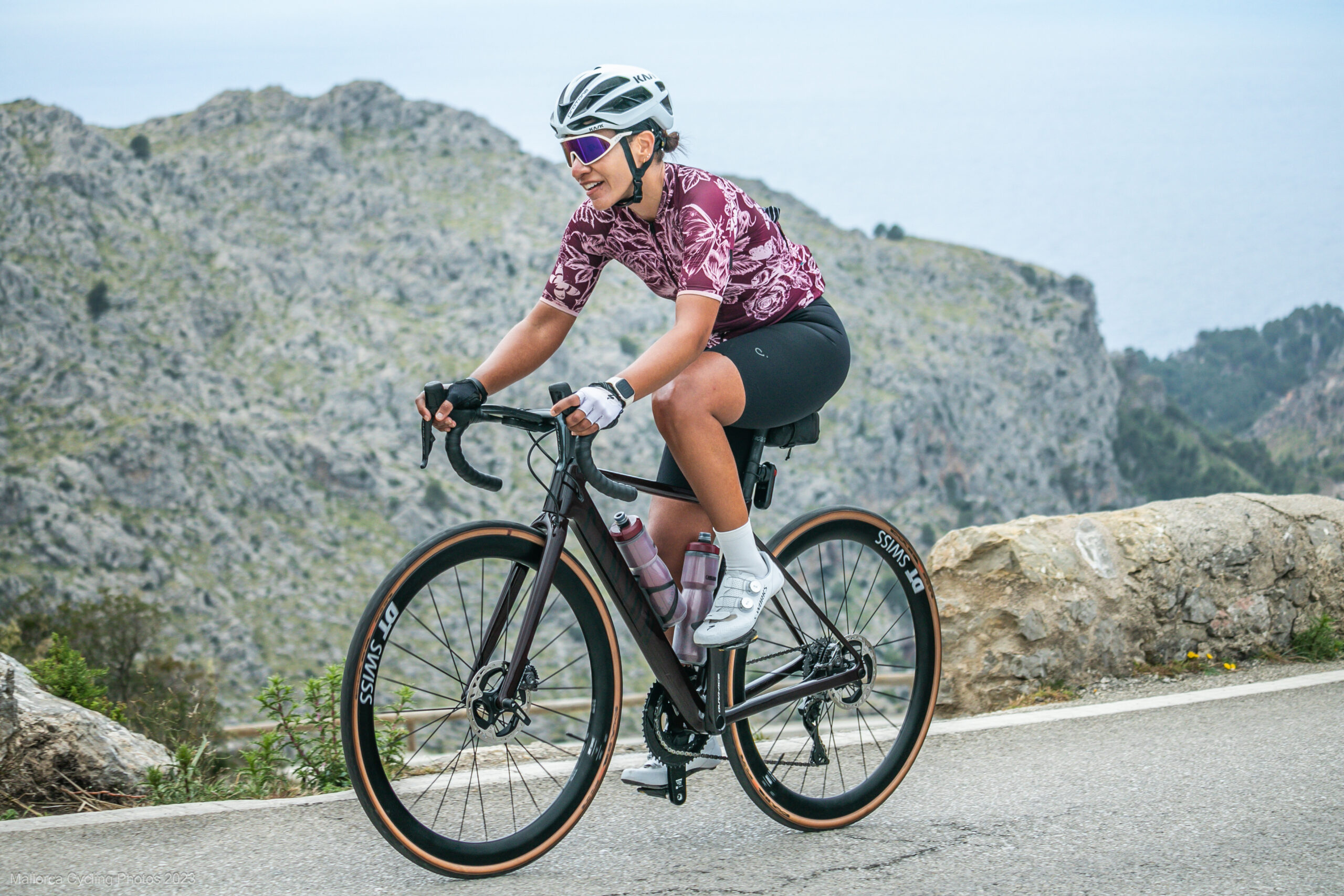

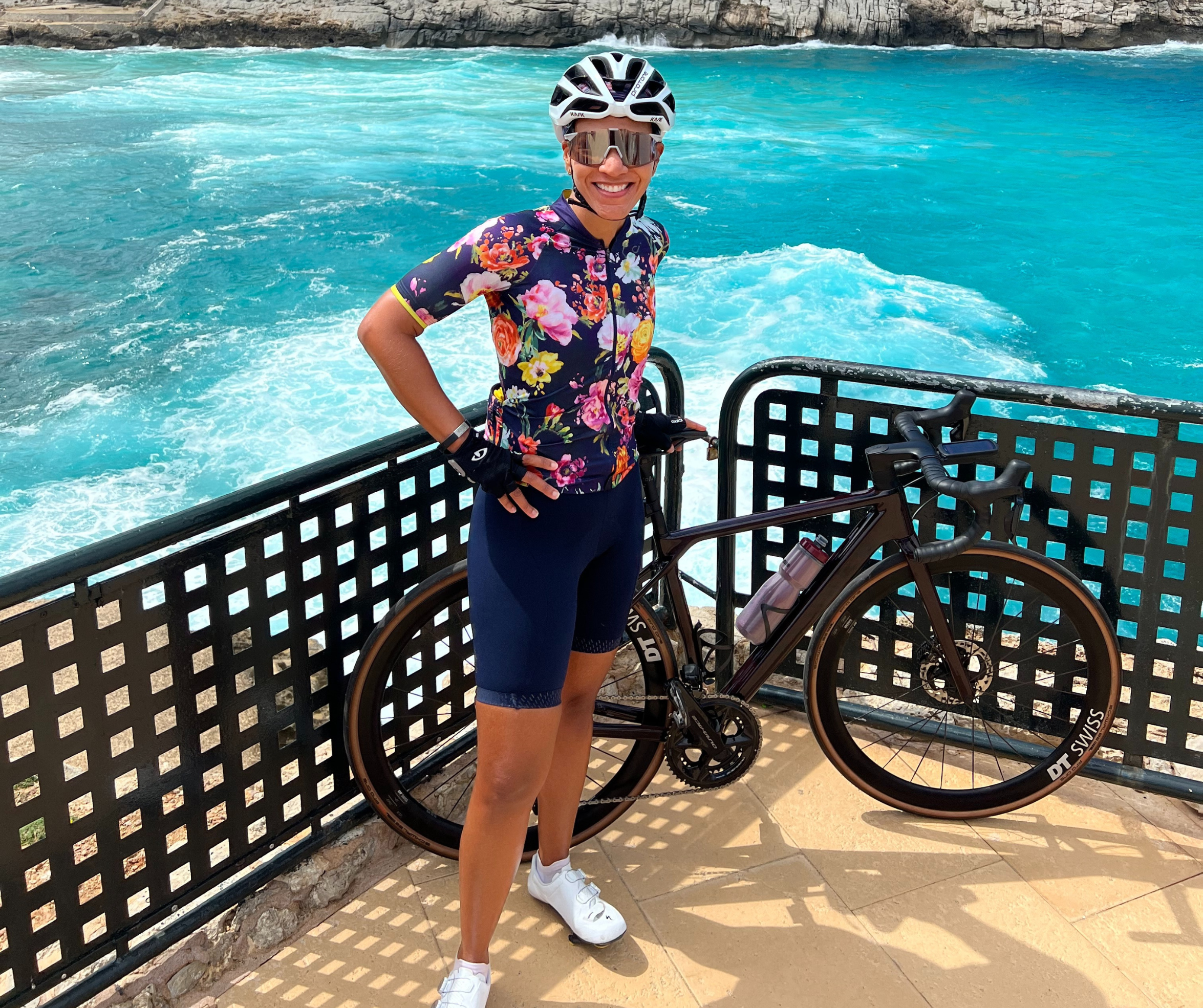
DECIDE WHAT TYPE OF CYCLING ADVENTURE YOU WANT. During May 2023, Bourne shipped her Canyon road bike to island destination Mallorca, Spain, and headed right along with it. The weeklong stay allowed her to bike more than 120 miles and climb close to 15,000 feet. “Ask yourself: is it a road, gravel, or mountain bike trip for you?” said Bourne. “I’m a roadie. I love climbing – and descending – mountains on my bike.” Bourne admits she’s partial to mountains, especially those near beaches. Hence, this recent trip to Mallorca. Laden with camouflaged coves, chalked mountaintops like the Tramuntana range, fresh market farms, and turquoise water beaches, “I was so blessed to travel for my fourth time to this gorgeous island,” she said.
CARVE OUT TRAINING TIME FOR SPECIFIC TRAILS. Bourne’s Spain trip in the Mediterranean Sea landed her east of the Spanish mainland. Mallorca’s breezy climate and network of paved roads offers dreamy routes for a medley of cycling adventures. Back in 2012, Olympic cyclist Bradley Wiggins trained for the Tour de France by clambering up Sa Calobra – one of the island’s famous cycling climbs with 26 tightly packed, hairpin turns. Today, Mallorca is a cycling destination hotbed for pro cycling teams and amateur cyclists worldwide. Bourne recommends dedicating at least 12 weeks of personal and professional instruction before pursuing new courses. “Hire a cycling coach like Black-owned and -operated CIS Cycling,” Bourne said. “Don’t forget strength training – the core, back, and lots of squats. Try yoga on your off days to open those hips.”
DETERMINE IF YOU WANT TO BRING YOUR OWN BIKE OR RENT ONE. Mallorca is built up with the best infrastructure to support diverse cyclists, confirmed Bourne. For refueling moments, the island provides bike racks stationed at community cafés, local bike shops, trained mechanics on standby, bike rental setups, and hotels with bike garages. “Bike garages allow you to build up your own bike if you’ve brought it along,” Bourne said. “You can even store your bike there when you don’t plan to ride. Mallorca is home to some amazing, local cyclists you can hire to lead you on the roads.” To help pick between bringing or renting a bike, Bourne points out two thoughts. First, look at the number of days you plan to spend on your bike. “If I’m spending one or two days cycling, I typically rent,” she said. “If I’m cycling for up to four or more days, I want to ride my own.” In both instances, Bourne stresses that the body should become well trained and adapted to your individual bike position. Warning: You risk injury riding on a rental for more than a few days if the position is incorrect. Second, calculate the cost of transporting your personal bike. Research if airlines will charge for special equipment. For certain situations, drill down on how much ground transportation will charge for hauling your bike and parts.

PACK FOR THE CONDITIONS (THE UNEXPECTED). Not everything during your adventure abroad will go as planned. “Assume there won’t be a bike shop nearby when you arrive at your destination,” said Bourne. “Cycling multiple days? You always want to bring extra.” Extra cleats for clipless pedals. Extra batteries and chargers for electronics. Extra gear and equipment for iffy weather forecasts. “If you're climbing at elevation, the weather will vary,” she said, “so pack layers.” Bourne recommends smart packing, including items like a base layer, jersey, wind vest, long-sleeve packable jackets, and arm/knee warmers. Cycling gear and equipment brands to consider: Rapha, Velocio, PEARL iZUMi, and Giordana.
GIVE YOURSELF GRACE. ABOVE ALL, HAVE FUN. A friend invited a then-amateur cycling Bourne to complete a three-day 350 AIDSRide in the year 2000. The AIDS awareness ride stretched North Carolina to Washington, D.C. Since Bourne loved her gym spin class, she thought “why not.” That experience led to her becoming a Luna Chix – CLIF BAR’s legacy ambassador program for cyclists that inspired more women to ride bikes and at the time supported breast cancer research. Throughout the decades, cycling has given Bourne mental clarity and strength; assisted her with lowering heart rate and blood pressure; and helped maintain her figure (legs and core especially). The years have increased her bike riding confidence and ability to incorporate cycling into the outdoor leader’s traveling lifestyle. She devoted 8 to 10 hours a week for four months straight to train for Mallorca trails. “I exceeded my personal goals,” she said. “In years past, this accomplishment hasn’t always been the case with factors out of my control – like my body’s response to jet lag, the elements, road closures, and at times falling sick.” Bourne has learned to go with the flow on her cycling journey: “Travel being grateful for your health and the freedom to just ride.” More about Bourne’s Outdoor Afro story here.
ABOUT OUTDOOR AFRO: Outdoor Afro is a national not-for-profit organization that celebrates and inspires Black connections and leadership in nature. What started as a kitchen table blog by Founder and CEO Rue Mapp in 2009 has since grown into a cutting-edge nationwide network with 100-plus volunteer leaders in 60 cities. “Where Black people and nature meet,” Outdoor Afro reconnects Black people with the outdoors through outdoor education, recreation, and conservation. Follow us @outdoorafro on social.

How Outdoor Afro got much-needed 'Sun Outdoors' 2022
State-of-the-art nature experiences are what Sun Outdoors brings to the picnic table for staycations, vacations, and even “bae”cations. A leader in the outdoor hospitality world, Sun Outdoor offers more than 175 campgrounds and resorts across the United States and Canada. During Outdoor Afro’s annual Outdoor Afro Leadership Training (OALT) held in Granby, Colorado, in April 2022, network staff and volunteer leaders received a rare opportunity to spend three days at Sun Outdoors Rocky Mountains. Waking up each morning to movie-like sunrises, TikTok-worthy trails, snow capped mountain views, and National Geographic wildlife.
Like OALT 2022, this new partnership with Sun Outdoors shared with Outdoor Afro the luxury RV and glamping possibilities. What transformative moments can look like for local networks to recreate outdoor recreation across the network’s four regions: Northeast, Midwest, South, and West. The leadership training alone showed the network how Sun Outdoors locations can redesign into spaces for panel discussions, hands-on workshops, nature exploration activities, and places of rest and healing. What distinguished Sun Outdoors Rocky Mountains from previous network training sites: its ample accommodations to manage extreme weather.
The site’s cozy vacation rentals and tent options allowed Outdoor Afro volunteer leaders to practice their wilderness survival skills while ensuring safety under snow storm conditions. This particular location featured prairie schooners and Airstream trailers equipped with modern conveniences for beginner to veteran outdoor enthusiasts. Additional outdoor housing choices the network can explore on future training trips. And do know Rocky Mountains is just one of many interpretations of what Sun Outdoors has to offer in outdoor travel fun. Other destinations for campers, glampers, and those somewhere in between:

Sun Outdoors Coos Bay in Coos Bay, Oregon, comes with never-want-to-leave-here outlooks of the Pacific Ocean. Literally camp by the ocean or cozy up in a Seaside Shanty vacation rental. And for travelers wanting more vacation rental space, Oceanside includes premium cottages to still capture the sights and sounds of the waypoint. Sightseers will appreciate resort amenities such as nearby state parks, wineries, and museums.
Sun Outdoors Myrtle Beach in Conway, South Carolina, is a Southern region camper's delight. This property sits near Atlantic Coast vacay community Myrtle Beach, which means instant access to the area’s water park, miniature golf course, low country dining, a video game plaza, and cabana-vibe poolside leisure time. Southern charm meets campsite vistas, this location speaks to cottage life fused with Deep South customs and old-fashioned fun.
Sun Outdoors San Diego Bay lives in Chula Vista, California – dubbed “The Lemon Capital” for its sundry of citrus trees. It’s also laden with nature parks and beaches. Therefore, San Diego Bay is all about creating bayfront memories in nature. This fairly new resort in Southern California furnishes RV sites and some of the coziest, open-air cottage rentals. Fresh Mexican and SoCal cuisine are just steps away. To deep dive into local marine life, the Living Coast Discovery Center and waterfront park are in the vicinity as well.
El Capitan Canyon in Santa Barbara County, California, holds the birthplace title to "glamping." That said, El Capitan is the nature station to indulge outdoor living in the state's central coast. Post up in cedar cabins, safari tents, or adventure yurts surrounded by historic oak and sycamore trees. Soak in the sun on top of rippling mountains that overlook the Pacific Ocean. More activities to check off: dining, wine tasting, hiking, llama farm touring, swimming, and listening to live concert music.
Sun Outdoors Frontier Town revisits the Old West from Berlin, Maryland. Snuggled on the scenic shores of inland waterway Sinepuxent Bay, the resort is lined with rustic tents and covered wagons. The Mid-Atlantic scene replicates an 1880s country Western town. Once settled into the RV site, explore farm-inspired shops, cowhand saloons, and iconic American fare.

ABOUT OUTDOOR AFRO: Outdoor Afro is a national not-for-profit organization that celebrates and inspires Black connections and leadership in nature. What started as a kitchen table blog by Founder and CEO Rue Mapp in 2009 has since grown into a cutting-edge nationwide network with 100-plus volunteer leaders in 60 cities. “Where Black people and nature meet,” Outdoor Afro reconnects Black people with the outdoors through outdoor education, recreation, and conservation. Follow us @outdoorafro on social.
ABOUT SUN OUTDOORS: Sun Outdoors is a leader in outdoor hospitality and committed to its mission of offering guests exceptional and transformative outdoor experiences. With over 175 locations across the U.S. and Ontario, Canada, Sun Outdoors offers guests several ways to stay: from RV sites to vacation rentals, from tent camping to glamping, whether they stay for a weekend, season or longer. Visit sunoutdoors.com to learn more. Sun Outdoors is a division of Sun Communities Inc., a publicly traded company which, as of September 30, 2021, owns, operates and has an interest in 584 developed manufactured home, RV and marina properties comprising over 155,900 developed sites and nearly 44,900 wet slips and dry storage spaces in 38 states, Canada and Puerto Rico. Sun Communities is a fully integrated real estate investment trust (REIT) listed on the New York Stock Exchange under the symbol: SUI. suncommunities.com.
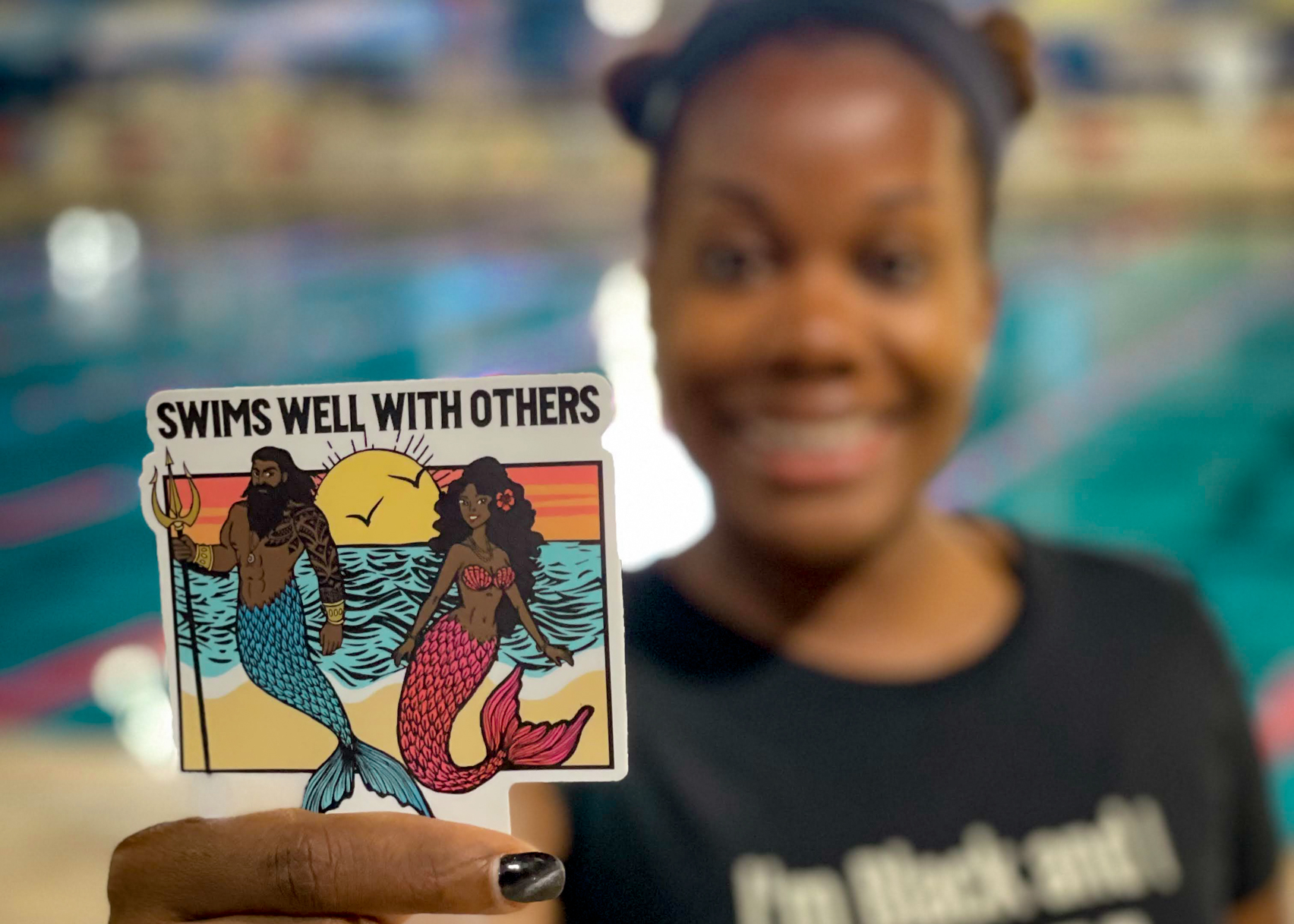
The water is ours too — always has been
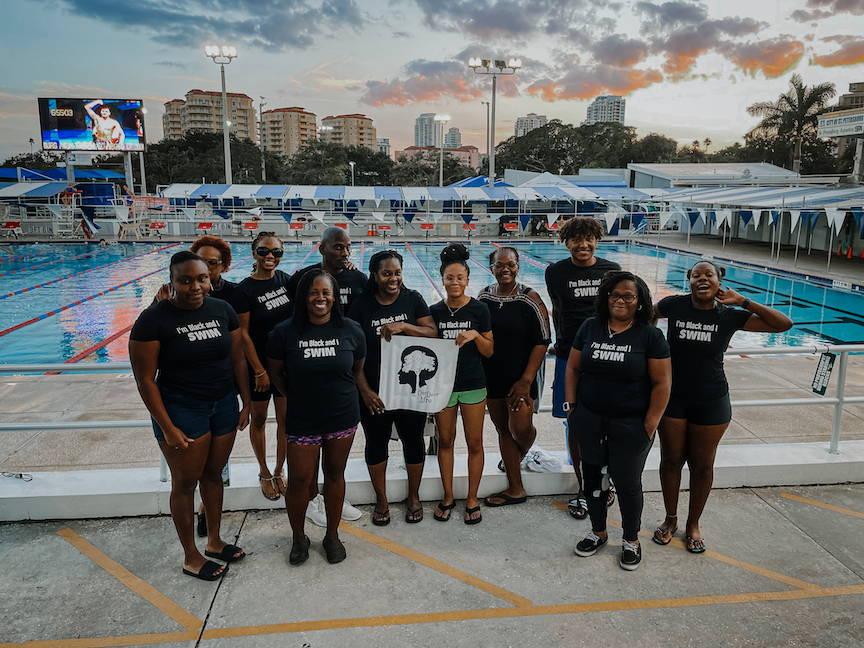
Like most instances in American history, the pioneering roles Black people have held in water-related industries has rarely been acknowledged, documented, or celebrated. For decades, there has been an ongoing myth that Black people — mostly in the Americas — have no or limited relationships with water. Outdoor Afro volunteer leader Hillary Van Dyke has been instrumental in not only uncovering our hidden history in the St. Pete and Tampa, Florida, areas, but she is also taking charge to ensure her local community strengthens its connection to water, like our ancestors did. Van Dyke, a Southern-based historian, has spent time conducting research on the Black men who helped establish and ultimately make the area’s sponge diving business what it is today.
“Sponge diving is a major industry in Tarpon Springs, Florida,” Van Dyke said. “It has now expanded into tourism where tour operators take people out on boats to see how the sponges were once harvested. However, when on these tours, the only pictures or faces you see are those of the Greek and/or white men who later built the industry.” The sponge used in modern times is now a synthetic material. Back in the day, Black divers helped collect sponge. Practical for cleaning and scrubbing purposes. In addition to maintaining personal hygiene, the sponge helped with filtering water and padding helmets.
It wasn’t until a 2008 Pinellas County survey released — the county in which Tarpon Springs (the “Sponge Capital of the World”) is located — that details on Bahamian male swimmers being the driving force of the industry were discovered. “The actual industry was built by these Black men,” said Van Dyke. “When the sponge fields were discovered in the area in the late 1800s, Bahamian divers were recruited and brought to the area to work in the businesses. But none of that is shared publicly or during the tours.”
According to the 2008 survey, boats from Key West made regular trips to the sponge beds and returned with rich harvests. An influx of Bahamian sponge fishermen established posts along the Anclote River. This led to more than 120 boats operating and new businesses springing up around the sponge fields at the helm of the Black divers. In 1905, Greek immigrants began arriving in Tarpon Springs after a Greek businessman working in the sponge diving industry made people in his homeland aware of the success of the industry.
Within one year, some 1,500 Greeks had come to Tarpon Springs, joining with the Bahamian residents to support a thriving industry, the survey explains. By 1908, sponge harvesting was one of the largest industries in Florida. Tarpon Springs as a major base of operations. The irony: “The Greek divers are described as helmet divers. They wore complex diving suits to harvest the sponges,” Van Dyke said. “This is also a major part of what is highlighted during the tours being operated today. However, the Black Bahamian men were all free divers, using no equipment at all to go under the water.”

Through her leadership role as an Outdoor Afro volunteer, Van Dyke wanted to correct local history. As part of her weekend activities with community participants, she asked participants if they wanted to take adult swim and scuba diving lessons in the area. They did. “I have close connections with the city and wanted to be able to offer this to adults who never learned to swim,” the 2021 Outdoor Afro “Leader of the Year” said. “It’s very courageous of any adult to make the decision to learn to swim later in life. There are often deep-rooted traumas associated with our reasons as Black people for not learning early in life. So, I know it takes a lot for them to join our classes.”
LEARN ABOUT OUTDOOR AFRO MAKING WAVES PROGRAM
While participants take their swim lessons, Van Dyke shares the history and impact the Black divers had on Tarpon County. Reconnecting them to the group’s generational relationships with water. “They always find it very intriguing, especially knowing that none of this is being shared elsewhere.” Van Dyke dives deeper into history by mentioning that in the mid-1950s local officials received funding to build a ‘Negro-only’ beach. A move that happened after conflict of trying to integrate the area’s segregated beach arose. However, rather than using the funds to do so, officials instead built North Shore Pool, which was for white swimmers only.
A song and dance Black communities have seen and experienced firsthand for generations. From the famed Inkwell in Oaks Bluff, Massachusetts to the countless ‘swim-ins’ that took place across the South — longstanding evidence Black people and Black communities have a deep love of and natural links to waterways. Van Dyke serves as a continuation of Outdoor Afro’s mission to inspire and celebrate Black connections and leadership in nature. Changing the narrative that Black people “don’t do water.”
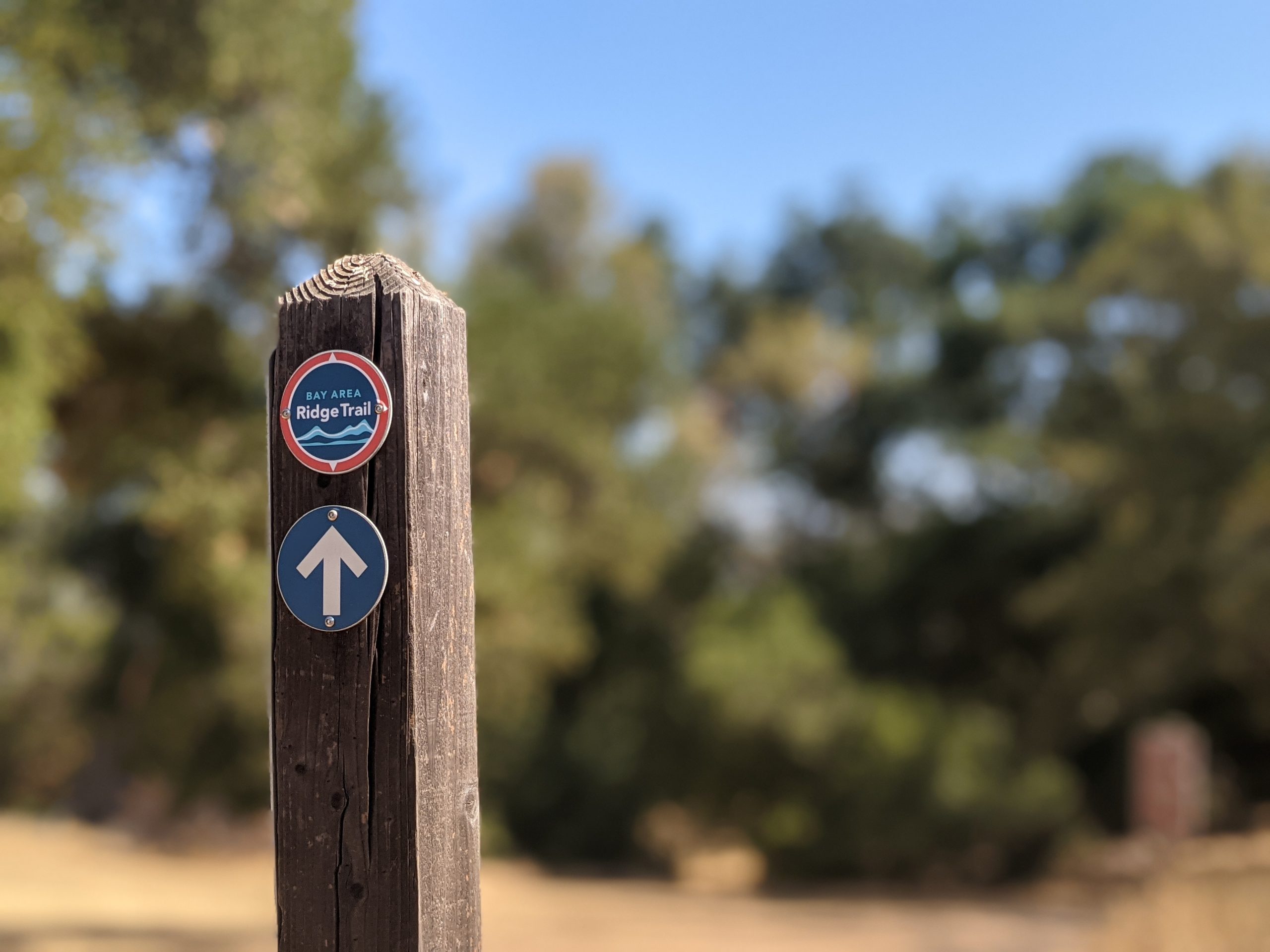
7 Bay Area Ridge Trail routes to summer trip plan
Planning a trip to the Bay Area with Outdoor Afro is a guaranteed outdoor adventure. Volunteer leaders guide some of the most enriching events to establish new relationships with natural West Coast wonders. Mountain hikes. Valley bike rides. Beach games. Public land nature journaling. You name it, volunteers have probably guided it. So here’s another adventure to anticipate exploring with the network: the Bay Area Ridge Trail.
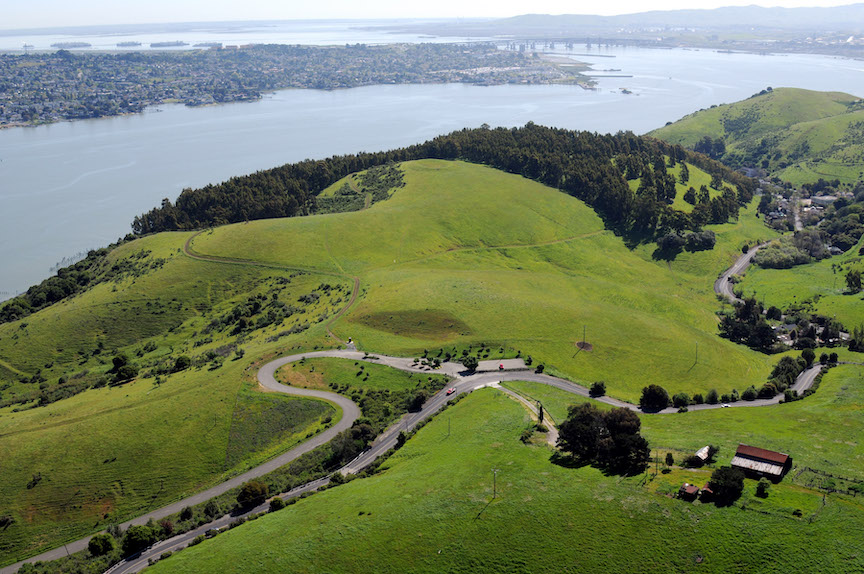
Spanning 400 miles, this multicity network of trails offers everything from camping to flower spotting. It winds through San Francisco, Marin, Oakland, Napa, Sonoma, San Jose, the Peninsula, Berkeley, and Fremont. Multi-use pathways meander between the area's North and South Bay. The idea to develop such a comprehensive trail spawned from a group of outdoor enthusiasts who envisioned an extended option for Bay Area residents, providing epic routes for those itching to discover more of nature from their backyards.
The trail opened in 1989. As of November 2021, 400 miles have been dedicated for public recreational use with another 150 miles opening in the coming years for the same purpose. Once the full 550 miles complete, residents and tourists will have continuous access to more than 75 parks and open spaces. Visitors can go by foot and even horseback through some of the Bay Area’s most iconic and tranquil naturescapes and backdrops. Of course, mapping out such a massive route can become challenging, however the trail’s website offers an easy-to-use system — the Ridge Trail Circumnavigation.
Plan everything from campsite locations and multi-day itineraries to determining the closest parking lots and best locations for a scenic picnic with gal (or guy) pals. Although there are still some unfinished parts to the trail, adventurers can take advantage of the trail’s two long, uninterrupted stretches that are currently open. On the Western Ridge: an 80-mile stretch from Northern Marin to Highway 92. On the Eastern Ridge: a 43-mile stretch from El Sobrante to Union City. View the full database of trail maps to organize summer trips. Fun options for future Outdoor Afro Meetups the network is considering as well. So include these starter locations into this year’s Bay Area travel plans, whether an independent day trip or longer excursion with family and friends:
Presidio to Marin Headlands
Distance: 1.9 miles | Difficulty: Easy
The star to this stretch of trail is none other than San Francisco’s Golden Gate Bridge. One of the less strenuous paths, this short walk also is accessible by wheelchair. As with any bridge, wind conditions are unpredictable, so be sure to carry an extra layer of clothing (scarves or pullovers) to confront extra breezy days.
Mount Tamalpais State Park/Bolinas Ridge
Distance: 6.4 miles | Difficulty: Moderate
For those who enjoy smartphone-worthy landscapes, this is the ideal trail section. From blooming wildflowers to ocean view lookouts along each step, this hike may be a little more demanding, but the vista will certainly help keep the trip on scenic course.
Jack London State Park and East Slope Sonoma Mountain
Distance: 5.5 miles | Difficulty: Hard
Challenge seekers: This one is definitely the one. So, bring it. The trail is located within the historic Jack London State Park. During the journey, expect to go through a rather dense forest. The perk while making it through this woodland is calming streams flowing nearby. Reach the highest point of the mountain’s ridge, and scenery typically found in global magazines of Valley of the Moon and the Bay are end results.
Table Rock to Palisades Spur
Distance: 6 miles | Difficulty: Hard
Ever pondered what it’s truly like to ascend to the highest point of the Bay Area? Now is the time to put action behind the thought. It’s often recommended to try this hike between April and June, because that’s also when wildflowers endemic to the area come out to play. See if you can spot the Southern Oregon buttercup, the Henderson’s fawn lily, or the dwarf woolly meadowfoam. To be clear: This trail requires full hydration, so pack enough fluids to keep moving steadily.
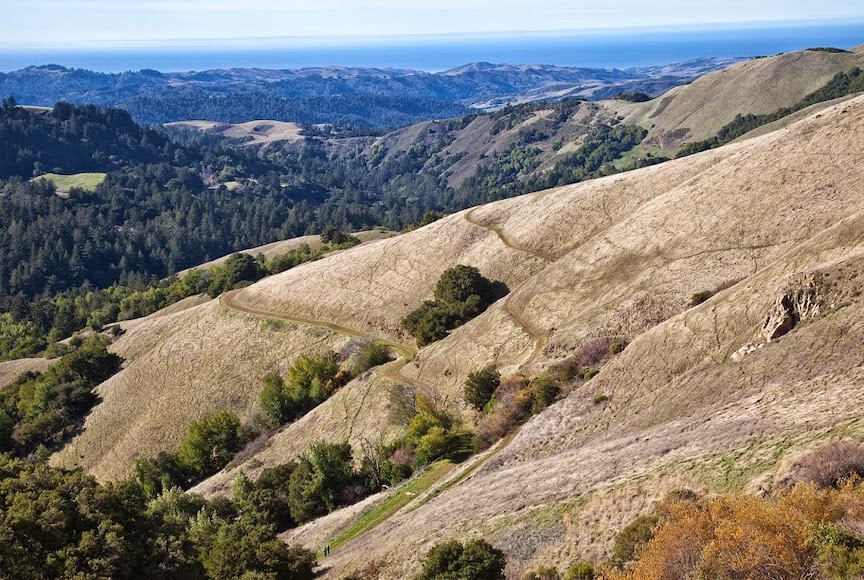
Coyote Lake to Harvey Bear Ranch Park
Distance: 5.6 miles | Difficulty: Moderate
This stretch is picnic perfect. Unplug for a couple of hours next to Coyote Lake, which is a popular feeding area for wild bird species like blue herron, red-necked grebe, and ring-necked ducks. Camp around this popular waterway. Easily bring a backpack. Pitch a tent. Plunge into local lake life. Keep in mind there’s very little shade along the trail, so pack sunscreen, a hat, and sunglasses if possible.
Carquinez Straight Bike Loop
Distance: 24 miles | Difficulty: Difficult
For Bay Area mountain bike riders, this mix of paved roads and pathways connects the Carquinez Straight through a 24-mile loop. Along the way, take in rarely seen cityscapes of the Bay. When it’s break time, there are plenty of eateries and cafés along the route to refuel or restock on snacks and knick knacks.
Mount Madonna County Park
Distance: 3.5 miles | Difficulty: Difficult
This route is entirely uphill, so prepare mentally and physically before attempting. Start from the Sprig Recreational Area trailhead to climb and climb and climb. Pass by boulder-laced grasslands before finishing in a redwood canyon. It’s an estimated 1,150-foot slope, so good luck!