7 Bay Area Ridge Trail routes to summer trip plan
Planning a trip to the Bay Area with Outdoor Afro is a guaranteed outdoor adventure. Volunteer leaders guide some of the most enriching events to establish new relationships with natural West Coast wonders. Mountain hikes. Valley bike rides. Beach games. Public land nature journaling. You name it, volunteers have probably guided it. So here’s another adventure to anticipate exploring with the network: the Bay Area Ridge Trail.
Spanning 400 miles, this multicity network of trails offers everything from camping to flower spotting. It winds through San Francisco, Marin, Oakland, Napa, Sonoma, San Jose, the Peninsula, Berkeley, and Fremont. Multi-use pathways meander between the area's North and South Bay. The idea to develop such a comprehensive trail spawned from a group of outdoor enthusiasts who envisioned an extended option for Bay Area residents, providing epic routes for those itching to discover more of nature from their backyards.
The trail opened in 1989. As of November 2021, 400 miles have been dedicated for public recreational use with another 150 miles opening in the coming years for the same purpose. Once the full 550 miles complete, residents and tourists will have continuous access to more than 75 parks and open spaces. Visitors can go by foot and even horseback through some of the Bay Area’s most iconic and tranquil naturescapes and backdrops. Of course, mapping out such a massive route can become challenging, however the trail’s website offers an easy-to-use system — the Ridge Trail Circumnavigation.
Plan everything from campsite locations and multi-day itineraries to determining the closest parking lots and best locations for a scenic picnic with gal (or guy) pals. Although there are still some unfinished parts to the trail, adventurers can take advantage of the trail’s two long, uninterrupted stretches that are currently open. On the Western Ridge: an 80-mile stretch from Northern Marin to Highway 92. On the Eastern Ridge: a 43-mile stretch from El Sobrante to Union City. View the full database of trail maps to organize summer trips. Fun options for future Outdoor Afro Meetups the network is considering as well. So include these starter locations into this year’s Bay Area travel plans, whether an independent day trip or longer excursion with family and friends:
Presidio to Marin Headlands
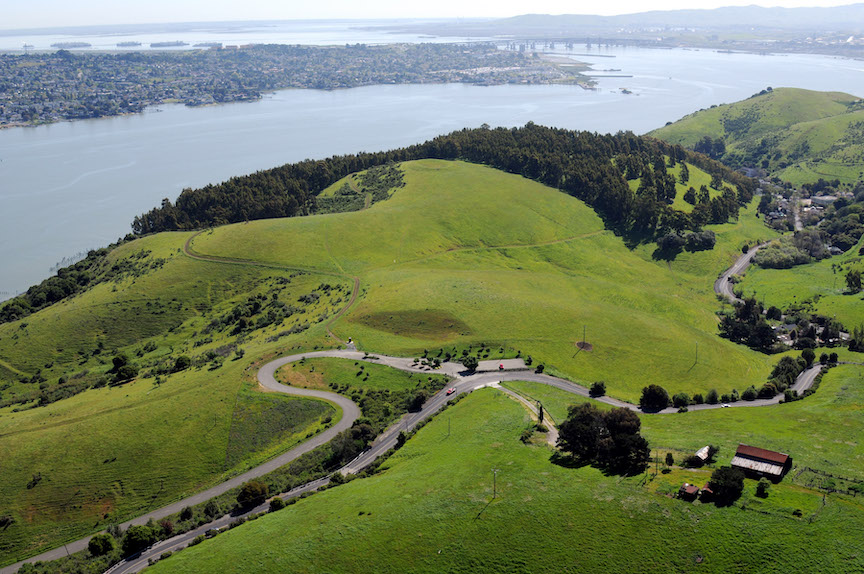
Distance: 1.9 miles | Difficulty: Easy
The star to this stretch of trail is none other than San Francisco’s Golden Gate Bridge. One of the less strenuous paths, this short walk also is accessible by wheelchair. As with any bridge, wind conditions are unpredictable, so be sure to carry an extra layer of clothing (scarves or pullovers) to confront extra breezy days.
Mount Tamalpais State Park/Bolinas Ridge
Distance: 6.4 miles | Difficulty: Moderate
For those who enjoy smartphone-worthy landscapes, this is the ideal trail section. From blooming wildflowers to ocean view lookouts along each step, this hike may be a little more demanding, but the vista will certainly help keep the trip on scenic course.
Jack London State Park and East Slope Sonoma Mountain
Distance: 5.5 miles | Difficulty: Hard
Challenge seekers: This one is definitely the one. So, bring it. The trail is located within the historic Jack London State Park. During the journey, expect to go through a rather dense forest. The perk while making it through this woodland is calming streams flowing nearby. Reach the highest point of the mountain’s ridge, and scenery typically found in global magazines of Valley of the Moon and the Bay are end results.
Table Rock to Palisades Spur
Distance: 6 miles | Difficulty: Hard
Ever pondered what it’s truly like to ascend to the highest point of the Bay Area? Now is the time to put action behind the thought. It’s often recommended to try this hike between April and June, because that’s also when wildflowers endemic to the area come out to play. See if you can spot the Southern Oregon buttercup, the Henderson’s fawn lily, or the dwarf woolly meadowfoam. To be clear: This trail requires full hydration, so pack enough fluids to keep moving steadily.
Coyote Lake to Harvey Bear Ranch Park
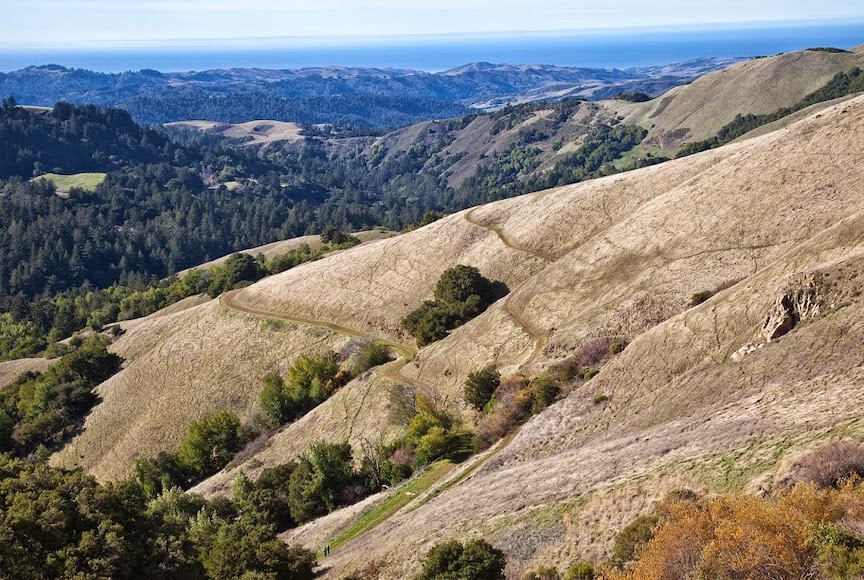
Distance: 5.6 miles | Difficulty: Moderate
This stretch is picnic perfect. Unplug for a couple of hours next to Coyote Lake, which is a popular feeding area for wild bird species like blue herron, red-necked grebe, and ring-necked ducks. Camp around this popular waterway. Easily bring a backpack. Pitch a tent. Plunge into local lake life. Keep in mind there’s very little shade along the trail, so pack sunscreen, a hat, and sunglasses if possible.
Carquinez Straight Bike Loop
Distance: 24 miles | Difficulty: Difficult
For Bay Area mountain bike riders, this mix of paved roads and pathways connects the Carquinez Straight through a 24-mile loop. Along the way, take in rarely seen cityscapes of the Bay. When it’s break time, there are plenty of eateries and cafés along the route to refuel or restock on snacks and knick knacks.
Mount Madonna County Park
Distance: 3.5 miles | Difficulty: Difficult
This route is entirely uphill, so prepare mentally and physically before attempting. Start from the Sprig Recreational Area trailhead to climb and climb and climb. Pass by boulder-laced grasslands before finishing in a redwood canyon. It’s an estimated 1,150-foot slope, so good luck!

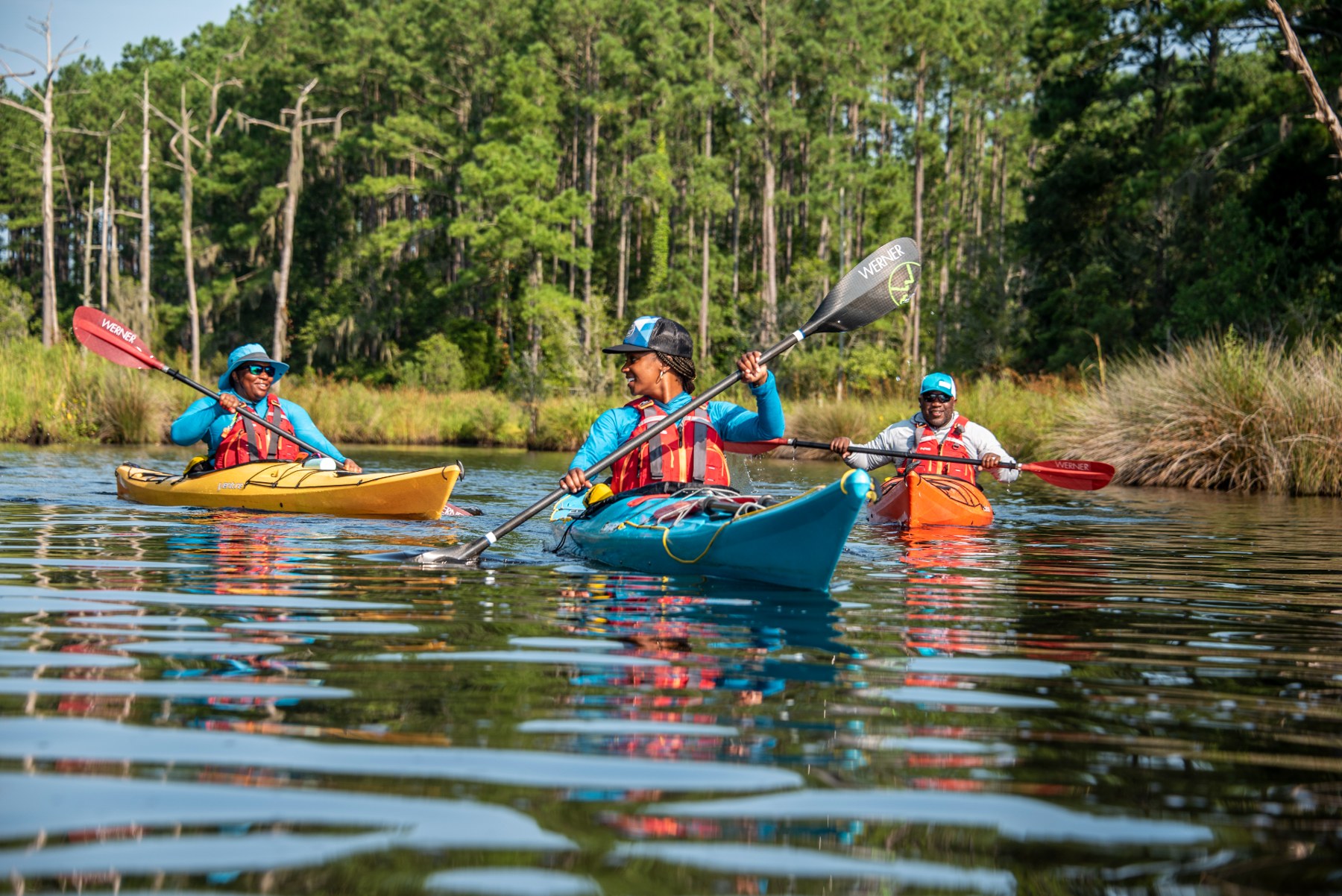
Outdoor Afro's Paddle Camp returns, doubles participation
OAKLAND, CALIFORNIA – An increasingly popular on-the-water experience for Outdoor Afro volunteer leaders is about to go into summer class again. Paddle Camp 2022 — in collaboration with boating and fishing equipment brand Northwest River Supplies, Inc. (NRS) — takes place July 30 through Aug. 6 on Lake Champlain in Burlington, Vermont.
“It’s so fulfilling to help guide our volunteer leaders in activities that continue to strengthen our community connections to water,” said Chaya Harris, Outdoor Afro’s National Program Director. “Paddle Camp is an opportunity to teach proper paddling techniques and water safety so that our volunteers can take these lessons back into their neighborhoods.”
With the support and expertise of NRS, camp engagement increased from 10 Outdoor Afro volunteer leaders in 2021 to now 20 volunteers wanting to learn boating skills that will help them better navigate and explore local waters. The seven-day summer session will include 10 canoers and 10 kayakers taking in-class and lakeside courses at St. Michael’s College outside of Burlington. Each volunteer will take away invaluable training, earning a Level I or Level II kayaking or canoeing certification through the American Canoe Association.
“Breaking down barriers to the outdoors is about creating opportunities for people to develop the skills and knowledge they need to get outside safely and enjoyably,” said NRS Chief Marketing Officer Mark Deming. “We’re thrilled to be able to support this effort to prepare volunteer leaders from Outdoor Afro to share their love of the water with people in their home communities.”
DONATE TO SUPPORT THIS NATURE EXPERIENCE
Paddle Camp prepares volunteers to become certified canoeing and kayaking instructors. The camp is led by NRS ambassador, accredited paddling instructor, and outdoor school leader Todd Johnstone-Wright. Prior to last year’s Paddle Camp, Harris also became a certified instructor under Johnstone-Wright’s instruction and helped lead the inaugural Outdoor Afro volunteer leader cohort.
“Todd does an amazing job uplifting everyone as a fully capable learner while also honoring the knowledge and experience each participant brings,” Harris said, “no matter how minimal their skill sets may be at the start of camp.” Once camp completes, volunteer leaders are expected to host at least three post-camp activities in their respective communities across the United States. During 2021, volunteers exceeded this expectation, said Harris.
That year, up to 109 people learned how to paddle — as well as general paddle safety — after volunteers hosted follow-up paddling activities in their local communities. Outdoor Afro volunteer leader Antonio Simmons participated in the 2021 cohort. “I never imagined going into this camp that I would have an experience I thoroughly enjoyed the way that I did,” said the Delaware, Maryland, and Vermont network leader. “I came away with so many new tools.”
Harris anticipates volunteer leader participation and the overall community impact becoming something even bigger after this year’s camp. Paddle Camp is just one of many professional development opportunities Outdoor Afro offers. The network's now 117 volunteers are able to expand their leadership and outdoor safety acumen within the industry through local events, national conferences, and seasonal expeditions.
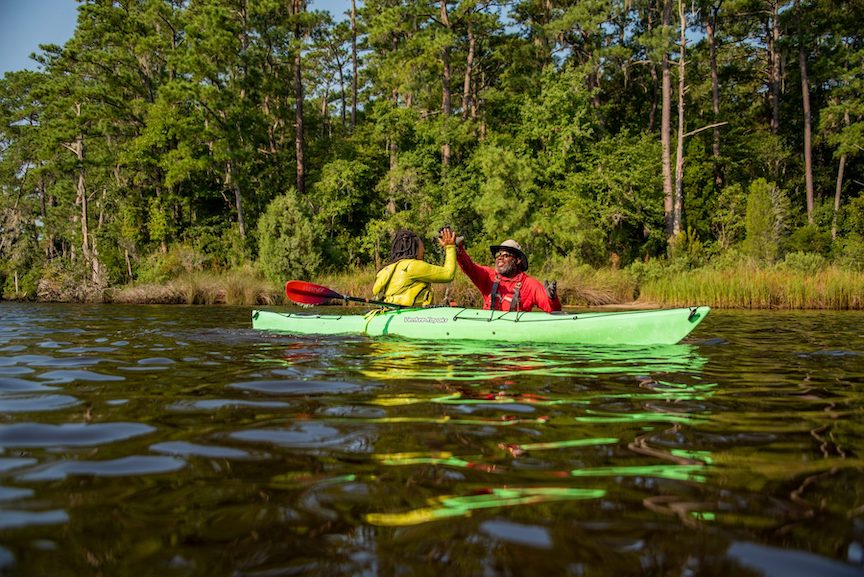
Annually, Outdoor Afro trains a select group of applicants to participate in its Outdoor Afro Leadership Training or OALT. This training equips volunteers with the essential outdoor proficiency to guide local communities in nature sustainably and safely. Paddle Camp is just another beneficial possibility that allows volunteers to build their nature portfolio. After successfully finishing the 2022 course, volunteers will have much to applaud alongside NRS, which celebrates 50 years in the business. Established in 1972 by business professor Bill Parks, NRS is the leading manufacturer of paddlesports equipment and apparel with a mission to empower adventures on the water.
In addition to creating boating gear, NRS is committed to preserving access to on-the-water recreation and to promoting stewardship of wild places. The brand works closely with national organizations and local groups throughout the world to help care for rivers, lakes, and oceans. “I was able to achieve my three classes in the DMV network last year as a result of Paddle Camp,” said Simmons. “Some people had never been kayaking, so seeing the joy and excitement on their faces as their fear of the water went away was thrilling and eye-opening.”
ABOUT OUTDOOR AFRO: Outdoor Afro is a national not-for-profit organization that celebrates and inspires Black connections and leadership in nature. What started as a kitchen table blog by Founder and CEO Rue Mapp in 2009 has since grown into a cutting-edge nationwide network with 100-plus volunteer leaders in 60 cities with network participation reaching 60,000 people. Outdoor Afro reconnects Black people with the outdoors through outdoor education, recreation, and conservation. Follow Outdoor Afro on social @outdoorafro today.
ABOUT NRS: NRS is 100-percent employee-owned and is the world’s leading supplier of equipment and apparel for water recreation, safety, and rescue. Founded in 1972 with a vision to create a better kind of company, NRS is dedicated to promoting the health and well-being of its customers, employees, and community. For more information about NRS, visit nrs.com, @nrsweb, or call 877-677-4327.
CLICK HERE FOR MORE NETWORK NEWS
10 beginner swimming pointers from leader Mardi Fuller
As summer draws nearer, anticipation for beach, pool, and lake days grows. Nationwide, Outdoor Afro looks forward to time outside with family and friends – as well as the wonder of weightlessness and the joy of cooling immersion that the water provides. Our network is in constant pursuit of deeper connections to nature, bringing Black people together in community and water-focused activities. Black people have faced exclusion from public pools and beaches over the course of the 20th century. Swimming areas were segregated through the 1960s, and Black people did not benefit from the pools and swim clubs built in white neighborhoods either. This deliberate prohibition has resulted in a great disparity in who has access to swimming and water safety, and by extension, the many sports and activities for which swimming is a foundational skill. I like sailing, fishing, kite surfing, or water polo.
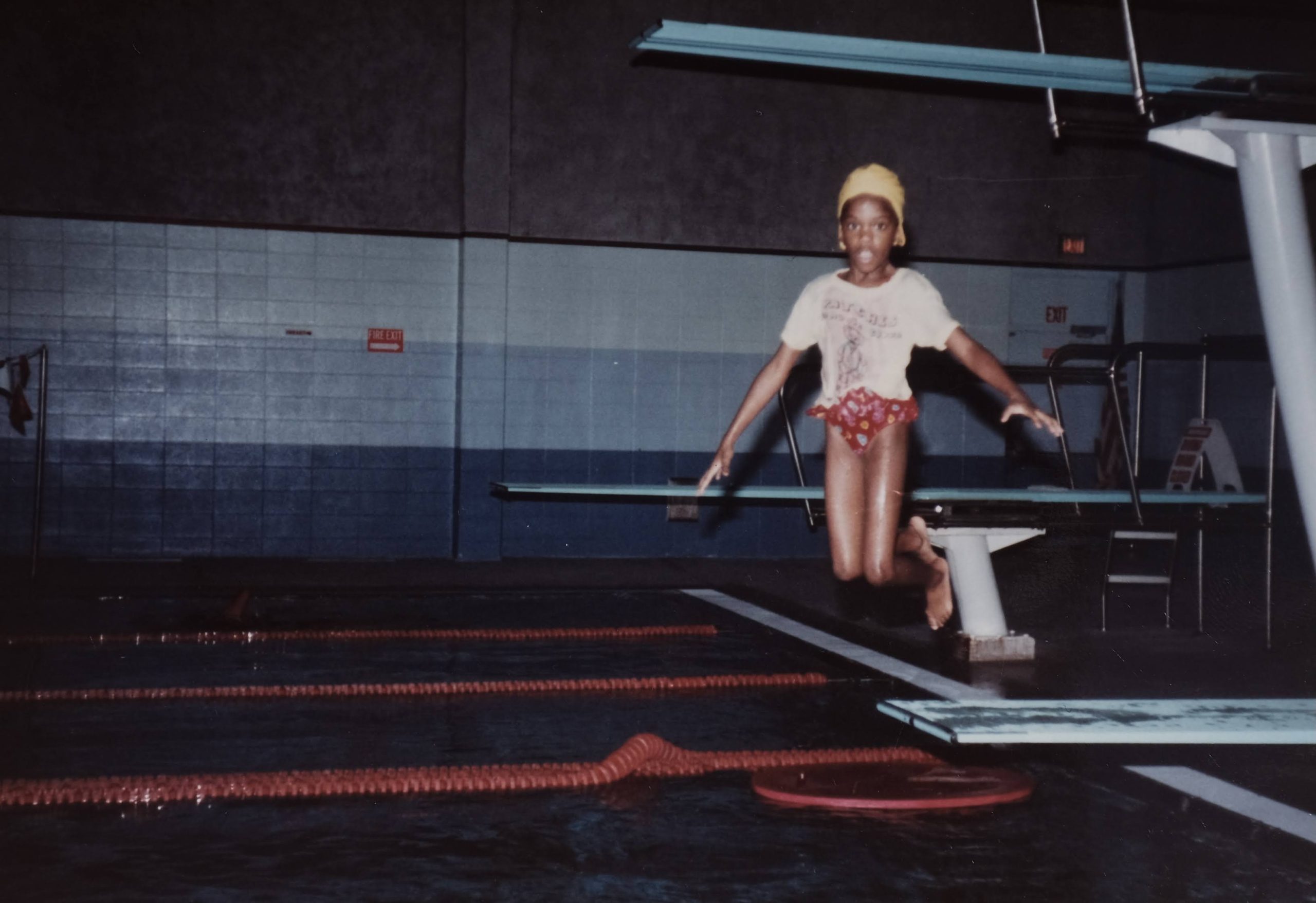
Outdoor Afro is working to change this through its Making Waves program, a program designed to help increase access to swimming for Black families across the United States. The program provides swim scholarships to children and their caregivers. Learning to swim is first about survival: knowing how to gauge safe swimming conditions, gaining water confidence, and moving efficiently in the water in a relaxed manner. Once achieved, swimming opens the door to a new world, truly, as 70 percent of the earth is covered by water. It has been called the best form of exercise because it’s easy on joints and builds muscle tone all over as the body works against the water’s resistance. I am fortunate to have had my mother take my brother and me to swimming lessons when I was around 3 years old.
My mom didn’t know how to swim and took classes at the same time. To this day, swimming is the exercise in which she finds the most ease, and it has helped her manage chronic pain. Swimming has been a refuge for me as well. As a kid, I was always happiest when playing in any body of water, and I participated in swim teams throughout childhood. I became a lifeguard and swim instructor in high school and college. These roles allowed me to be around the water and were some of the best paying jobs around. In adulthood, I now swim for exercise and injury management; I’ve swam in triathlons, and I still enjoy open water swimming. Above all, it’s always brought me massive joy. If you are a beginner swimmer looking to increase your water confidence and have more fun at the beach or pool this summer, here are my recommended tips to get started and build a rewarding lifelong relationship with water:
CHANNEL YOUR ANCESTORS. The most important thing for you to know about swimming is that you belong in the water; it is your heritage. Historically, West Africans were proficient swimmers at a young age. Swimming, boating, and fishing were integral to our cultural practice, including spiritual beliefs, economies, social structures, political institutions and worldviews. In Undercurrents of Power: Aquatic Culture in the African Diaspora, Professor Kevin Dawson’s research reveals how descendants of Africans demonstrated aquatic fluencies at home as well as while enslaved in the Americas. West Africans built and navigated the waters in dugout canoes. They spear fished. They evaded enemies by swimming. Reading this scholarship brought new meaning into my understanding of our powerful water-based legacy.
LEARN THE FUNDAMENTALS OF WATER SAFETY. Understanding the risks of being in and around water is the first step to becoming a strong and safe swimmer. Familiarize yourself with water safety tips from the American Red Cross, where you will find a national database of swim instruction available near you.
FLOAT ON. AND ON. AND ON. Once you’re comfortable in the water, floating is a survival technique as well as a restorative practice. You can float when you’re too tired to swim anymore, and you can float simply to relax and be present in your surroundings. Practice by laying on your back in shallow water with arms and legs extended. Have an experienced swimmer support you by standing next to you, gently placing a hand under your lower back. Press your hips to the sky. Cup your hands slightly, fingers together, and slowly move water towards your body, and then flip your hands and push water away. This is called sculling. Each body floats differently, depending on muscle mass, body fat percentage and your body’s surface area. Most people can’t float without some gentle movement, such as sculling or a gentle flutter kick. Practice and discover exactly how much movement it takes for you to float with ease.
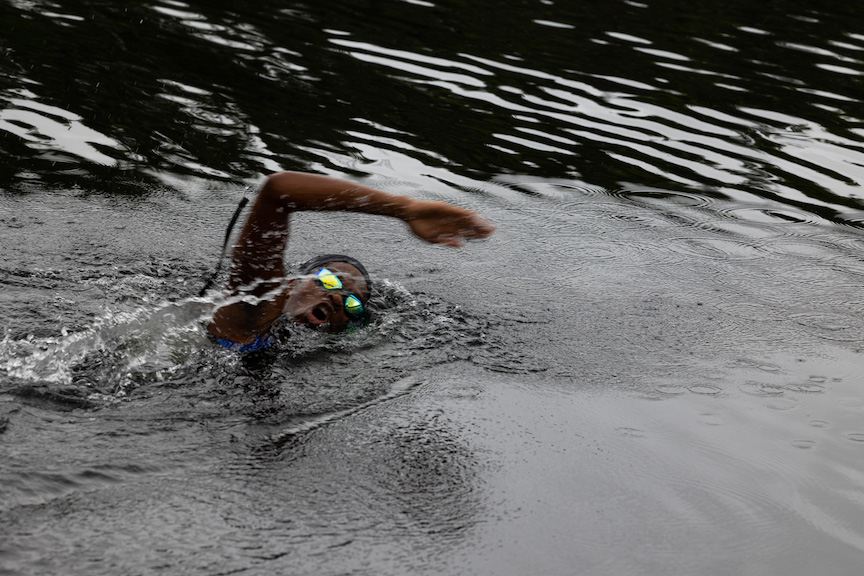
JUST BREATHE. After learning to float, your next priority is regulating your breath. Once you do so, the experience of swimming can be quite calming and beneficial to your overall health. Swimming increases lung capacity and breath endurance. Interestingly, one study compared swimmers’ lung capacity to that of elite football players and found that the swimmers had larger lungs and better cardiorespiratory function.
PRACTICE BLOWING BUBBLES. Swimming proficiently for any length of time requires putting your face in the water. You can try this at home. Fill a basin with water and get comfortable dunking your face right in. Whenever your face is in the water, you are always blowing air out of your nose and mouth – never holding your breath. After you’ve pushed the last drop of air from your lungs, lift your head out of the water and inhale through your mouth slowly. Repeat. As you gain comfort, practice turning your head to either side to inhale, as you will when you learn the crawl stroke or freestyle stroke.
TAKE A SHOWER. We are not trying to have damaged hair or dry, ashy skin. Not only is it good hygiene to rinse yourself off before going into a body of water, but also allowing your hair and skin to absorb fresh water means that your cells and follicles have less room to absorb damaging chlorine or salt.
TRY TO CREATE GOOD CONDITIONS FOR LEARNING. Your local YMCA, YWCA, or community pool will offer lessons for children and adults. Outdoor Afro even offers “Swimmerships™” (swim lesson scholarships) through its Making Waves program. If you have options, shop around and find an instructor you’re comfortable with and in a supportive learning environment at that. It can feel hard to try to learn a new skill as an adult, too. Settle into a mindset in which you’re patient with yourself and open to learning and growth. Find a bathing suit you feel good in. Check out Black-owned soulcap.com for swim caps designed to fit our various hairstyles and hair volumes. Get a pair of swim goggles to protect your eyes from chlorine and to make it quicker to transition between being above and under the water.
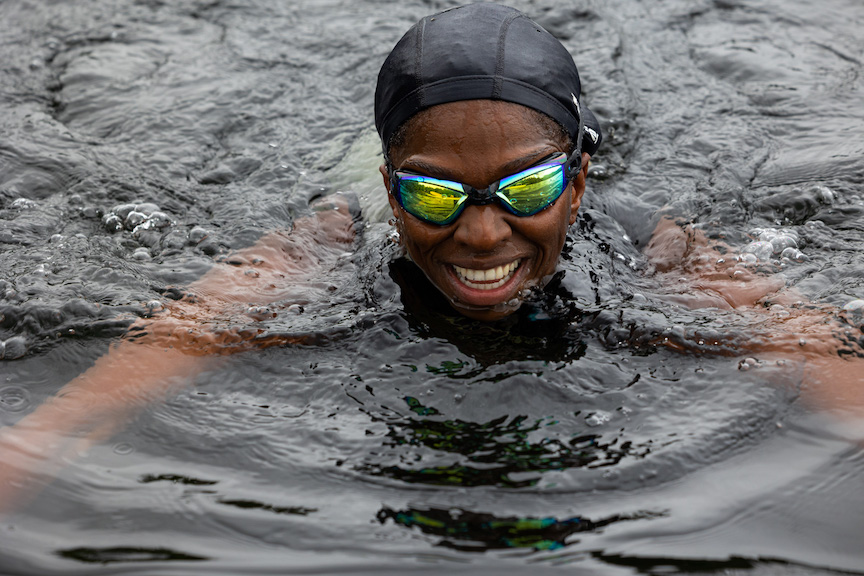
WEAR FINS. When you’re practicing on your own, fins are a great support to use to learn how to kick. When you kick with fins your body naturally executes a flutter kick emanating from your core and hips. It’s easy for beginners to want to bend their knees to kick – a motion which will get you nowhere.
AVOID FLOATATION DEVICES. You will find varying opinions on this, but my opinion is that flotation devices are important for safety on open water, but while learning to swim, they can provide a false sense of security. Children who wear floatation devices often feel overconfident in deep water before they are truly able to keep themselves safe at that depth. Wearing a floatation device may tempt a new swimmer to not pursue stronger skills. Better to stay within a swim area where you can stay safe. Progress to deeper water as your skills advance.
DON'T STOP PRACTICING. Learning how to swim takes consistency – some estimate it takes 75-100 hours of lessons and practice to become proficient. It may take five years of swimming once or twice a week to become a comfortable lap swimmer, but you’ll become strong enough to be safe and enjoy yourself well before that. And of course, have fun! Find your own water joy, whether it is the peace and quiet that comes from ducking underwater, riding waves in the ocean, or floating for relaxation. Or picking up a sport like stand-up paddle boarding or windsurfing. Oh! And don’t forget to bring a friend or family member along with you.
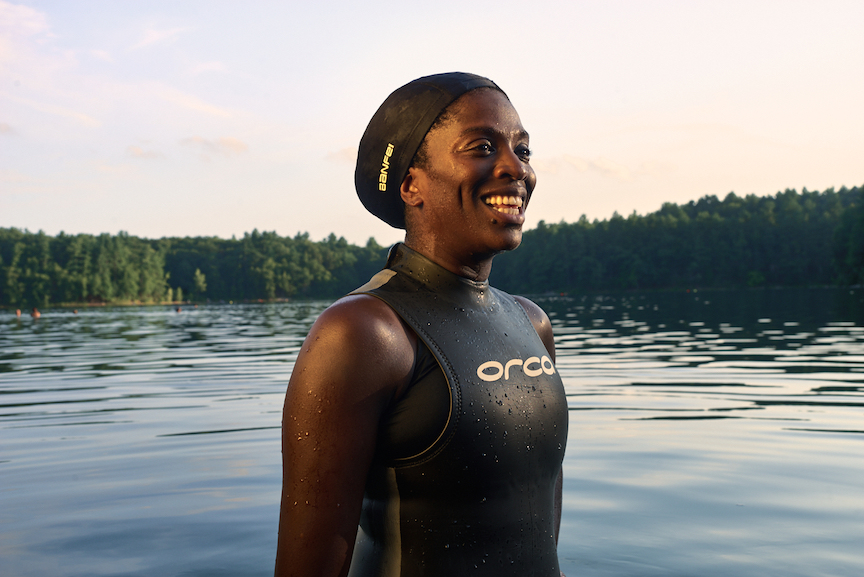
Underwater, action shots by Joe Klementovich: @klementovitch; portrait shot by Philip Keith: @philipckeith_

Machine Falls: where endurance hikers, leaders are born
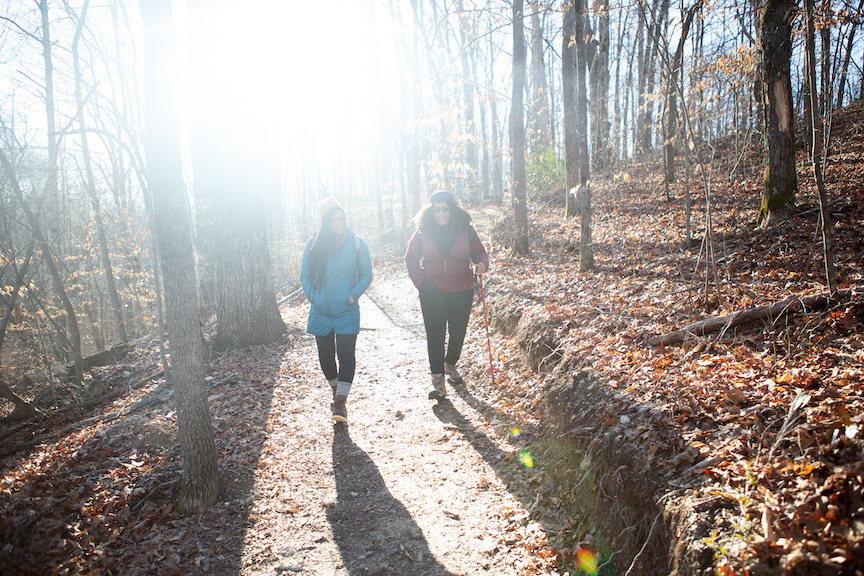
The accordion-like hike chugs along with ease. Then, a collective cautiousness seeps in. Ahead, a 60-foot descension. Disjointed stones, hard-to-identify wooden staircases, and protruding tree roots offer occasional guidance with each unsure footstep. A steep, jagged drop any hiker would question. Then, her voice echoes toward the group: “Take your time,” said Outdoor Afro volunteer leader Danielle Young, 35. “There’s no rush.”
“Whew!” Some blurted. “Thank goodness!” Another wave murmured under their breath. Once that part of the hiking gauntlet completes, everyone temporarily lands back on solid ground. Young gives clear direction for this next part: It’s slippery entering the water. Which, by the way, comes to one's knee. Something she gave notice about weeks before on Outdoor Afro’s Tennessee Meetup page.
“So walk slowly,” Young said. “I will be there at the halfway point to tell you where to go next.” A woman of her word, she does. For the last time as an Outdoor Afro volunteer leader. An assignment she now passes to new 2022 volunteer leader Danae Gaiter, 36. After a few mental scares and semi-water treading hesitations, the party of nearly 15 community participants arrive at their destination: Machine Falls Loop Trail in Tullahoma, Tennessee. Roughly an hour drive from Nashville.
The aerospace and aviation hub in Southern Middle Tennessee is home to the world's most advanced flight testing center. Railroad construction actually created the community, which chartered in 1852. However, the city’s surrounding springs became popular tourist attractions alongside its growing avionics history. Machine Falls became one of Tullahoma’s many challenging sightseeing routes and waterfalls visitors wanted to test. Explore water life (creek beds and smaller waterfalls), fauna, and flora as pluses to the trail.
Positioned off a 4.1-mile loop, the more than 60-foot-tall waterfall is a top Outdoor Afro activity on Tennessee participants' to-visit list. For the past three years, Young has guided those interested in the destination on Outdoor Afro weekend adventures. COVID paused group trips to Machine Falls until recently. However, Young found personal peace at the waterfall while waiting for network events to start again. Outdoor Afro has helped Young in present times of grief.
“Logging offline and heading into nature is just soothing, especially with everything that has been thrown at me,” said Young, a cyber defense major. Because Young plans to move closer to her sister who lives in Texas, she recommended Gaiter as her volunteer leader replacement. Gaiter, who participated in her very first Outdoor Afro activity in November 2021, accepted. As network events posted to Meetup, Gaiter joined more journeys with Young. Refreshed. Inspired.
“It felt so good to be with like-minded people,” said Gaiter. “Breathing in the early morning air. That sense of being welcomed. Getting all my questions about nature answered.” Sold on taking Young’s place, Gaiter applied to become an Outdoor Afro volunteer leader. After many screenings and interviews by the networks’ national program director, Chaya Harris, Gaiter joined the Class of 2022 volunteer leaders. Totaling 117 volunteers this year. Next, Gaiter hopped on a flight to Granby, Colorado, for Outdoor Afro Leadership Training (OALT) held at River Run RV Resort.
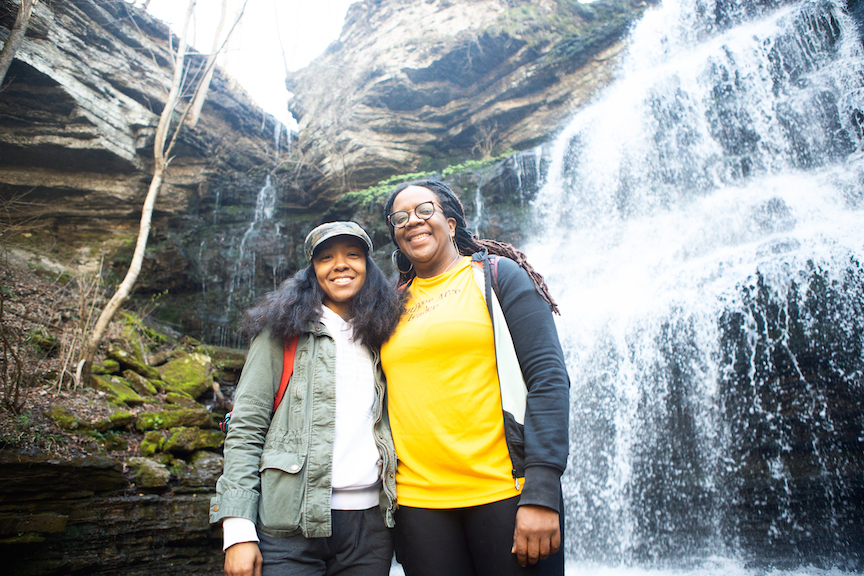
Another weekend experience but for selected and trained applicants to gain the essential tools needed to guide local communities in nature sustainably and safely. The training is organized annually by Outdoor Afro staff and experienced volunteer leaders who share the organization's history, values, best practices, and industry knowledge, including: trip planning basics; health impacts of nature conservation ethics; risk management; and effective social media storytelling. Select partners and guest speakers are invited to the training to provide field insights, and share inspiration and encouragement.
After training, volunteer leaders like Gaiter create and guide monthly trips that foster local program collaborations, and help strengthen community relationships with land, water, and wildlife. Volunteers center joy and healing, disrupting a false perception that Black people do not have a relationship to nature. “I’m really big on making people feel comfortable,” said Gaiter. “We belong in this space. I look forward to reassuring our participants that there is safety in numbers within group experiences.” Gaiter’s contributions are part of Outdoor Afro’s 60,000 participation network.
The national not-for-profit organization spans 60 cities across the country. Located in 32 states, including Washington, D.C. That moment at Machine Falls where participants made it safely and together to the cascading water scene is what OALT prepares volunteer leaders for. The arduous hike left 67-year-old Jesse Green Jr. of Nashville in anticipation for the local network’s next nature quest. “I could have stayed at that waterfall all day with Outdoor Afro,” said Green Jr., a former YMCA certified swim instructor trainer. “I loved hearing the water. Although it was really cold water, it was a great experience with new people.”
Boating Season 2022: 5 water safety tips to know
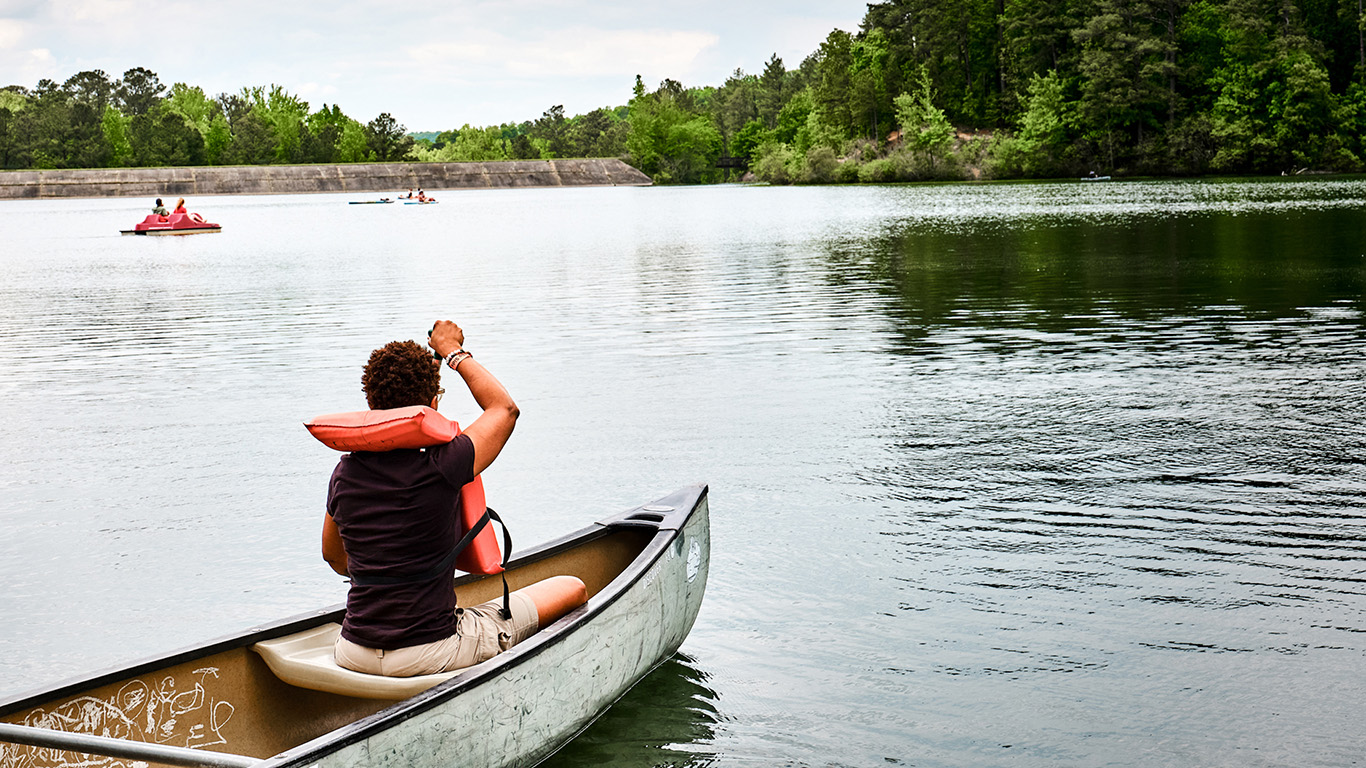
Warm weather means more Sunday fundays on a pontoon boat or pulling out family kayaks and canoes to cruise local rivers. However you prefer to spendtime on the water during summer 2022, safety first. Always! In preparation for the National Safe Boating Council’s National Safe Boating Week (May 21 through May 27), Outdoor Afro wants to remind you of the dos and don’ts to boating season adventures.
“The best boating experience is safe boating,” said Yvonne Pentz, communications director of the National Safe Boating Council, a nonprofit dedicated to helping create a safe boating experience for all boaters and the lead organization of the Safe Boating Campaign. “Have fun on the water, make memories with your family and friends – all while boating responsibly.” That said, here are five best practices to help you stay safe while creating water moments:
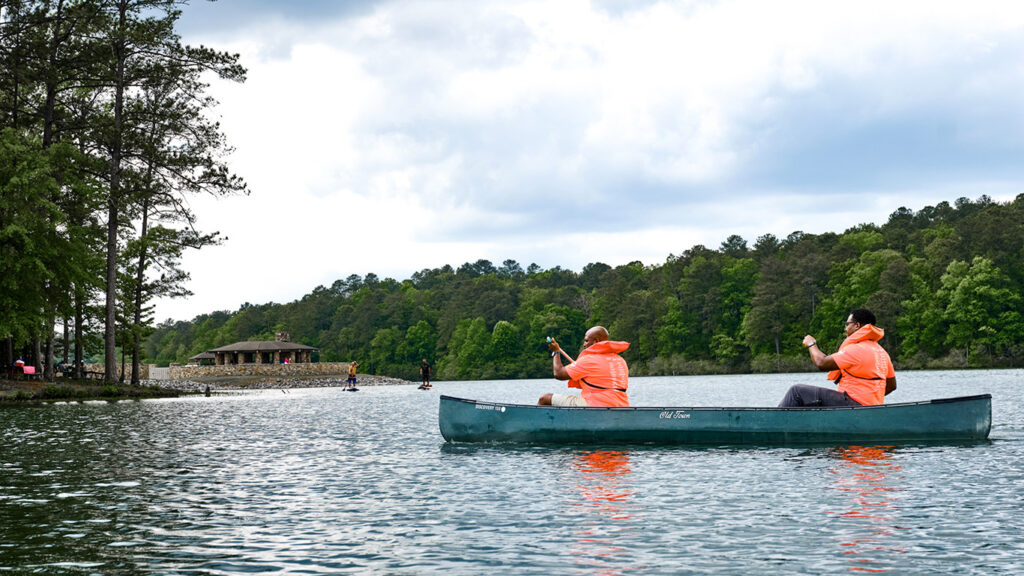
LIFEJACKETS. LIFEJACKETS. LIFEJACKETS. Lifejackets. It doesn’t matter if you’re a beginner or veteran swimmer, wearing a lifejacket (or at the very least, having them nearby) should always be at the top of your safety list. The council recommends having life jackets on children under the age of 13 while swimming or during other activities on open water. This also holds true for adults while boating.
ENGINE CUT-OFF DEVICE. Things happen. Better to be safe than sorry. Emergencies can arise on the water at any time. Whether you drop something into the water, or worse, a person goes overboard. An engine cut-off device — often worn around your wrist or attached to your lifejacket — ensures the boat’s engine will shut off instantly.
DON'T BOOZE AND BOAT. Yes, a BUI is most definitely a thing. So, no “Boating Under The Influence.” According to the council, BUIs accounts for one-third of all recreational boating fatalities. We all want to have fun on the water, but just like with a car, getting behind the wheel while under the influence is a big no-no. Alcohol impacts vision, balance, coordination, and judgment. Increasing the likelihood of accidents. Know that it’s illegal to operate a watercraft under the influence of both drugs and alcohol in every state. The Coast Guard enforces a federal law that provides BUIs, too. Including all boats: canoes, rowboats and ships.
BE AWARE OF CARBON MONOXIDE EXPOSURE. Most people don’t associate boats with producing carbon monoxide, but they certainly do. Because it’s an odorless and colorless gas, you likely won’t know if it’s being emitted. The best thing to do to remain safe on the water is to avoid swimming anywhere near the rear of a motorized vessel, or sitting along the swim deck/platform while the boat motor is running.
HAVE A PLAN, WAYS TO COMMUNICATE BEYOND THE BOAT. Again, you never know what could happen during your outdoor water journeys. It’s always great practice to let someone back ashore know your route plan as well as how long you plan to be on the water. You’ll also want to make sure any communication devices like phones, emergency locator beacons, or walkie-talkies are charged, have a signal, and work properly.
Outdoor Afro holds 2nd annual Juneteenth commemoration
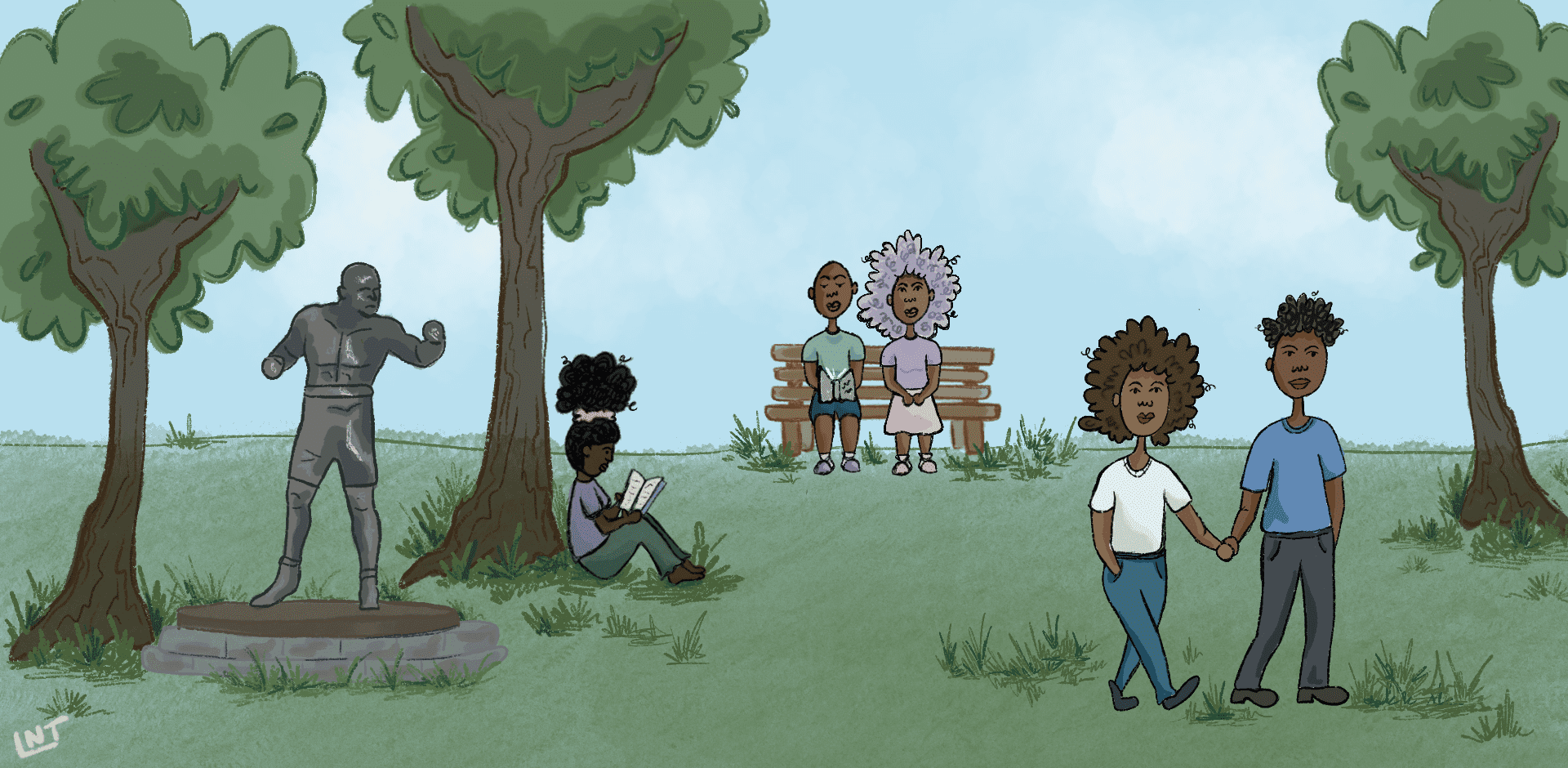
OAKLAND, CALIFORNIA – National not-for-profit Outdoor Afro will commemorate a significant part of American history through nature healing for Juneteenth 2022’s designated three-day holiday weekend taking place June 18 to June 20. This year’s theme: Reflecting on Freedom with Outdoor Afro. Juneteenth is historically marked as June 19. Outdoor Afro is offering the American people a nationwide invitation to achieve one simple request on this day: join our network to reflect on what it means to be free in this country.
“We can’t lose sight of what Juneteenth is truly about,” said Outdoor Afro Founder and CEO Rue Mapp. “There’s this false narrative of what the holiday symbolizes. Traditionally, America has recognized this day as a ‘celebration’ to the end of slavery in the United States – but that is not accurate.” In reality, June 19, 1865, is the date 250,000 enslaved Black Americans in Galveston, Texas, were told they were free. What appeared as “good” news was a memo the enslaved finally received two and a half years after the Emancipation Proclamation (signed Jan. 1, 1863) went into effect.
“Outdoor Afro is correcting this narrative by sharing this history across the country,” said Outdoor Afro’s COO Joseph Mouzon. “To honor this day, we encourage our local communities, partners, supporters, and regional networks to just spend time in nature. Whether that’s at a nearby beach, public park, or your own backyard.” How you can join Outdoor Afro in reflecting on and commemorating freedom:
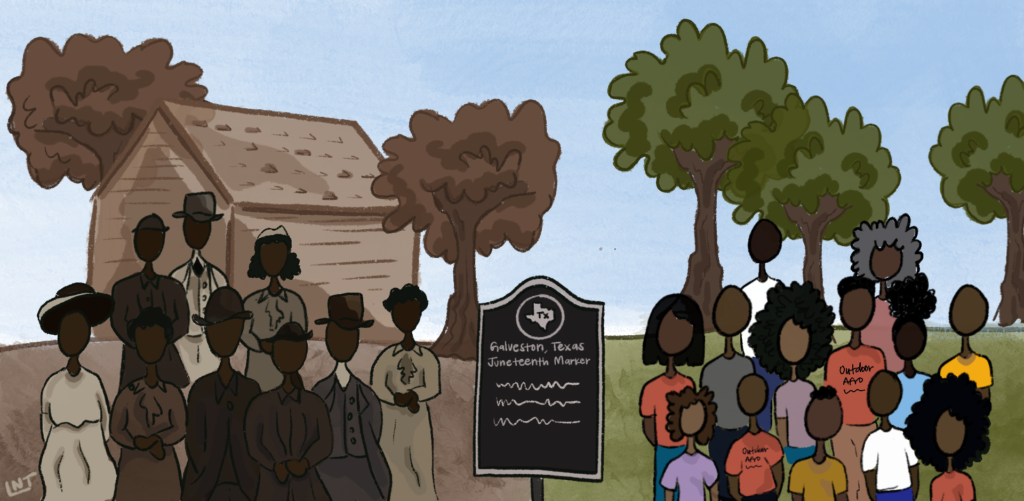
REGISTER HERE. By doing so, you’re simply pledging to join Outdoor Afro in nature. That’s it. We aim to get 50,000 people outside anywhere they feel comfortable in nature for only 2.5 hours to symbolize the 2.5 years of freedom delayed for the 250,000 enslaved people of Galveston, Texas.
REFLECT WITH US AFTER JUNE 19. Immediately after Juneteenth, Outdoor Afro wants to know how participants spent their 2.5 hours outdoors. These nature stories connect to the American storyline by becoming a modern-day change agent and source of healing from our country’s traumatic past. Outdoor Afro will add this nature-rich content to its site to illustrate its ongoing Black joy and Black healing in nature efforts.
ABOUT OUTDOOR AFRO: Outdoor Afro is a national not-for-profit organization that celebrates and inspires Black connections and leadership in nature. What started as a kitchen table blog by Founder and CEO Rue Mapp in 2009 has since grown into a cutting-edge nationwide network with 100-plus volunteer leaders in 60 cities. “Where Black people and nature meet,” Outdoor Afro reconnects Black people with the outdoors through outdoor education, recreation, and conservation. Follow us on social at @outdoorafro
Annual network training welcomes new nature lovers
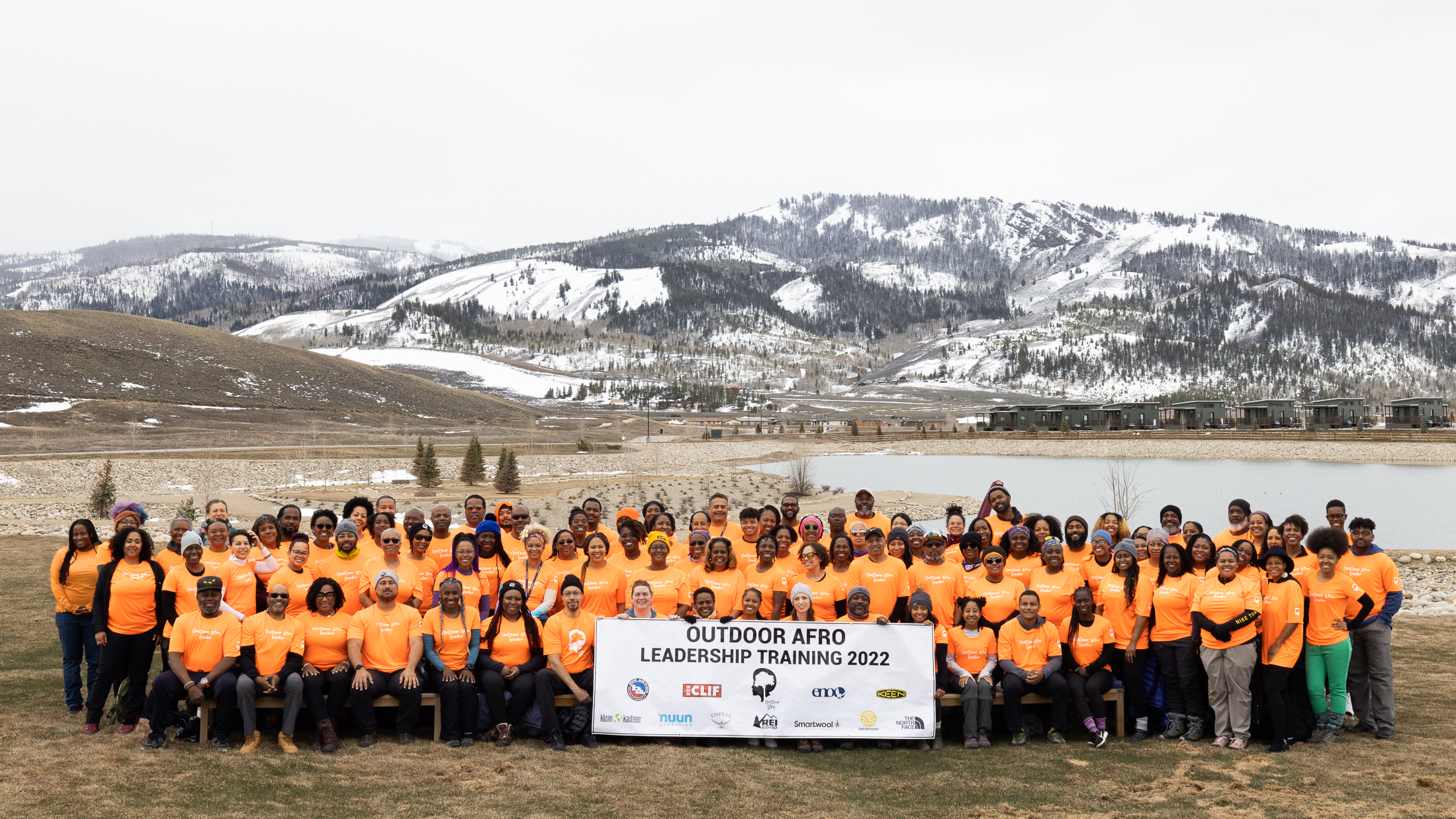
OAKLAND, CALIFORNIA– It’s considered the “most wonderful time of the year” for national not-for-profit Outdoor Afro. And for 2022, the organization’s always-anticipated Outdoor Afro Leadership Training (OALT) finally returns in person. “Two years ago, COVID forced us to shift our annual training into consecutive virtual workshops and interactive sessions,” said Outdoor Afro Founder and CEO Rue Mapp. “We’re so excited that we can now gather safely in a space that accommodates our staff, partners, and the 2022 class of volunteer leaders in nature.”
OALT is where outdoor enthusiasts gain firsthand experience in navigating and leading in nature. This year’s training with more than 100 new and returning volunteer leaders takes place at Sun Outdoors’ River Run RV Resort in Granby, Colorado, starting Earth Day 2022 from April 22 through April 24. Coinciding with Earth Day’s 2022 theme of “Invest in Our Planet,” OALT discusses and puts into action outdoor conservation, education, and recreation so that volunteer leaders can create safe, sustainable, and nature-rich activities in their local communities across the United States.
Outdoor Afro’s mission is to celebrate and inspire Black connections and leadership in nature. With a brand-new cohort of selected volunteer leaders for 2022-23, OALT is an intimate opportunity for volunteers, Outdoor Afro staff, and network partners to bond and continue to strengthen Black people’s relationships with the outdoors. For this year’s training, Outdoor Afro partnered with Sun Outdoors – a leader in outdoor hospitality with more than 175 resorts and campgrounds across the United States and Canada.
“This partnership with Outdoor Afro is an important element in our overall goal as a company,” said Karen Dearing, Chief Financial Officer for Sun Outdoors’ parent company Sun Communities, “creating a path towards fostering a more diverse society.” At Sun Outdoors’ River Run location, Outdoor Afro staff and experienced volunteers will share the organization’s history, values, best practices, and industry knowledge, including: trip planning basics; health impacts of nature; conservation ethics; risk management; and effective social media storytelling.
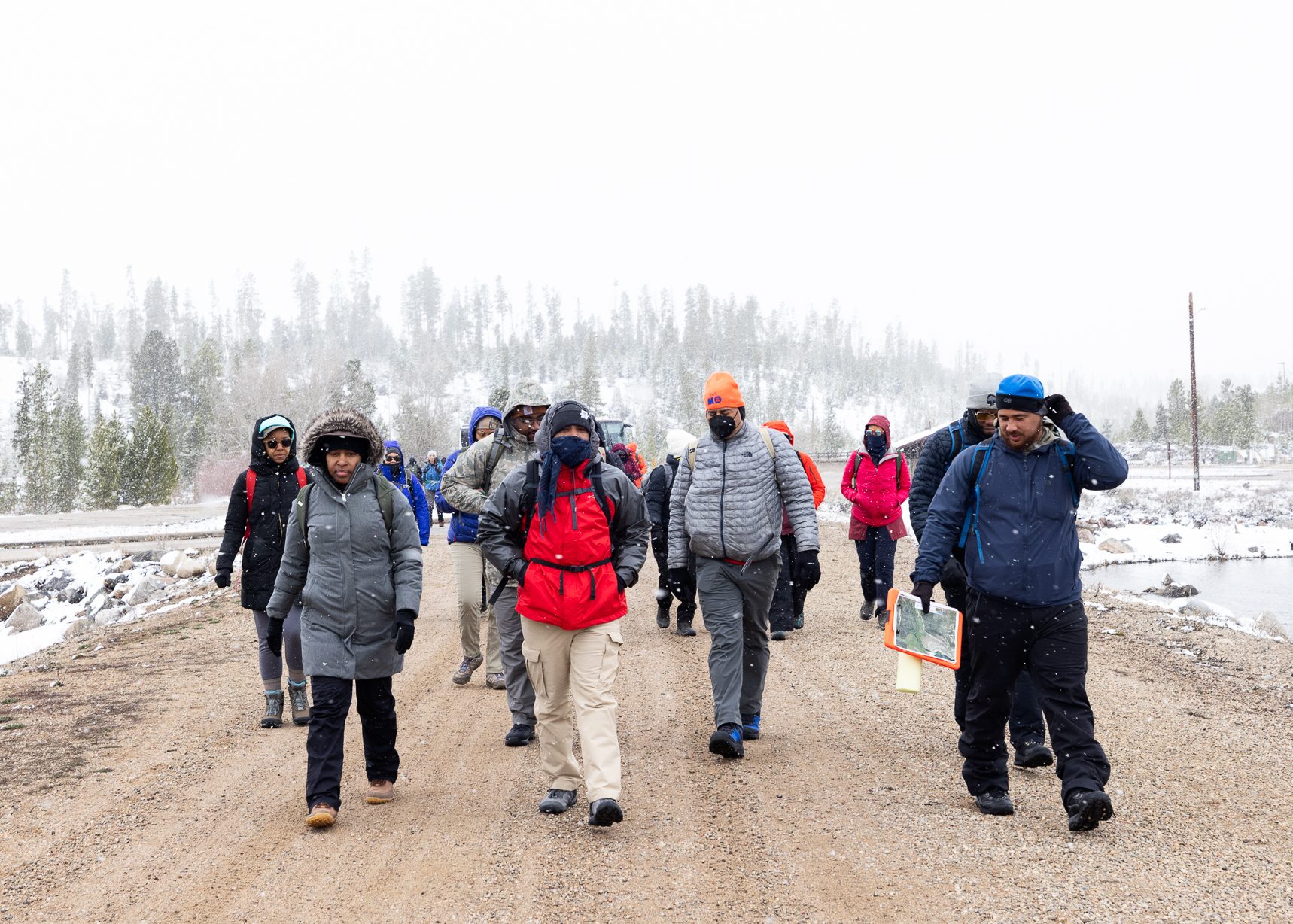
Select partners and guest speakers are invited to the training to provide field insights, and share inspiration and encouragement. After training, volunteer leaders create and guide monthly trips that foster local program collaborations, and help strengthen community relationships with land, water, and wildlife. Some examples of nature-rich experiences Outdoor Afro volunteer leaders guide after the training completes: camping, fishing, hiking, biking, kayaking, gardening, skiing, horseback riding, canoeing, geocaching, bird watching, nature journaling, and more.
Volunteer leaders center joy and healing, while also disrupting a false perception that Black people do not have a relationship to nature. Outdoor Afro formed 13 years ago. OALT started in 2012 with just a dozen volunteer outdoor enthusiasts. Each took the call to learn directly from Mapp about how to inspire and guide unforgettable experiences in nature. “OALT is like a family reunion,” said Outdoor Afro’s National Program Director Chaya Harris. “Our volunteer leaders join us from our four regions – Midwest, Northeast, South, and West – for a weekend filled with organized intergenerational fun and outdoor learning.”
ABOUT OUTDOOR AFRO: Outdoor Afro is a national not-for-profit organization that celebrates and inspires Black connections and leadership in nature. What started as a kitchen table blog by Founder and CEO Rue Mapp in 2009 has since grown into a cutting-edge nationwide network with 100-plus volunteer leaders in 60 cities. “Where Black people and nature meet,” Outdoor Afro reconnects Black people with the outdoors through outdoor education, recreation, and conservation. Follow us @outdoorafro on social.
ABOUT SUN OUTDOORS: Sun Outdoors is a leader in outdoor hospitality and committed to its mission of offering guests exceptional and transformative outdoor experiences. With over 175 locations across the U.S. and Ontario, Canada, Sun Outdoors offers guests several ways to stay: from RV sites to vacation rentals, from tent camping to glamping, whether they stay for a weekend, season or longer. Visit sunoutdoors.com to learn more. Sun Outdoors is a division of Sun Communities Inc., a publicly traded company which, as of September 30, 2021, owns, operates and has an interest in 584 developed manufactured home, RV and marina properties comprising over 155,900 developed sites and nearly 44,900 wet slips and dry storage spaces in 38 states, Canada and Puerto Rico. Sun Communities is a fully integrated real estate investment trust (REIT) listed on the New York Stock Exchange under the symbol: SUI. suncommunities.com.
10,000 Steps to Denali, Temescal Hike, and National Outdoors Day!


It's Alisha, Outdoor Afro Los Angeles Leader. This Saturday June 8th we had a Temescal Canyon Hike planned in the Santa Monica Mountains to support the first African American group to hike Denali. So our hike was in support of the 10,000 steps to Denali trek. Our hike also coincided with National Outdoors Day.
We started our day at Baldwin Hills Scenic Overlook where there were activities planned for the kids. They had camping gear set up to show how to set up a camp.

Along with camping gear lessons they also allowed children (and big kids like myself) to create buttons and bookmarks to show their support of 10,000 steps to Denali.

From BHSO, we met up with another group of teens from Watts and Compton inner city program who have had little exposure to the outdoors. We were paired with them through the Santa Monica Mountains Conservatory to encourage them to get outdoors more. Santa Monica Mountains Conservatory provided a bus and an amazing guide Anthony to take us on our hike and explore the canyon.

We got to Temescal and had a quick snack on the lawn, took a photo with both groups and paired off into two different groups to meet at the waterfall. There were so many of us we didn't want to overwhelm the trail.


On our way up we saw caterpillars, lizards, a garden snake and a red-tailed hawk. In true LA fashion we also saw a film crew filming a movie, haha. When we reached the top we sat for a bit and let the kids play around the waterfall which was dry. Anthony explained we're in a dry season. We had to watch out for poison oak. Quick tip: if its three let it be. If you see leaves in clusters of three leave them alone.


Many thanks to Kleen Kanteen and REI for keeping us hydrated. Thank you REI for keeping me warm and to Keen shoes for making my hike comfy. I also want to acknowledge Clif Bars for snack bars for the kiddos. We had an amazing time. Looking forward to many more collaborations with Santa Monica Conservatory, your rangers are amazing and knowledgeable. Thank you Anthony and Iann the volunteer.


Oh yes on our way down the canyon we came to a beautiful open field and my sister and the kids decided to jump and play.


We did it again, this time with a challenge...
By Alisha Pye, Los Angeles Outdoor Afro Leader

So we went hiking above the Mountain Gate Country Club again, but this time we decided to mix it up a bit. So we decided to go off the fire trail and hike the hills. This was a great hike although we had fewer people we had a very diverse group, ranging from a mom wearing her 6 month baby, to a 9 year old cross country runner.
This hike was particularly challenging for me because I'm very afraid of heights and cliffs, both of which we encountered. I would love to post pictures of the cliff but I was nearly paralyzed with fear. So here's to embracing fear and moving forward! Because of the challenge that I experienced, I think I enjoyed the hike more.
Overall, we hiked 11.3 miles, every time I even thought about complaining about the distance I looked up and saw this mom wearing her baby, a 9 year old and a grandmother or two chugging along. The diversity in this group was motivating to say the least. We didn't get a chance to stop and take a group picture, but we had a great time. The sun was shining, the sky was blue, the weather amazing and the scenery was breathtaking.


